Système Panhard – Panhard et Levassor Type M2F Wagonette #593

Panhard et Levassor are credited with building the first internal combustion motor in France, built under licence from Benz’s competitor Gottlieb Daimler that had been secured from Daimler’s Paris agent Edouard Sarazin. Just one year after the Benz Patent Motorwagen had been granted to Karl Benz Frenchman René Panhard and Émile Levassor set out to build a vehicle of their own using one of the petrol motors built under licence from Benz’s then competitor Daimler.
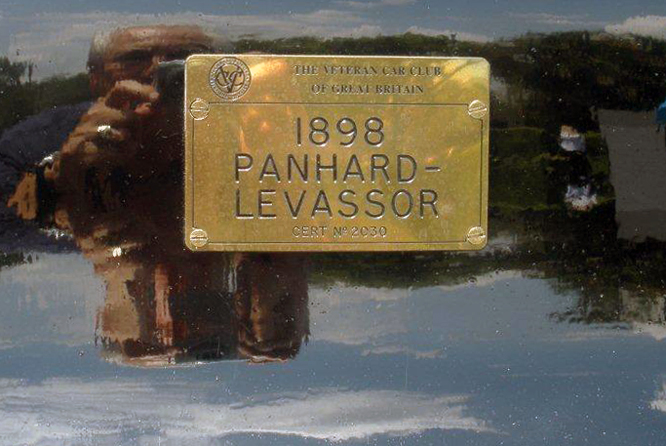
Panhard et Levassor, Type M2F 6hp Wagonette, Florida

Sarzin died in 1887 and Daimler tasked Sarazin’s widow Louise with continuing representation of Daimler’s interests in France. Louise married Émile Levassor in 1890 the same year the first, mid engined, Panhard et Levassor was sold.
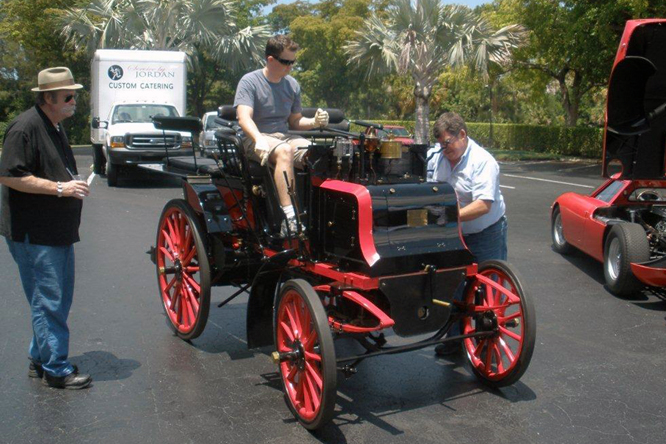
Panhard et Levassor, Type M2F 6hp Wagonette, Florida

Panhard et Levassor’s second vehicle despite sharing many features with a horse drawn coach in terms of suspension and wheel braking also introduced to the world both Systéme Panard and a four speed, plus reverse, gearbox, an item which would not be significantly improved upon until Cadillac introduced synchromesh transmissions in 1928.
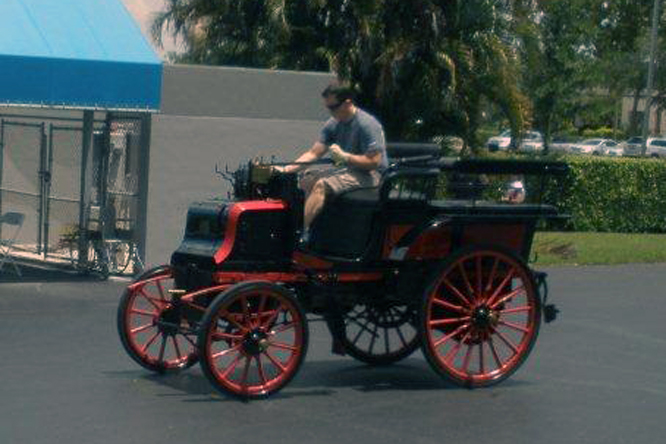
Panhard et Levassor, Type M2F 6hp Wagonette, Florida

Systéme Panard, first seen in 1895, was the practice of placing the motor, in this case a twin V giving 6 hp, in the front of the vehicle in this case ahead of the front axle and using a geabox to transmit the power to the rear axle.
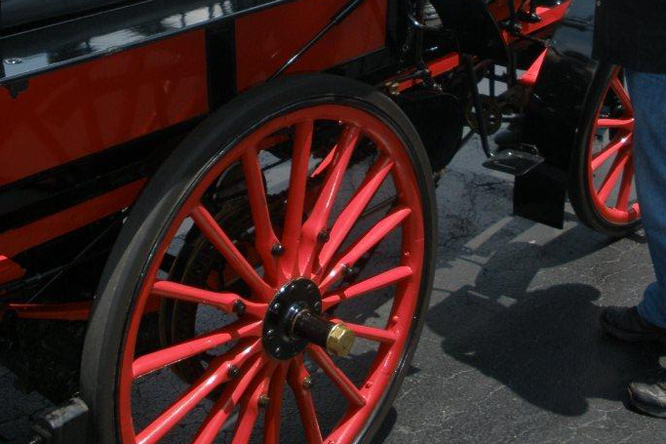
Panhard et Levassor, Type M2F 6hp Wagonette, Florida

Also known as the front (engine) rear (wheel) drive (FR) layout would be the mainstay of motor vehicle production up until the 1960’s and 70’s when front engine front wheel drive (FF) increasingly came to the fore in passenger vehicle production.

Panhard et Levassor, Type M2F 6hp Wagonette, Florida

Interestingly the M2F derived from the initial second Panhard et Levassor had the radiator mounted in the back a good place to put such a fragile object, given the poor state of the roads, home to plenty of stones and rocks which could easily damage it.

My thanks to John Aibel for kindly sharing today’s photographs.

Thanks for joining me on this “Systéme Panard” edition of “Gettin’ a li’l psycho on tyres” I hope you will join me again tomorrow, when I’ll be looking at some of the high lights of Autosport International. Don’t forget to come back now !

Brighton Speed Trials Under Threat of Permanent Cancellation !

In their infinite wisdom, Brighton & Hove City Council are seeking to ban the Brighton Speed Trials from 2014.

If you care about speed and or motorsport history, please sign this linked petition to save Brighton Speed Trials in 2014 and beyond.

It’s a faf to Register before signing, but relatively painless compared to loosing the event which has been run with few interruptions since 1905.

You do not need to be resident in Brighton or even the UK to sign.

Share

Twin I Beam Flex-O-Matic – Ford F-Series Sport Custom

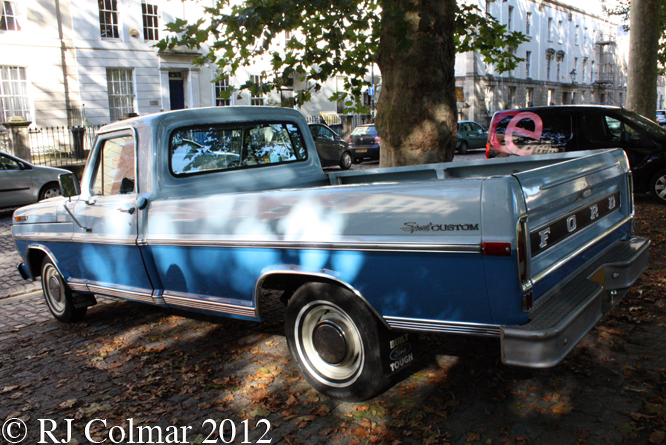
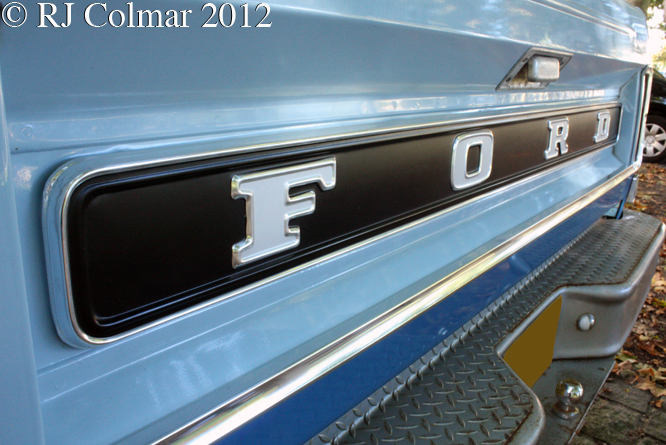
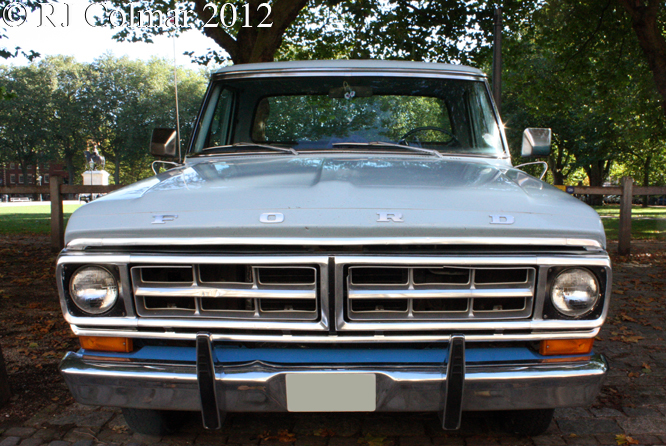
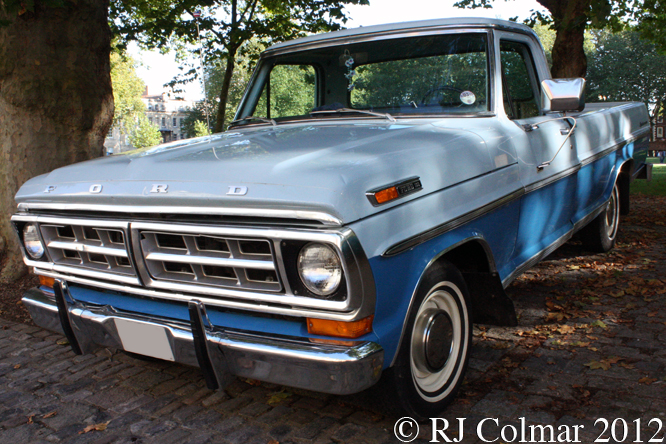
The fifth generation, US built, Ford F-Series pickups were built from 1967 to 1972, Brazilian versions were built from 1971 through 1992. A face lifted F-Series with a new grill appeared in 1970 and today’s featured ’71 Custom Sport version had further minor grill changes.

Ford Sport Custom, Avenue Drivers Club, Queen Square Bristol

’71 F-Series pick ups also featured a new steering wheel design, colour options and an AM/FM radio option.

Ford Sport Custom, Avenue Drivers Club, Queen Square Bristol

Ford marketed the ’71 F-Series on the strength of “Better ideas” which made “Ford Pickups work like a truck” and “ride like a car”.

Ford Sport Custom, Avenue Drivers Club, Queen Square Bristol

Better idea’s also included independent front “Twin I-Beam” suspension, first seen in 1965, which dramatically improved the handling over the pre 65’s solid front axle suspension, and dramatically increased the appeal of the F-series beyond the traditional agricultural and building trades communities.

Ford Sport Custom, Avenue Drivers Club, Queen Square Bristol

The rear suspension was known as “Flex-O-Matic” in Ford’s marketing literature, this appears to be a regular solid rear axle and leaf spring set up with a rubber pad twixt the rear leaf springs and a shackle attached to the body which acts as a shock absorber on any upward movement of the axle.

Ford Sport Custom, Avenue Drivers Club, Queen Square Bristol

The Twin-I-Beam and Flex-O-matic suspension are the bain of ‘Rodders’ lives because the front cannot be lowered without adversely affecting the geometry of the front wheels leaving them with too much negative camber, and the rubber pad and shackle interfere with the lowering of the rear suspension.

The Sport Custom seen in these photographs at an Avenue Drivers Club meeting is powered by a 215 hp 5.9 litre / 360 cui FE V8 motor.

Thanks for joining me on this “Twin I Beam Flex-O-Matic” edition of “Gettin’ a li’l psycho on tyres”, I hope you’ll join me again tomorrow when I be looking at a vehicle that appears to define the term “horseless carriage”. Don’t forget to come back now !

Share

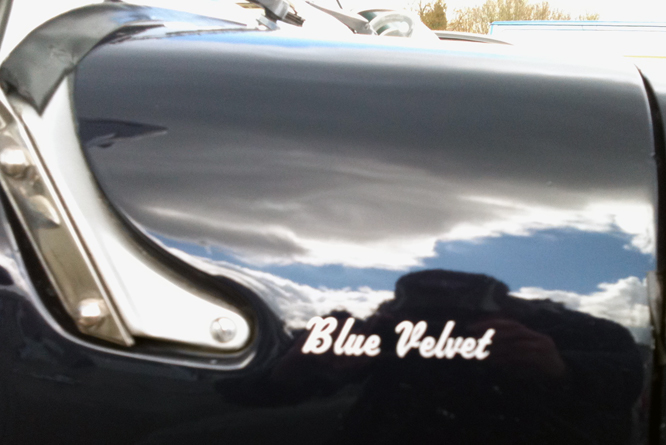
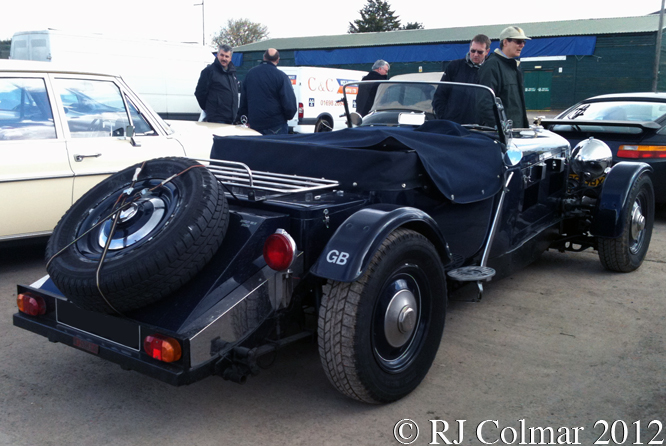
Blue Velvet – Bentley Mk VI Special

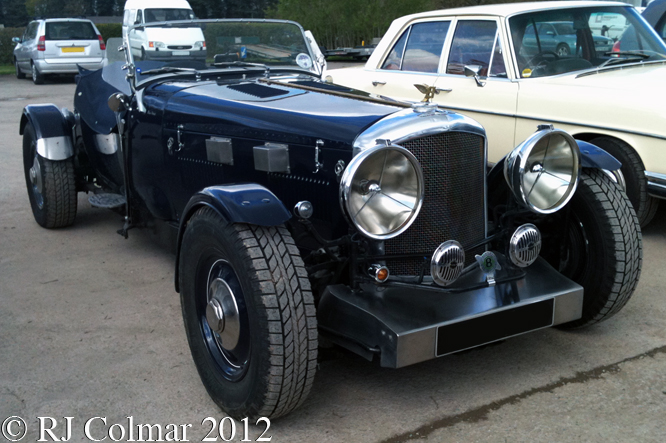
In May 1946 Rolls Royce, owners of Bentley, announced that there subsidiary would be making an all new model known as the Mk VI standard steel sports saloon which would mark a break in several production traditions but which would maintain it’s air of exclusivity by becoming the the most expensive production car and the worlds fastest 4/5 seat saloon.

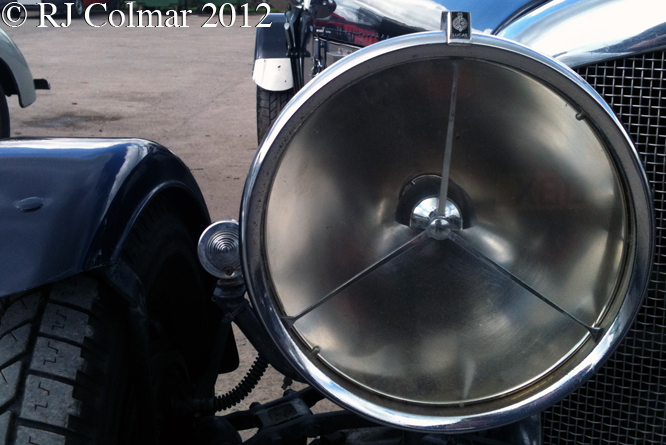
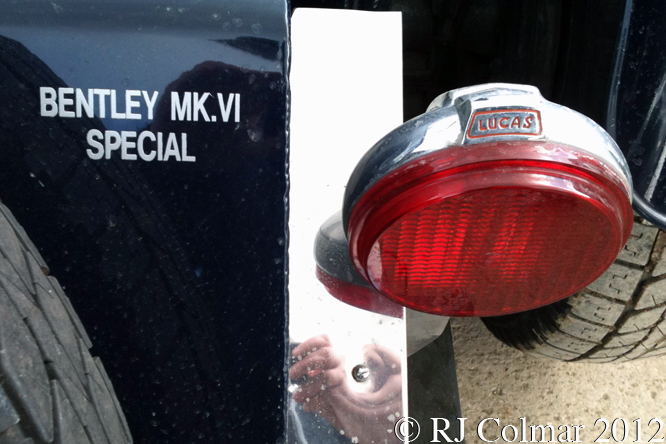
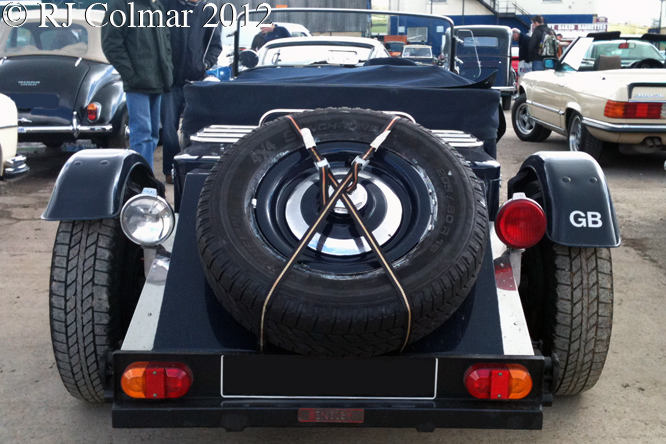
Bentley Mk VI Special, Blue Velvet, Bristol Classic Car Show, Shepton Mallet

The novel feature for the marque and indeed the marques owners was the steel body, complete with sliding sunroof manufactured by Pressed Steel Ltd of Coventry which meant a Bentley no longer had to be sent to an independent coach works for a bespoke body before it was sold although that was an option pursued by around 20% of Mk VI customers between 1946 and 1952.

Bentley Mk VI Special, Blue Velvet, Bristol Classic Car Show, Shepton Mallet

Initially from 1946 to to 1951 these cars were fitted with uprated straight F-head 6 cylinder 4.257 litre / 259 cui of Rolls Royce origin but with Bentley rocker covers. 4 1/4 litre engines were replaced by 4.566 litre / 278 cui 4 1/2 litre motors featuring twin exhausts in 1951.

Bentley Mk VI Special, Blue Velvet, Bristol Classic Car Show, Shepton Mallet

Rolls Royce never gave away hp figures for it’s motors, but a contemporary report of a vehicle powered by the earlier motor related that top gear provided “flexibility down to 6 mph” and could “climb a hill of 1 in 9 maximum gradient, complicated by bends. A vehicle tested with the later motor was independently tested from rest to 60 mph in 15 seconds with a top speed of 100 mph.

Bentley Mk VI Special, Blue Velvet, Bristol Classic Car Show, Shepton Mallet

To illustrate just how much demand there was for the Bentley Mk VI standard steel sports saloon a pre owned vehicle report in 1951 observed that a three year old 4 1/4 litre Mk VI with under 10,500 miles on the clock sold brand new for £4038 in 1948 and in 1951 was being offered for sale at £5,335, such was the quality of the car and the post ’39 – ’45 shortage of vehicles in the UK.

Bentley Mk VI Special, Blue Velvet, Bristol Classic Car Show, Shepton Mallet

Over time the Mk VI’s Achilles Heel manifested itself when the quality of the steels used in the bodywork, proscribed by government edict in the post war aftermath, showed itself to be inferior. As a consequence many surviving Mk VI Bentley’s, like Blue Velvet seen here at the Bristol Classic Car Show, have been fitted with cheerful one off bodies displaying varying degrees of professionalism in their finish. With the loss of the weight of the original steel body one would imagine the performance while accelerating to be quite exhilarating.

Bentley Mk VI Special, Blue Velvet, Bristol Classic Car Show, Shepton Mallet

In all 4000 4 1/4 litre Mk VI’s like Blue Velvet were built with standard steel sports saloon bodies from 1946 to 1951 with an additional 832 being fitted with bespoke bodies from independent coach builders.

Thanks for joining me on this “Blue Velvet” edition of “Gettin’ a li’l psycho on tyres”, I hope you will join me again tomorrow when I’ll be looking at a sports pick up from Ford. Don’t forget to come back now !

Brighton Speed Trials Under Threat of Permanent Cancellation !

In their infinite wisdom, Brighton & Hove City Council are seeking to ban the Brighton Speed Trials from 2014.

If you care about speed and or motorsport history, please sign this linked petition to save Brighton Speed Trials in 2014 and beyond.

It’s a faf to Register before signing, but relatively painless compared to loosing the event which has been run with few interruptions since 1905.

You do not need to be resident in Brighton or even the UK to sign.
More on Brighton Speed Trials on this link.

Thanks and please spread the word through whatever social media you have at your disposal.

A tweet on the Save Brighton Speed Trials site this morning says that so far over 10,000 signatures have been received, thanks if you have responded, if not please do so you have until January 23rd, it would be nice to receive 100,000 signatures world wide.

Share

The Lotus Clan – Clan Crusader

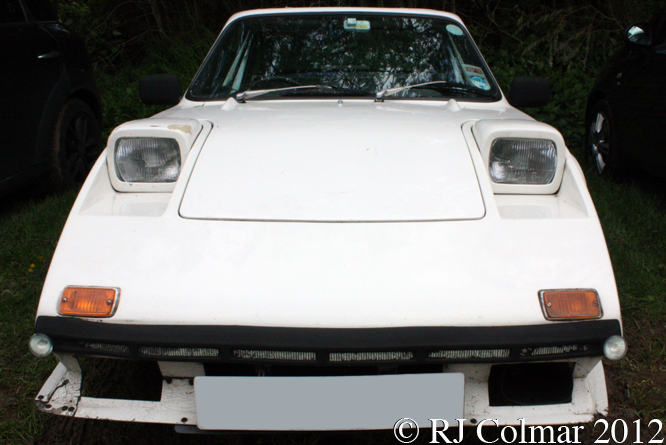
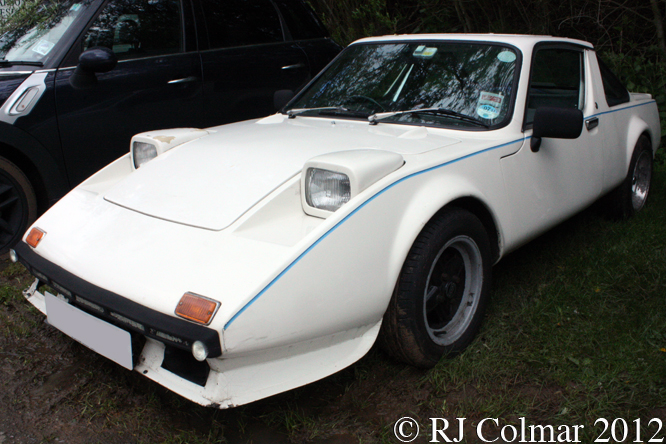
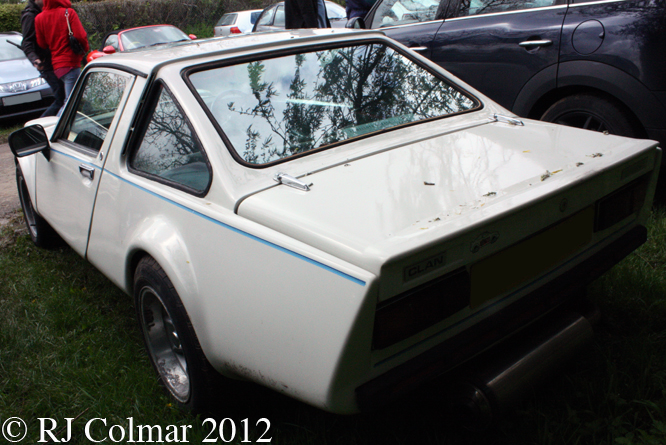
In the late 1960’s early 1970’s at least three sports cars went to market using the all aluminium Coventry Climax derived Hillman Imp / Singer Chamois engine including the Ginetta G15, Davrian Imp and today’s featured vehicle the Clan Crusader.

In 1969 three Lotus Engineers, Paul Haussauer, John Frayling and Brian Luff left the company after an unspecified disagreement with Colin Chapman and founded the Clan Motor Company in Washington, Co Durham, England.

Clan Crusader, Castle Combe

Their one and only model styled by Frayling, employed a steel reinforced monocoque designed by Luff with Imp / Chamois suspension. The handling of the Clan, with a top speed of 100 mph, was said to be superior to that of both the cheaper Ginetta G15 and Davrian Imp.

From late 1971 until the introduction of crippling taxes the car was manufactured in self build or complete forms, with the self builds dropped the Crusader successfully completed independent crash tests in mid 1972. By the end of 1973 production ceased with over 300 complete cars and kits built, despite a healthy order book, due to component supply and financial difficulties.

Clan Crusader, Castle Combe

In 1974 much of the Clan stock and body moulds were shipped to Cyprus, however due to the Turkish military invasion later the same year production never got underway on the Mediterranean island.

Brian Luff made a new set of moulds from an existing car and built some more Crusaders mostly for competition use. Crusaders competition successes included a second place on it’s debut the 1972 Manx International Rally with Andy Dawson and John Foden, 1972 Tour of Mull Rally win for Alan Conley and Crawford Dunn along with two production car trials championships for Mike Hinde in 1973 and Bill Moffat in 1993.

Clan Crusader, Castle Combe

After acquiring Luff’s moulds in 1982 Peter McCandless founded Clan Cars Ltd in Northern Ireland and recommenced production of the a variant of the Crusader now simply known as the Clan which featured a new nose with pop up head lights. Around 120 so called Irish Clans were built for the road and a further 10 for competition.

A Clan Clover model, powered by an Alfa Romeo engine mounted ahead of the rear axle was also built, more than 20 of these cars are thought to have been built before the receivers were called in to Clan Cars in 1987.

Today’s featured 1972 Crusader was seen at Castle Combe a couple of years ago.

Thanks for joining me on this “Lotus Clan” edition of “Gettin’ a li’l psycho on tyres” I hope you will join me again tomorrow when I’ll be looking at a 1948 Bentley called Blue Velvet. Don’t forget to come back now !

Share

What Goes Around (Slight Reprise) – Ferrari 250 MM Vignale #0260MM

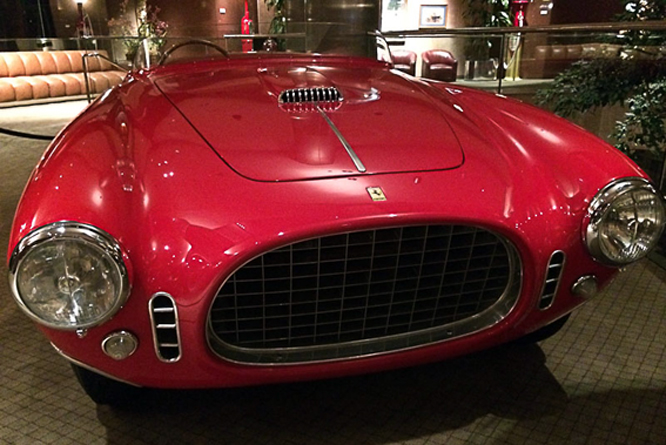
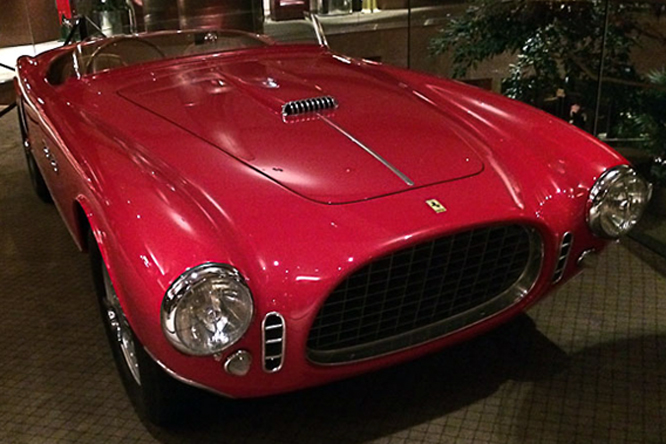
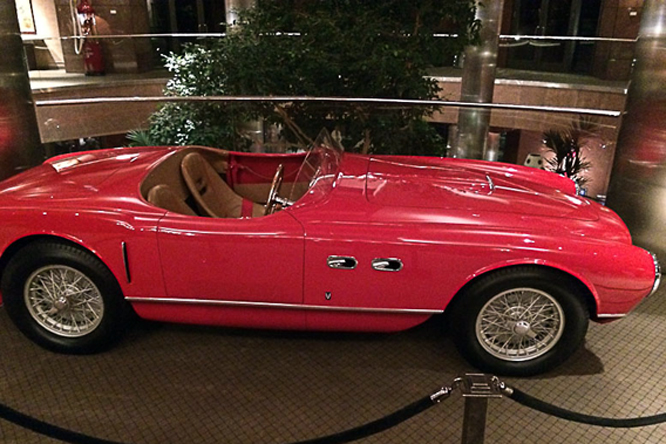
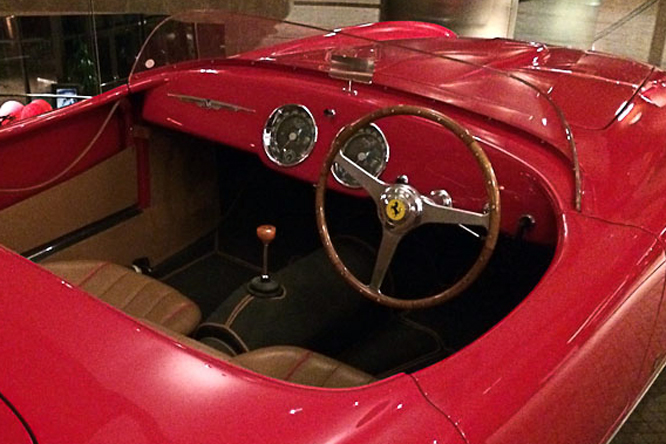
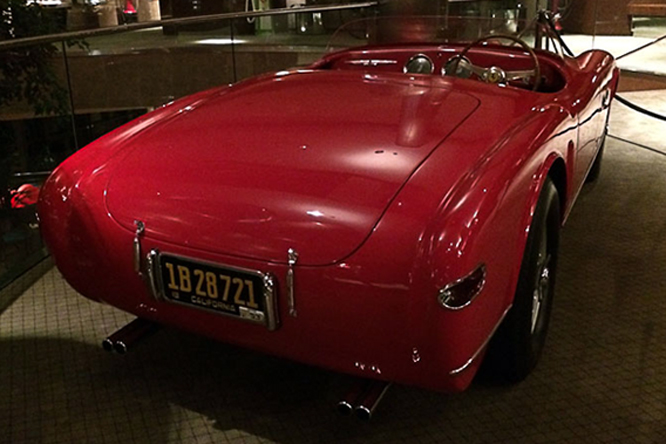
I first looked at today’s featured Vignale bodied Ferrari 250 MM #0260MM in June 2011, but since Geoffrey Horton was kind enough to send me some more recent photo’s of it I can indulge you with a few snippets of additional information that have come to light.

Ferrari 250 MM Vignale, Blackhawk Museum

Phil Hill sold the car after he had raced it 5 times from new to Charles Brown of Monroe Los Angeles. While the car was in Charlies care he entered it for William Jarnigan to drive in a couple of races run at Bergstrom Air Force Base (AFB) in March 1954, William repaid his owners faith with 2 class wins coming 4th overall on both occasions.

Ferrari 250 MM Vignale, Blackhawk Museum

In July 1954 Charles finished 3rd in class at Offutt AFB coming home 8th overall. In October 1954 the motor was recorded as having been rebuilt at the Ferrari factory.

Ferrari 250 MM Vignale, Blackhawk Museum

The next recorded owner is Ernie Miller of New Orleans, Los Angeles who is known to have raced the car on at least one occasion in the Hammond Grand Prix where Ernie is recorded as having finished 3rd overall in what is thought to be #0260MM’s last in period competitive appearance.

Ferrari 250 MM Vignale, Blackhawk Museum

Allen S Bishop is credited with restoring #0260MM between 1972 and 1975, after which original owner Phil Hill was reunited with the car for a classic race at Monterey in 1984 from which he car was retired.

Ferrari 250 MM Vignale, Blackhawk Museum

It is believed that #0260MM fetched US$ 1.2 million from an anonymous purchaser in 1995. Phil Hill was reunited again with the car at Monterey in August 2001, though no race results for that particular reunion appear to have been recorded.

My thanks to Geoffrey Horton for sharing these photographs taken at the Blackhawk Museum late last year.

Thanks for joining me on this “What Goes Around (Slight Reprise)” edition of “Gettin’ a li’l psycho on tyres”, I hope you will join me again tomorrow for a look at a Crusader built in Washington…. Co Durham. Don’t forget to come back now !

Share

Yellow Cab With Disco Lights – Plymouth Caravelle Saloon

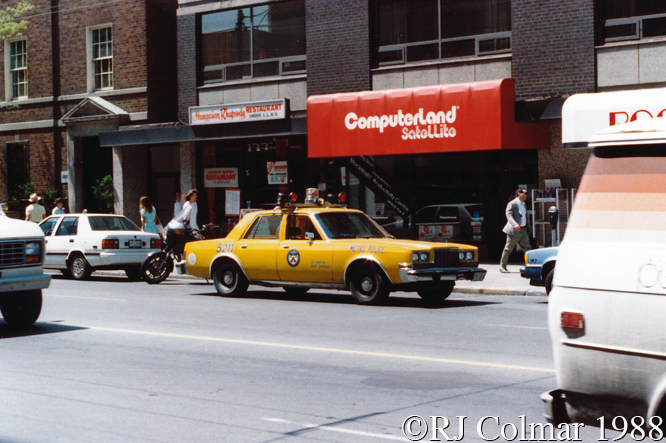
As my host Geoff, my girl and I were leaving a Toronto eatery one day we decided to take a cab to see friends who lived on the edge of the city, as I stepped into the street I saw a yellow cab on the far side of the street. I turned to Geoff and pointed at the object of what I thought was our desire and suggested, “Looks like the cab company is one step ahead of us”.

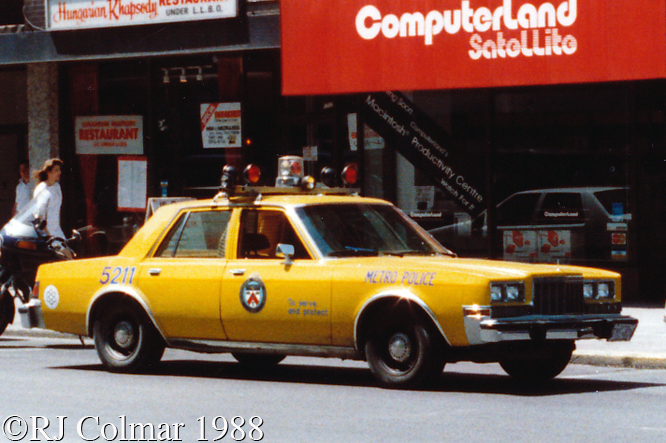
Plymouth Caravelle Salon, Toronto

Geoff rolled his eye’s saying “You can always tell a tourist in Toronto”, “How is that ?” I asked, “always ready to jump into the first cab with disco lights, take another look at the cab” he instructed.

Plymouth Caravelle Salon, Toronto

Sure enough the cab really did have disco lights and the cab company was called Metro Police. I turned back to Geoff and asked “I guess the ‘To serve’ part of the ‘To Serve and Protect’ strap line does not include taking us to where we are headed then ?”, to which Geoff replied “we could try and verify that, but it’s probably best for Limey’s not to mess with armed law enforcement officers.”

Turns out that from the 1960’s to 1986 Toronto Metro Police patrol cars were all painted yellow after which they were painted white the red and blue accents.

The car seen here in 1988 is a rear wheel drive Plymouth Caravelle Salon, a Canadian market only model name for the more familiar US market third generation Plymouth Gran Fury manufactured from 1982 to 1989.

Not to be confused with either the similar looking first generation ’81 – ’89 Lincoln Town Car or the front wheel drive ’83 – ’88 E-body Plymouth Caravelle.

Thanks for joining me on this “Yellow Cab With Disco Lights” edition of “Gettin’ a li’l psycho on tyres”, I hope you will join me again for Ferrari tomorrow. Don’t for get to come back now !

Brighton Speed Trials Under Threat of Permanent Cancellation !

In their infinite wisdom, Brighton & Hove City Council are seeking to ban the Brighton Speed Trials from 2014.

If you care about speed and or motorsport history, please sign this linked petition to save Brighton Speed Trials in 2014 and beyond.

It’s a faf to Register before signing, but relatively painless compared to loosing the event which has been run with few interruptions since 1905.

You do not need to be resident in Brighton or even the UK to sign.
More on Brighton Speed Trials on this link.

Thanks and please spread the word through whatever social media you have at your disposal.

Share

First Wooden Spoon – Caterham Renault CT03

In 2010 two budget Airline moguls entered Formula One teams for the first time, one was Malaysian Tony Fernandes who headed a consortium under the Lotus Racing banner with the blessing of Lotus owners Proton and the other was Richard Branson who entered his team under the Virgin Racing banner.

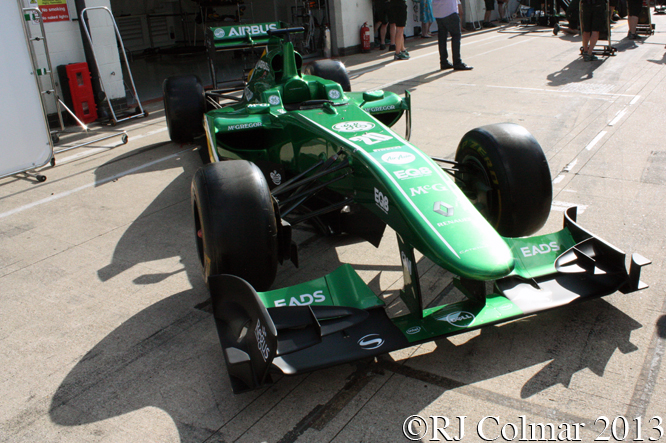
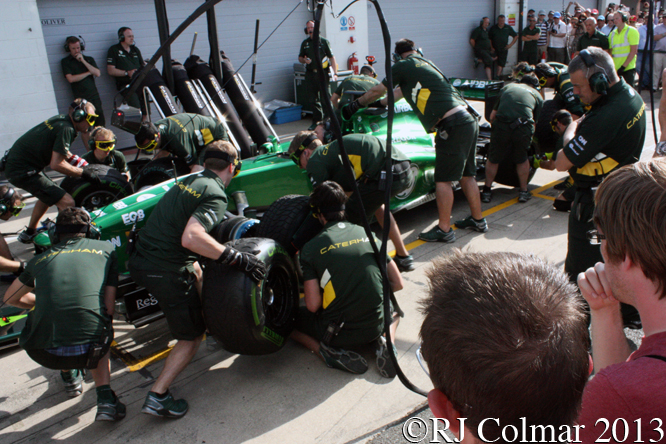
Caterham Renault CT03, Young Driver Test, Silverstone

At the beginning to the 2010 season Fernandes and Branson made a bet that which ever owner finished lowest in the Constructors Championship would join the aircrew of the others airline for a day dressed as a hostess. Richard lost the bet and last year finally got togged up as an Air Aisa Stewardess.

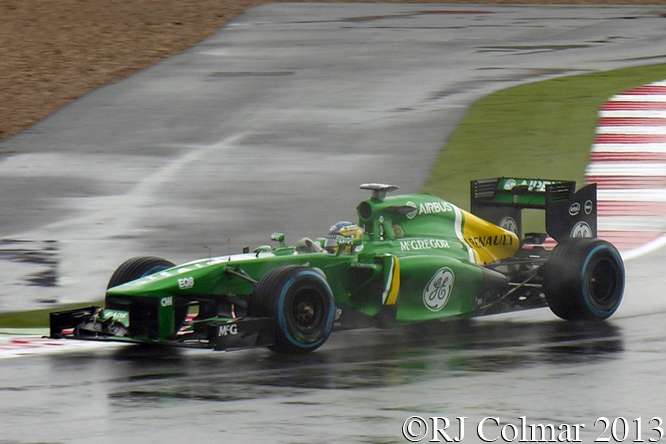
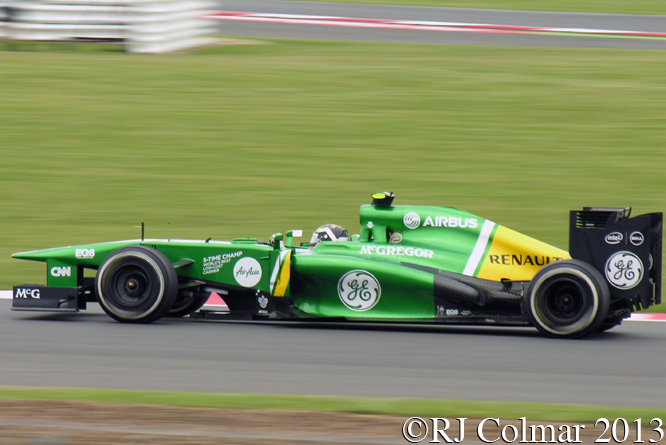
Pic, Caterham Renault CT03, British Grand Prix P1, Silverstone

Fast forward to 2013 and Fernandes team is still on the grid having changed it’s name to Team Lotus in 2011, and then to Caterham in 2012 after Fernandes bought the Caterham Cars company and Proton let the Genii Capital led consortium which runs the old Renault Team use the Lotus name.

Caterham Renault CT03, Young Driver Test, Silverstone

In 2011 Tony’s team managed to secure a supply of Renault motors as used by Red Bull, and the following season Williams in favour of the Cosworth units they had used in their first season. However they finished both the 2011 and 2012 seasons 10th in the championship standings on best finishes, having failed to score a world championship point in their entire history.

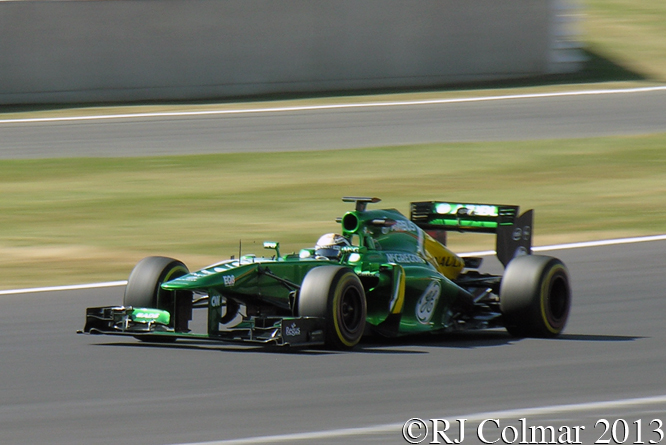
van der Garde, Caterham Renault CT03, British Grand Prix P1, Silverstone

Mark Smith was responsible for the design of the Caterham Renault CT03 used by the team in 2013 which was not too dissimilar to the 2012 CT01 designed by Mike Gascoyne.

van der Garde, Caterham Renault CT03, Young Driver Test, Silverstone

Frenchman Charles Pic, see second photo, moved over to Caterham from Richard Branson’s old team, rebranded Marussia in 2012, to be joined by Dutchman Giedio van der Garde, seen above for the driving duties.

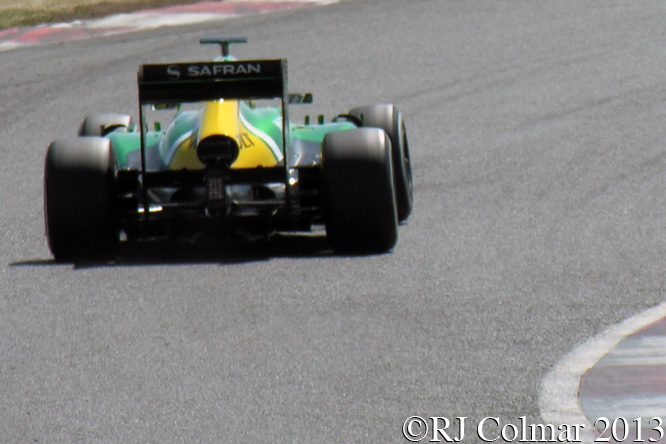
Caterham Renault CT03, Young Driver Test, Silverstone

The Caterham team’s highlights in 2013 season were two 14th place finishes at the Hungarian Grand Prix for Giedo and at the Korean Grand Prix for Charles.

Despite not having the slowest car, Giedo qualified a team best ever 14th in Belgium, the Caterham team could not better the 13th place finish recorded by Jules Bianchi driving a Marussia in the 2013 Malasian Grand Prix and so Caterham finished the 2013 season last in the constructors championship with their first wooden spoon.

For 2014 Caterham will again be relying on Renault for their turbocharged primary motors but have yet to make any announcement regarding their drivers at least one of whom is expected to be a well known “star”. You can stay abreast of developments at Caterham on their official website linked here.

Thanks for joining me on this “First Wooden Spoon” edition of “Gettin a li’l psycho on tyres”, I hope you will join me again tomorrow on the streets of Toronto. Don’t forget to came back now !

Share