Tag Archives: Bristol

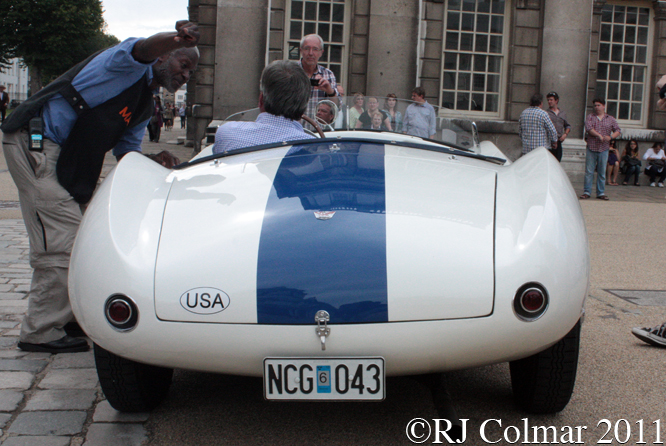
Wacky and Bertone – Arnolt Bristol Bolide #404X3086

In 1906 Stanley Harold Aranoff was born into a family of bookbinders living in Chicago. After studying engineering he changed his name to Arnolt as part of an unsuccessful bid to break into the motor industry in 1936.
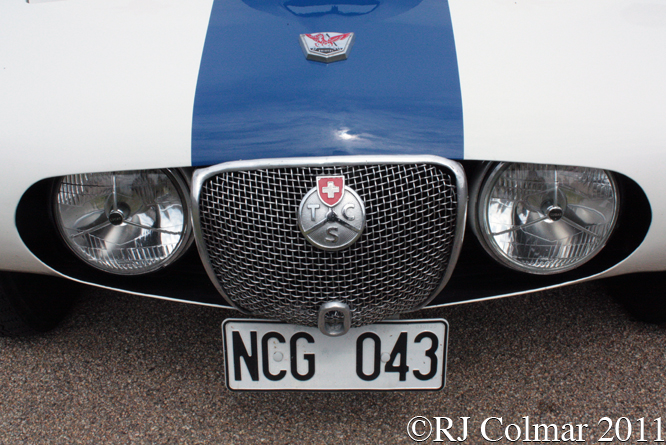
Arnolt Bristol Bolide, Bristol Concours d'Elegance, Greenwich

While looking for business opportunities he bought the rights to the Sea Mite Marine engine which he attached to a 13 ft rowing boat and sailed from St Joseph in Michigan across Lake Michigan to Chicago as part of a publicity stunt which earned him his “Wacky” nickname.
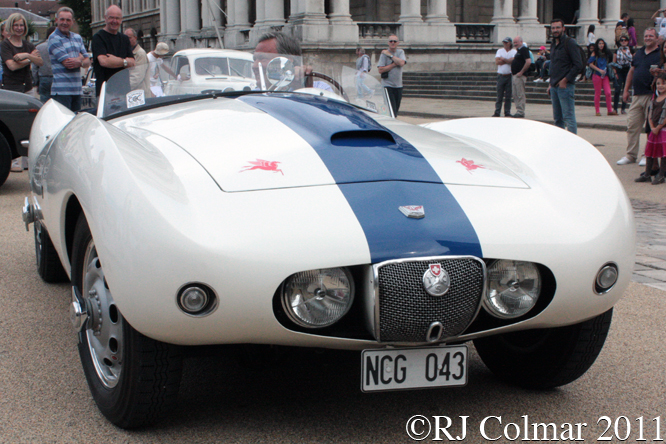
Arnolt Bristol Bolide, Bristol Concours d'Elegance, Greenwich

The Sea Mite proved a wise purchase after “Wacky” Arnolt won a contract to supply the motors to the US NAVY for their small vessels during the ’39-’45 war.
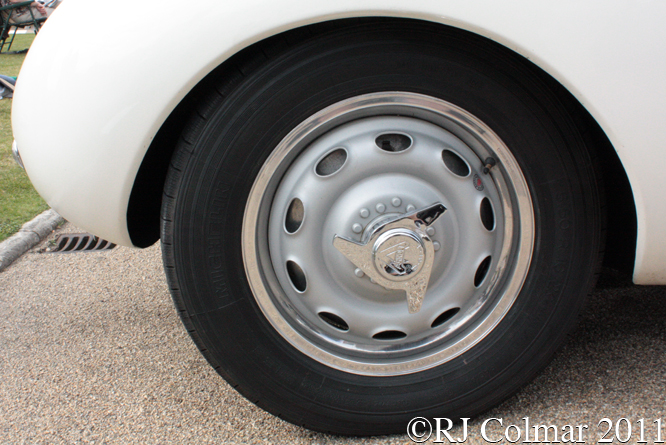
Arnolt Bristol Bolide, Bristol Concours d'Elegance, Greenwich

After the war “Wacky” held franchises to distribute MG, Riley and Morris cars and at the 1952 Turin motor show a MG TD with bodywork designed by Franco Scaglione form the financially struggling Bertone Coachworks caught his eye.
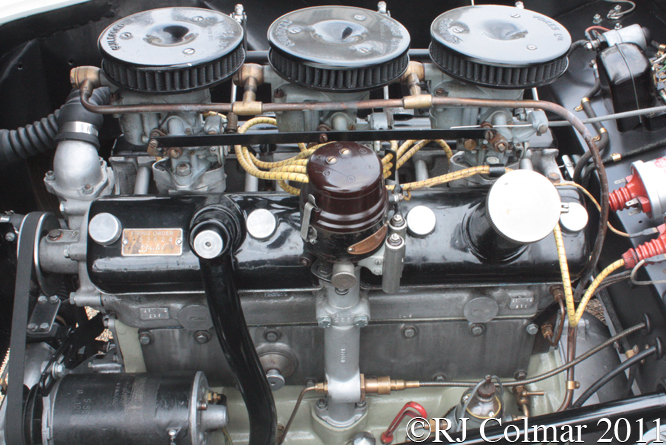
Arnolt Bristol Bolide, Bristol Concours d'Elegance, Greenwich

Wacky immediately placed an order for two hundred of the distinctive Bertone MG’s and Mr Bertone apparently nearly fainted. Only 103 Arnolt MG’s were built because MG switched production to the new TF model.
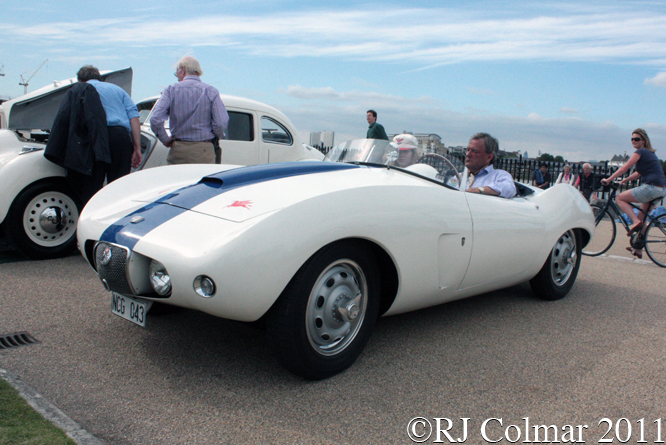
Arnolt Bristol Bolide, Bristol Concours d'Elegance, Greenwich

Impressed with the sales of the Bertone MG Arnolt, “Wacky” commissioned Bertone to develop a body for an Aston Martin and a total of eight these cars are thought to have been built by which time Aston Martin has long pulled the plug on the project.
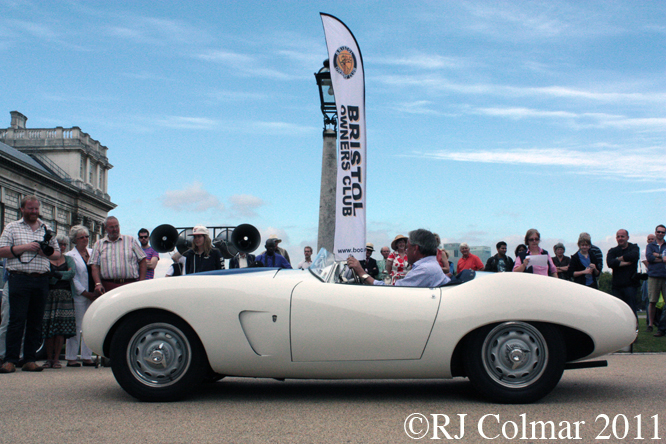
Arnolt Bristol Bolide, Bristol Concours d'Elegance, Greenwich

Wacky then commissioned a one off Bertone Bentley for his personal use before entering an agreement with Bristol to supply 200 type 404 chassis with 125 hp six cylinder Bristol motors which would then be shipped to Bertone for the bodywork as seen on today’s featured 1954 example chassis #404X3086.
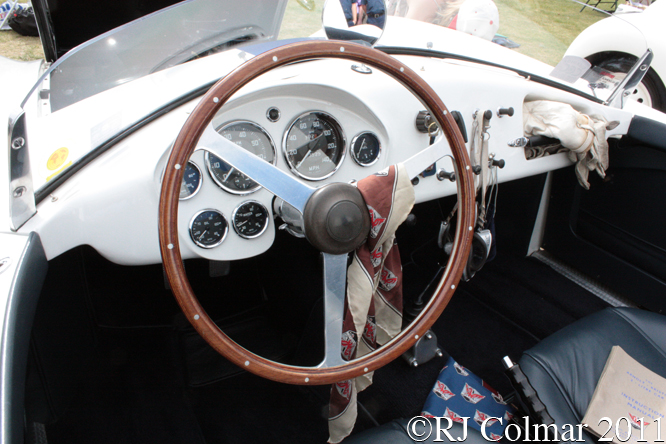
Arnolt Bristol Bolide, Bristol Concours d'Elegance, Greenwich

Today’s featured car, which is seen at the 2012 Bristol Concours d’Elegance at Greenwich, was the original European demonstrator and was displayed at the 1954 Motor Shows held in Geneva, Turin, Brussels, Munich, and finally Paris where it was sold to an American owner.
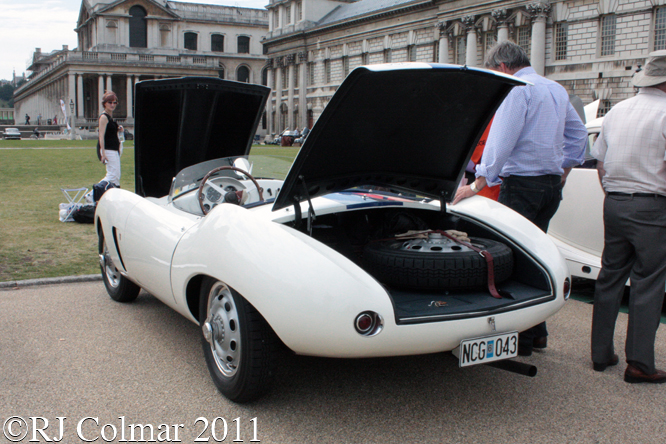
Arnolt Bristol Bolide, Bristol Concours d'Elegance, Greenwich

To help market the Arnolt Bristol “Wacky” entered three cars in the 1955 Sebring 12 hours and they finished 1st, 2nd and 4th in the 2 litre / 122 cui class with John Panks and Ernie Erickson sharing the honours. The following year the team finished second in the Sebring 12 hours to a Ferrari and in 1957 the team withdrew from the race after team member Bob Goldrich was killed during the race.
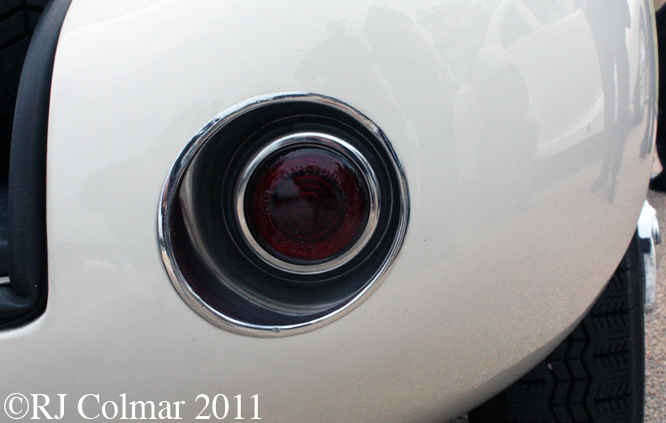
Arnolt Bristol Bolide, Bristol Concours d'Elegance, Greenwich

In 1960 Max Goldman and Ralph Durbin shared a second Sebring 12 hour class win driving an Arnolt Bristol which finished 14th overall. Other class and race winners driving Arnolt Bristol’s included team owner Wacky himself, Ed Rahal, Carl Grassman and Tom Payne.
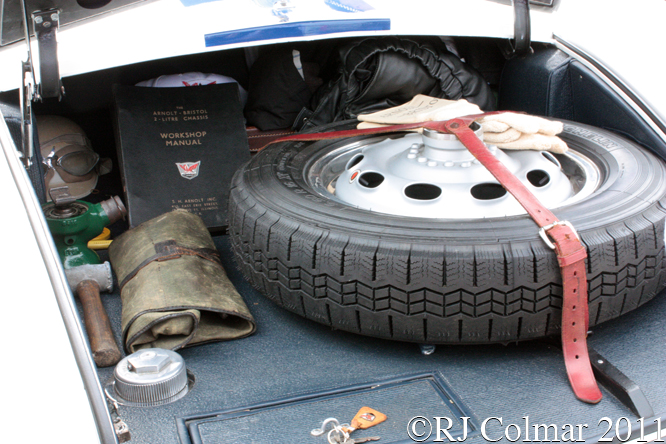
Arnolt Bristol Bolide, Bristol Concours d'Elegance, Greenwich

Production of the Arnolt Bristol is thought to have come to an end in 1959 with 142 vehicles built, of those 12 were destroyed on Wacky’s premises in a warehouse fire.
Arnolt Bristol Bolide, Bristol Concours d'Elegance, Greenwich

Three versions of the Arnolt Bristol were built striped down Bolide like the one seen here, several Bolides also had aluminium bodies, Deluxe Roadster with Connolly hide seats full windscreen and full weather protection and a couple of coupes. At least one Arnolt Bristol is known to have been sold new as late as 1966.

Thanks for joining me on this Wacky and Bertone edition of “Gettin’ a li’l psycho on tyres” I hope you will join me again tomorrow when I’ll be looking at the first of this months Indy Cars. Don’t forget to come back now !

Share

Razzle Dazzle – Mazda MX5

Hard to believe that the Mazda MX5 celebrates it’s 25 anniversary this year, but it’s enduring qualities are no accident the idea behind the MX5 was first discussed in 1976 by Motor Trend journalist Bob Hall and Mazda’s Research and development heads Kenichi Yamamoto and Gai Arai.

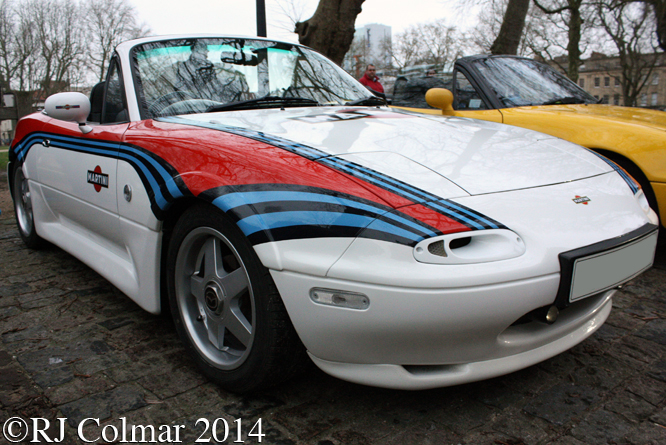
Mazda MX5, Avenue Drivers Club, Queen Sq, Bristol

13 years later the lightweight sports car which took it’s styling queues from the 1960’s icon the Lotus Elan was launched and many accolades and three generations of MX5 later over 900,000 units have been sold to make the model the most successful sports car of all time.

Mazda MX5, Avenue Drivers Club, Queen Sq, Bristol

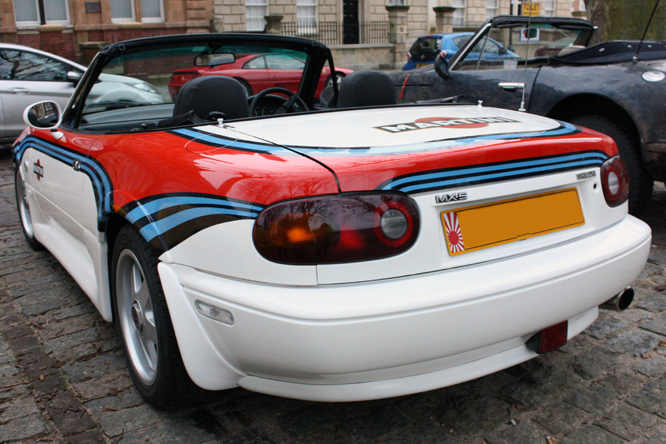
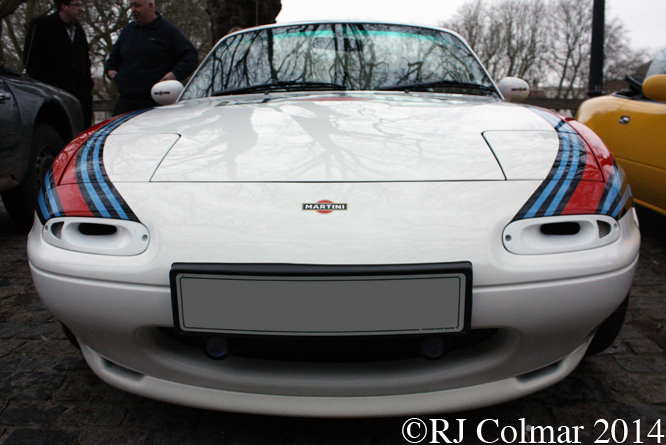
Today’s featured first generation NA model, distinguished by the pop lights, was built in 1993. This car is powered by a 1.6 litre / 98 cui motor twin cam motor which produces 115 hp.

Mazda MX5, Avenue Drivers Club, Queen Sq, Bristol

The owner of this car used to own a Mazda MX5 Le Mans Special which was painted in the Renown colours which were carried by the rotary powered Mazda 787B that won the 1991 Le Mans 24 hours.

Mazda MX5, Avenue Drivers Club, Queen Sq, Bristol

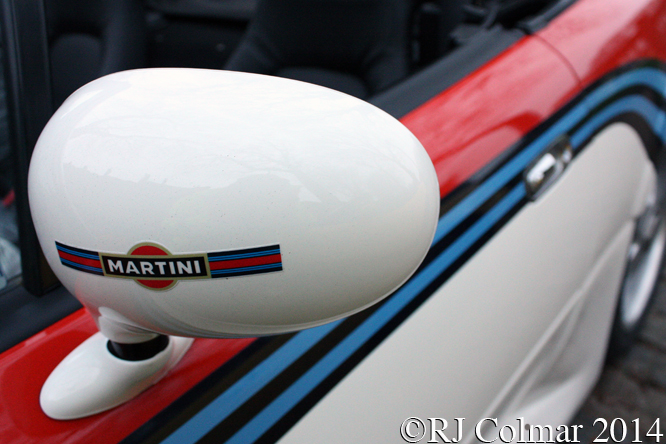
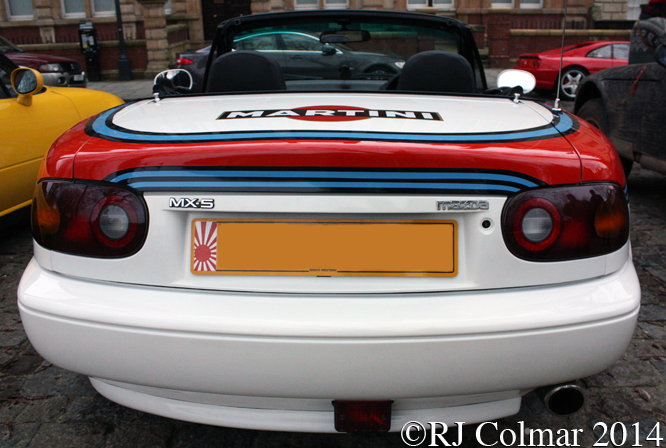
Having bought a white car the new owner thought it would be cool to find a paint shop to put some Martini® stripes on it and when he eventually found someone to take on the job he was not disappointed, of course he now has extra kudos because Martini® have returned to Formula One™ with Williams Grand Prix Engineering after a 35 year absence.

Mazda MX5, Avenue Drivers Club, Queen Sq, Bristol

The original NA MX5 could reach 60mph in 8.1 seconds and has a top speed of 126 mph, Japanese market NA MX5’s, known as Eunos Roadster’s were restricted to 112 mph by the Manufacturer.

Share

Last Finest And Most Exciting – Bristol Fighter

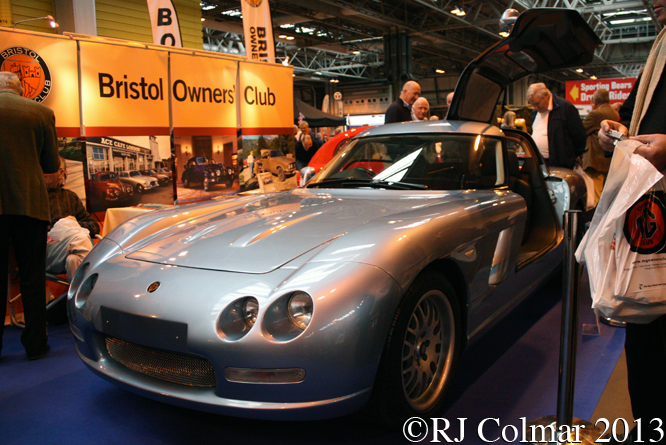
When I got up at some absolutely ungodly, dark and cold, hour last November to join some friends from the Bristol Pegasus Motor Club for a trip to the Classic Motor Show at the NEC in Birmingham the last thing I could have imagined was finding my self sitting at the wheel of a 210 mph car, the last Bristol ever built to boot, taking a selfie, a couple of hours later thanks to the generosity of owner Mr Gibbs that is exactly what happened.

Bristol Fighter, Classic Motor Show, NEC Birmingham

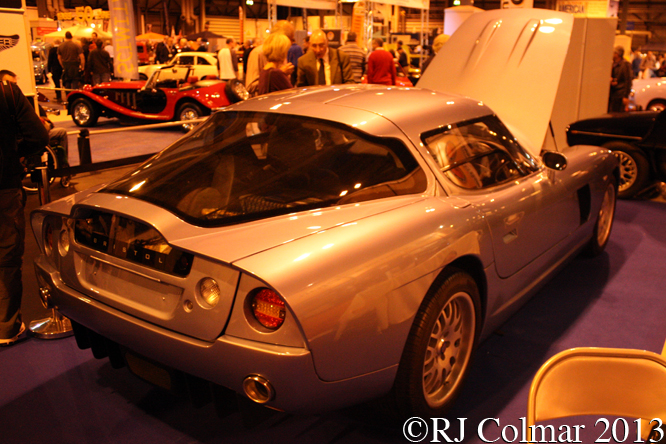
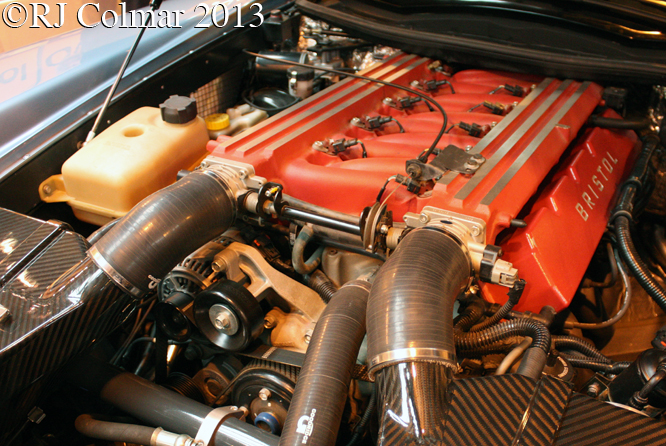
The Bristol Fighter was designed by Max Bostrom, regular GALPOT readers might remember another vehicle from his design portfolio the rumbling Aston Martin AMR 1 Group C Le Mans challenger. The design of the Fighter seems to center on it’s motor which is based on the 8 litre / 487 cui all aluminium Chrysler V10 as used in the Dodge Viper and Dodge Ram SRT-10 pick up.

Bristol Fighter, Classic Motor Show, NEC Birmingham

Fitted with Bristol’s own heads the motor was made available with 525 hp in normally aspirated base form, a 628 hp option was also available which with the effects of ram air when in motion is boosted to 660 hp, and if that was not was not enough in turbocharged from the motor produced 1012 hp to become the second most powerful motor ever offered by a manufacturer second only to the 1046 hp quoted for the SSC Aero.

Bristol Fighter, Classic Motor Show, NEC Birmingham

The standard transmission is a six speed manual and with all the torque from the V10, when Richard Porter tested one for evo magazine in in 2008 he found the motor would pull in sixth gear from as low as 30 mph. A 4 speed automatic was an option with performance being the same regardless of transmission meaning 60 mph could be reached from rest in a claimed 4 seconds with the 525 hp motor.

Bristol Fighter, Classic Motor Show, NEC Birmingham

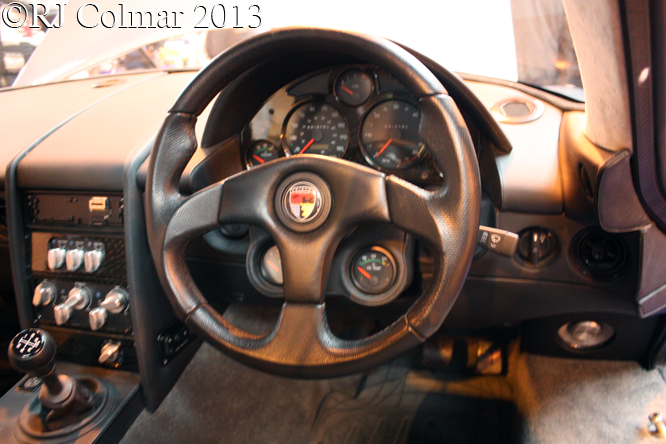
Despite extensive use of aluminium and carbon fiber to save weight and keep the center of gravity than almost every weekend apart from a Ferrari Enzo the interior is completely civilised and decked with finest Wilton carpet over extra thick soundproofing underlays to provide a “perfect environment in which to enjoy the car’s astonishing performance.

Bristol Fighter, Classic Motor Show, NEC Birmingham

At 6′ tall I find many performance vehicles no go area’s, however the Bristol is different it was designed to accommodate individuals between 5′ and 6′ 7″. I can just picture my 5′ 2″ mother loving this car since she recently passed her Institute of Advanced Motorists test. Notice the swicth gear, finest military grade good enough to last the life of the car, just as well since a replacement switch would cost you £60 each in 2008.

Bristol Fighter, Classic Motor Show, NEC Birmingham

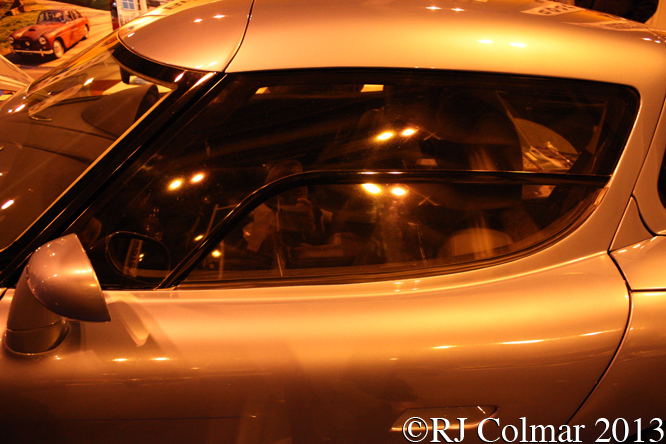
With all of that glass parking should be a piece of cake, no having to open the gull wing doors and getting a mate to talk you in as would be mandatory with some of Marchello Gandini or Pininfarina’s finest designs.

Bristol Fighter, Classic Motor Show, NEC Birmingham

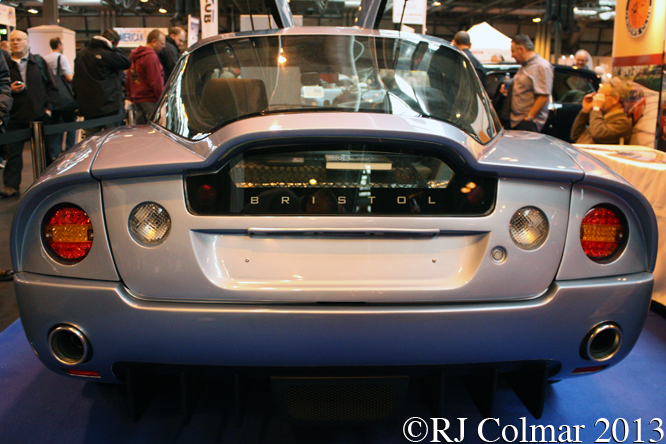
As Bristol said “in a world where cars are styled first and tested for function afterwards the Fighter is again unique”. The 0.28 drag coefficient of the body is class leading, in part because this 210 mph car has no need of wings, Gurney flaps or even venturi because it was designed to set new aerodynamic standards not follow the crowd.

Bristol Fighter, Classic Motor Show, NEC Birmingham

Exact production numbers for the Fighter are hard to come by one source says sixteen Fighters were built while another suggests at least 46 may have been built. What is for sure is that today’s featured car was the last completed Bristol to leave the factory, the owner Mr Gibbs also tells me that one incomplete Fighter left the factory when it closed down in 2011.

In the advertising cody for the Fighter model Bristol claim that it is “Designed according according to engineering and aerodynamic principles, it is intended to represent the finest and most exciting way for two people to travel by road.” One day I’d like to put that to the test, meantime I’d like to thank Mr Gibbs for letting me try his Fighter, the very last complete Bristol to leave the factory, for size.

Now all I have to do is see if I can save my pennies fast than any one else before Mr Gibbs parts with it, did I mention this car which has never been registered is for sale ? It was and if you would like to purchase it get in touch and I’ll gladly pass the message on.

Thanks for joining me on this “Last Finest And Most Exciting” edition of “Gettin’ a li’l psycho on tyres” I hope you will join me again tomorrow. When I’ll be looking at a agricultural super vehicle. Don’t forget to come back now !
Share

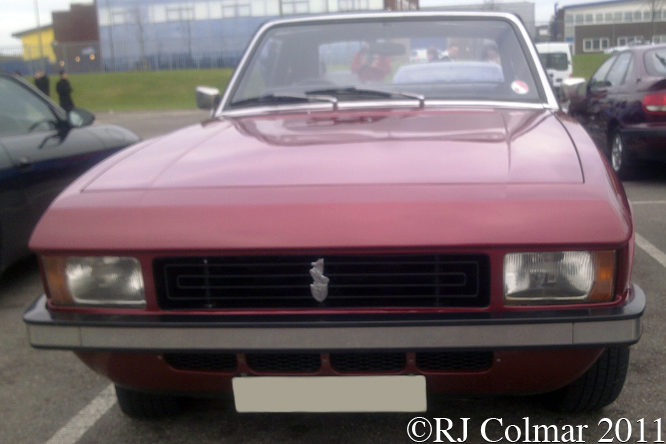
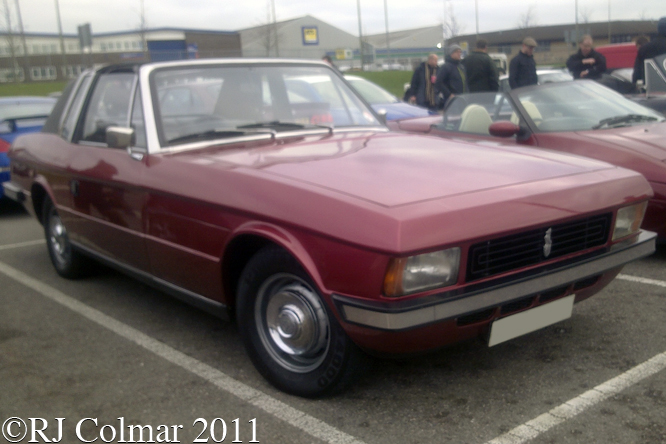
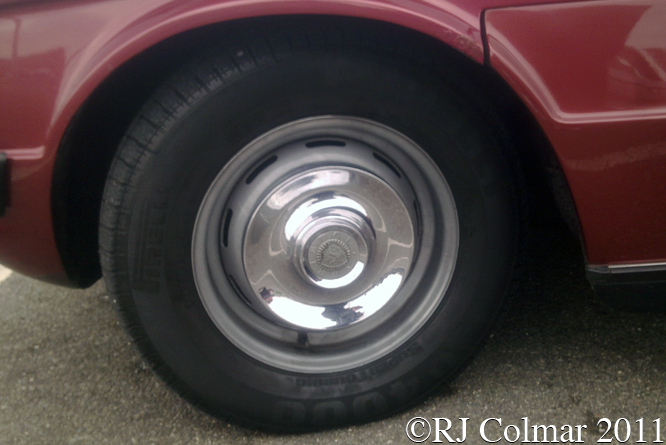
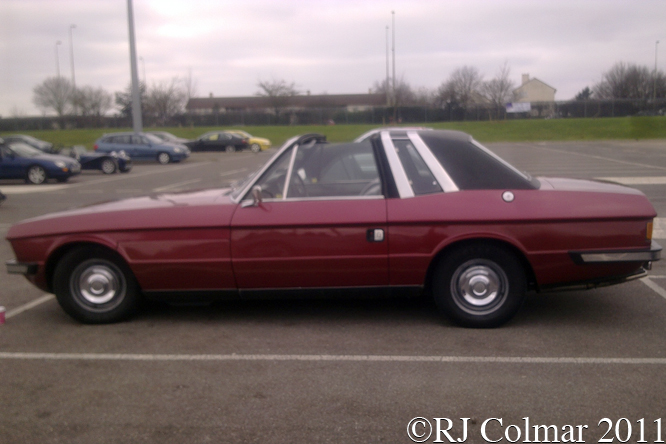
Turbo Mopar Under The Hood – Bristol Brigand

By the early 1980’s the temporary austerity enforced on the global economy by the oil crisis ten years earlier was giving way to a new era of prosperity that would be characterised in the immortalisation of Gordon Gecko in “Wall Street“.

Bristol Brigand, Bristol Classic Car Show, Shepton Mallet

Likewise in the motor trade cars were becoming seemingly exponentially faster thanks to widespread use of turbochargers which had the benefit of boosting horsepower of small motors without the cost of having to develop new large motors, additionally turbochargers could give executives a powerful model with a small motor typically 2 litres / 122 cui without the tax liabilities and inefficiencies of a 3 litre model.

Bristol Brigand, Bristol Classic Car Show, Shepton Mallet

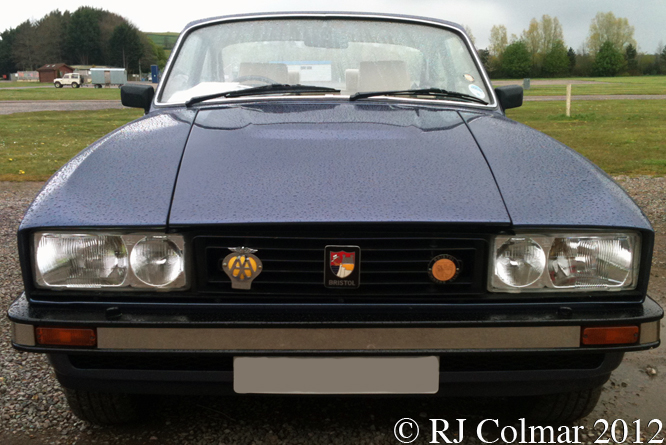
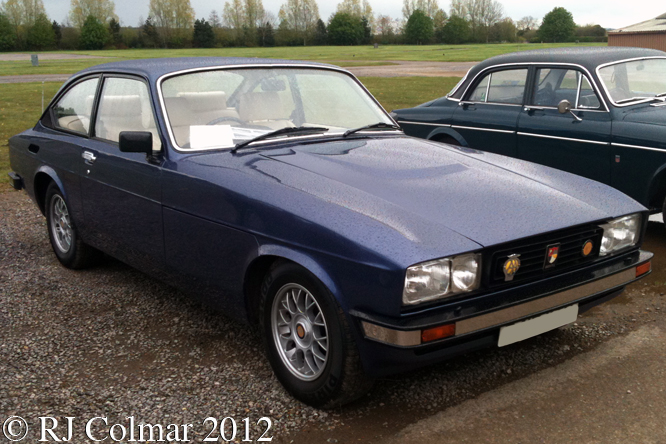
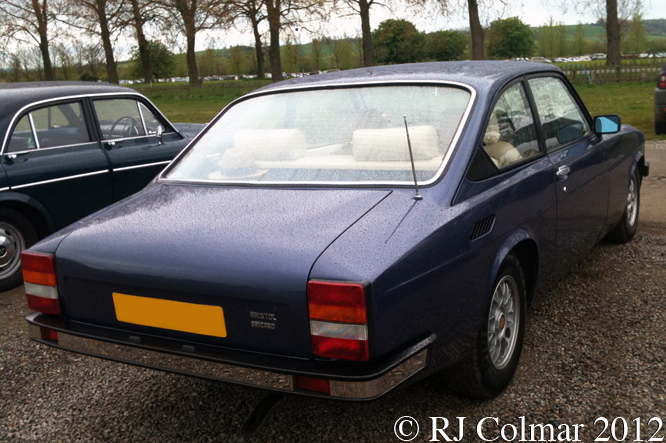
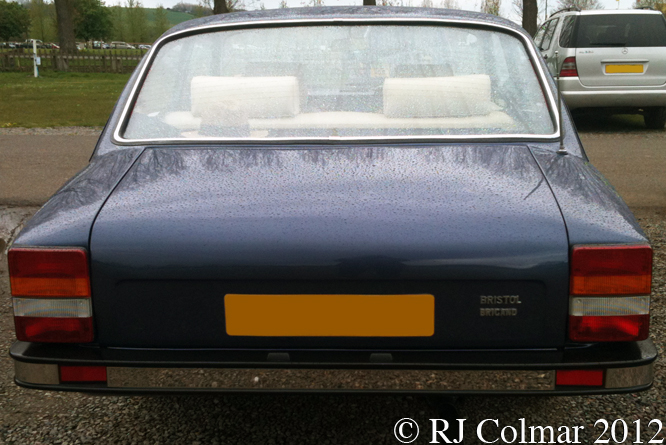
Many manufacturers like Lotus naturally made sure everybody new your car was fitted with a turbocharger, though later a more discrete approach was introduced by some like Volvo. Amongst the Créme de la Créme unsurprisingly Bristol chose to take the more discreet approach with the turbocharged variant of it’s 603 model which was differentiated from it’s less powerful brethren by; standard alloy wheels, a visually inconsequential power bulge in the bonnet / hood and the “Brigand” name on the boot / trunk lid.

Bristol Brigand, Bristol Classic Car Show, Shepton Mallet

The series 3 603’s introduced in 1982 were among the first to be given names used by Bristol’s early owners the Bristol Aeroplane Company, the normally aspirated 603 Series 3 is known as the Britannia after a turbo prop airliner with the Brigand named after a ground attack bomber. The Brigand equipped with a 5.9 litre / 360 cui Chrysler V8 and a Rotormaster Turbocharger was said to be capable of reaching 60 mph from rest in 6.1 seconds and a top speed of 150 mph.

Bristol Brigand, Bristol Classic Car Show, Shepton Mallet

Brigands like today’s 1985 example, seen at the Bristol Classic Motor Show at Shepton Mallet a couple of years ago, were manufactured from 1982 to 1994 with minor exterior revisions, no production numbers for these cars was ever released some believe there may be 16 left while How Many Left.com shows only an extremely conservative 2 as taxed for use in the UK !

If you think the tail lights look familiar that probably show’s that at some point in your life you have sat behind a Bedford Commercial CF2 van.

Thanks for joining me on this “Turbo Mopar Under The Hood” edition of “Gettin’ a li’l psycho on tyres” I hope you will join me again tomorrow when I’ll be looking at an agricultural BMW powered Mopar. Don’t forget to come back now !
Share

Unparalleld Vision – Bristol 603 E

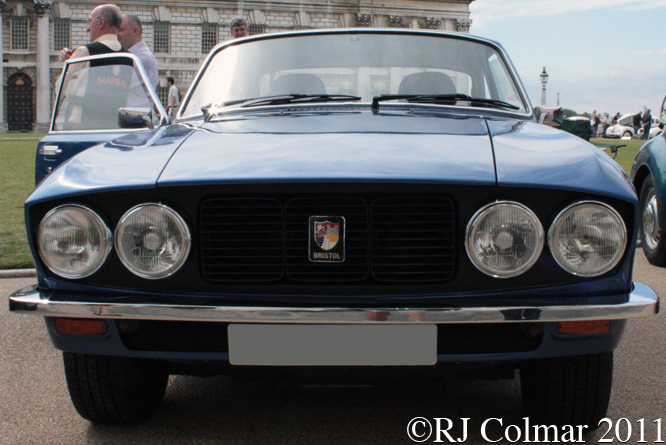
When Bristol replaced it’s faithful 411 models in 1976 it came out with all guns blazing launching the Targa topped 412 and today’s featured model the 603 which owed little to it’s older sister apart from a familial face with four round head lights.

Bristol 603 E, Bristol Concours d'Elegance, Greenwich

The 603 was launched in E and S form’s, the E like the 1977 example seen here was supplied with a 145 hp 5.2 litre / 318 cui Chrysler V8 while the S was fitted with the 170 hp 5.8 litre / 360 cui motor.

Bristol 603 E, Bristol Concours d'Elegance, Greenwich

Since it left the factory today’s featured car has been fitted with a stroked 360 Mopar to bring it up to 375 hp 6.6 litre / 408 cui spec. An Edelbrock carburetor and special inlet manifolds helping to more than double the cars original horsepower numbers.

Bristol 603 E, Bristol Concours d'Elegance, Greenwich

The official rest to 60 mph time for the more powerful S variant was a sprightly, for 1976, 7.6s with a 1/4 mile time of 18.2 seconds, one would imagine with double the horsepower these numbers would take a significant dive.

Bristol 603 E, Bristol Concours d'Elegance, Greenwich

The 603 is noted for it’s slim window pillars which offered unparalleled vision, and yet this did not give the car in anyway an overly futuristic glass house look, the 603 was very much of it’s time and it’s variants remained in production until the one off Blenheim S4 was built in 2009.

Thanks for joining me on this “Unparalleled View” edition of “Gettin’ a li’l psycho on tyres” I hope you will join me again tomorrow when I’ll be looking at an agricultural pick up. Don’t forget to come back now !
Tony Crook RIP.

It was with sadness that the motoring fraternity learned of the death of Tony Crook earlier this week.

Tony had a long and successful racing career which included driving two Bristol powered cars in the 1952 and 1953 British Grand Prix, run to Formula 2 regulations.

Tony went on to become an agent and later the sole agent for Bristol Cars in which he took a 40% stake when Bristol Cars became independent of it’s parent the Bristol Aeroplane Company in 1960.

In 1973 Tony bought out Bristol Cars founder Sir George White to become sole proprietor and distributor of Bristol Cars until 1997, when he sold a 50% stake to Toby Silverton which became 100% in 2001.

Tony continued working for Bristol until 2007.

We offer sincerest condolences to Mr Crooks family and friends.

Share

Clash Of The Eccentrics – Bristol 412 S1

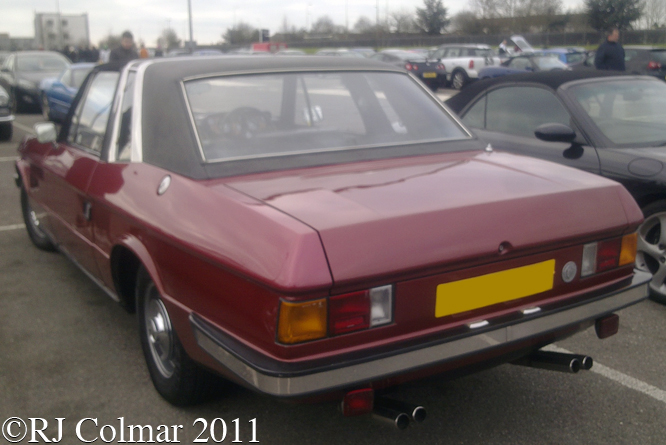
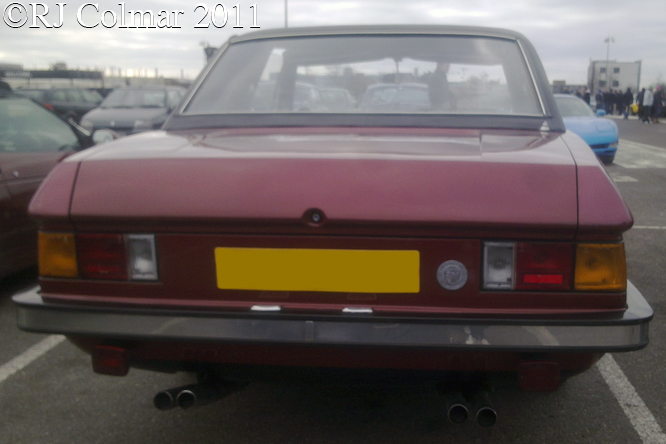
In 1975 Bristol replaced it’s 411 model with the 603 featuring a completely new body, a second new car was scheduled to appear on Bristol’s Earle Court Motor Show stand in October 1975 however despite pre event publicity the targa topped 412 model featured today was not ready and so did not appear as promised in the press.

Bristol 412 S2, Pistonheads Sunday Service, BMW Plant, Cowley

The 412 has been described as a clash of automotive eccentrics by some commentators because the body was designed and built by no less an eccentric company than Carrozzeria Zagato wih whom Bristol’s Tony Crook had earlier worked as their UK Concessionaire and Importer. The distinctive head light clusters appear to have been sourced from the second generation Opel Commodore.

Bristol 412 S2, Pistonheads Sunday Service, BMW Plant, Cowley

The first Series 412’s were built with the 300 hp 6.6 litre / 400 cui Chrysler B series V8’s but the second series introduced in late 1977 were fitted with the smaller 5.9 litre / 361 cui Chrysler motor.

Bristol 412 S2, Pistonheads Sunday Service, BMW Plant, Cowley

Series 2 412’s have front suspension modifications as a result of the lighter motor, improved ventilation for the cabin and redesigned seats. From the date of first registration, March 1977, and engine size it would appear today’s car, seen at a Pistonheads Sunday Service meeting held at the BMW Plant in Cowley a couple of years ago, is a Series 1 412.

Bristol 412 S2, Pistonheads Sunday Service, BMW Plant, Cowley

Apparently when Tony Crook went to see the the prototype 412 at Zagato it featured an even bluffer front end and was some 18 foot long, before Tony intervened.

Bristol 412 S2, Pistonheads Sunday Service, BMW Plant, Cowley

The appearance of the 412 divides opinion like few others, as can be seen on this linked Pistonheads thread, one either gets Bristol ethos or one does not their is little middle ground.

Bristol 412 S2, Pistonheads Sunday Service, BMW Plant, Cowley

In 1982 the 412 was fitted with a turbocharger and slightly face lifted which included twinned headlight clusters and called the Beaufighter production of around 27 of these continued until 1993. It is thought just one export only fully convertible versions of the Beaufighter with an electric roof, known as the Beaufort were built along with two non turbocharged US spec 412 known as the 412USAs.

Bristol 412 S2, Pistonheads Sunday Service, BMW Plant, Cowley

It is thought 24 412 Series 1’s were built and 34 Series 2 412’s. Of the 88 Targa tops and one Convertible it is thought 76% are still extent.

Thanks for joining me on this ” Clash Of The Eccentrics” edition of “Gettin’ a li’l psycho on tyres” I hope you will join me again tomorrow when I’ll be looking at something a little more agricultural. Don’t forget to come back now !

Share

Twin I Beam Flex-O-Matic – Ford F-Series Sport Custom

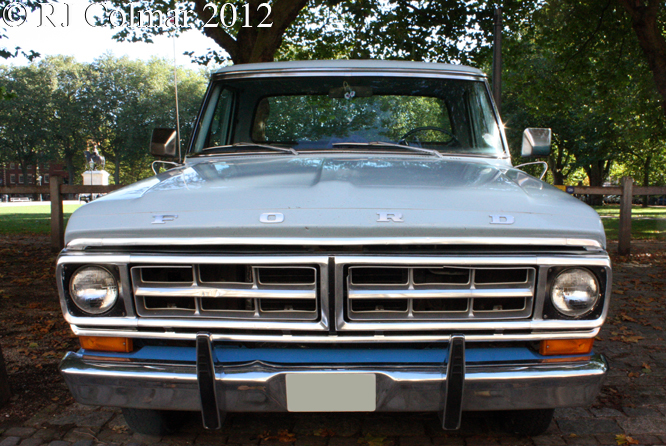
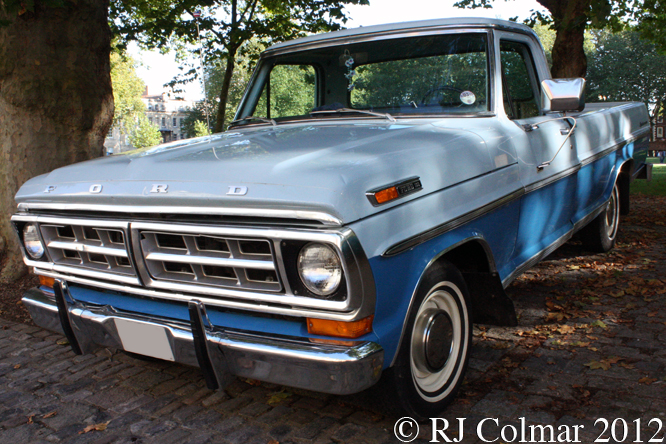
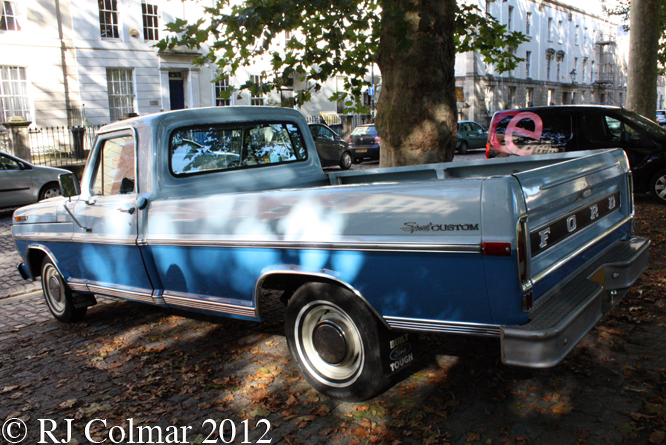
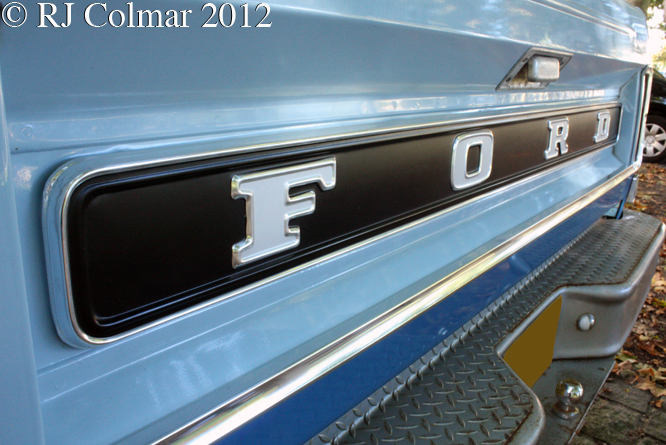
The fifth generation, US built, Ford F-Series pickups were built from 1967 to 1972, Brazilian versions were built from 1971 through 1992. A face lifted F-Series with a new grill appeared in 1970 and today’s featured ’71 Custom Sport version had further minor grill changes.

Ford Sport Custom, Avenue Drivers Club, Queen Square Bristol

’71 F-Series pick ups also featured a new steering wheel design, colour options and an AM/FM radio option.

Ford Sport Custom, Avenue Drivers Club, Queen Square Bristol

Ford marketed the ’71 F-Series on the strength of “Better ideas” which made “Ford Pickups work like a truck” and “ride like a car”.

Ford Sport Custom, Avenue Drivers Club, Queen Square Bristol

Better idea’s also included independent front “Twin I-Beam” suspension, first seen in 1965, which dramatically improved the handling over the pre 65’s solid front axle suspension, and dramatically increased the appeal of the F-series beyond the traditional agricultural and building trades communities.

Ford Sport Custom, Avenue Drivers Club, Queen Square Bristol

The rear suspension was known as “Flex-O-Matic” in Ford’s marketing literature, this appears to be a regular solid rear axle and leaf spring set up with a rubber pad twixt the rear leaf springs and a shackle attached to the body which acts as a shock absorber on any upward movement of the axle.

Ford Sport Custom, Avenue Drivers Club, Queen Square Bristol

The Twin-I-Beam and Flex-O-matic suspension are the bain of ‘Rodders’ lives because the front cannot be lowered without adversely affecting the geometry of the front wheels leaving them with too much negative camber, and the rubber pad and shackle interfere with the lowering of the rear suspension.

The Sport Custom seen in these photographs at an Avenue Drivers Club meeting is powered by a 215 hp 5.9 litre / 360 cui FE V8 motor.

Thanks for joining me on this “Twin I Beam Flex-O-Matic” edition of “Gettin’ a li’l psycho on tyres”, I hope you’ll join me again tomorrow when I be looking at a vehicle that appears to define the term “horseless carriage”. Don’t forget to come back now !
Share