Tag Archives: Castle

Delicious And Wholesome – Ice Cream Vans

With the summer holiday season still in full swing, at least in the UK, I thought I’d focus today’s post on Ice Cream vans.
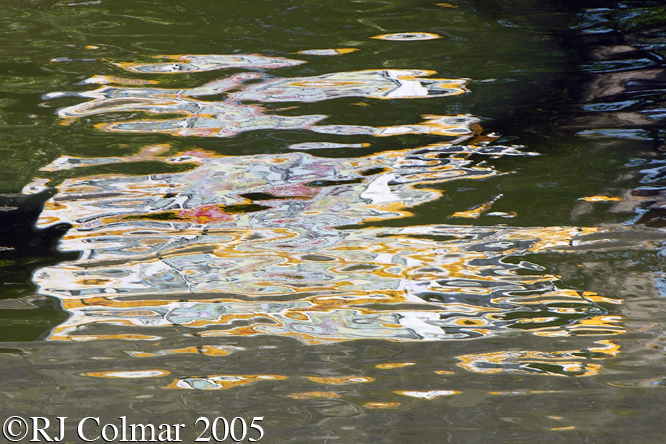
Bedford CF, Arnolfini, Bristol,

The first time I remember taking a photo of an ice cream van was in 2005 when I was collecting images that might make interesting subjects for poems, the reflected image of a Bedford CF Ice Cream Van standing in front of the Arnolfini in Bristol above never did get used for a poem, but ever since I have kept half an eye out for these bearers of Delicious Wholesome products.

Morris J-Type, Silverstone Classic,

The oldest Ice Cream van I have in my files is this 1949 J-Type Morris seen above early in the morning at last years Silverstone Classic.
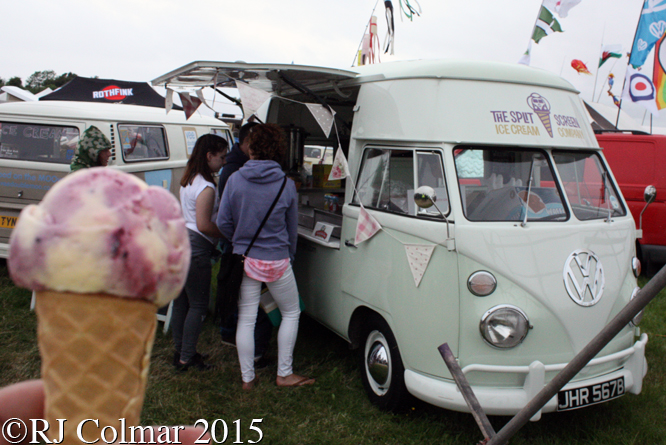
Volkswagen Type 2, Volksfest, Easter Compton,

Earlier this year at Volksfest in Easter Compton I couldn’t resist buying a single scoop of Marshfield Farms finest from The Split Screen Ice Cream Company who claim to be operating the oldest Volkswagen Ice Cream Van in the country in the form of the 2012 British Street Food Award winning 1964 Type 2 seen above.
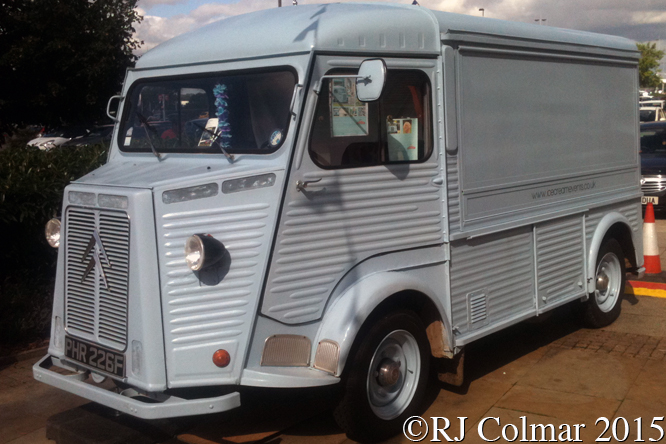
Citroën HY, Cribbs Causeway, Bristol,

Seen in another early morning photo is this 1968 Citroën HY, belonging to Ice Cream Events, which in an ironically, one couldn’t make this up, used to be operated by French Fire Fighting Services before being imported to the UK in 2011.
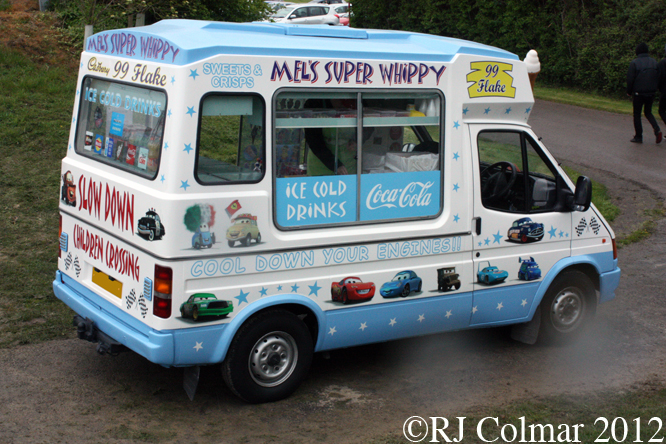
Ford Transit, Castle Combe

Since at least the late 1960’s, when they first came into my regular summer experience, Ice Cream vans in the UK have often had Disney characters painted on them, above Mel’s Super Whippy Ford Transit is covered in characters from the animation Cars and was appropriately seen at Castle Combe race circuit a few years ago.
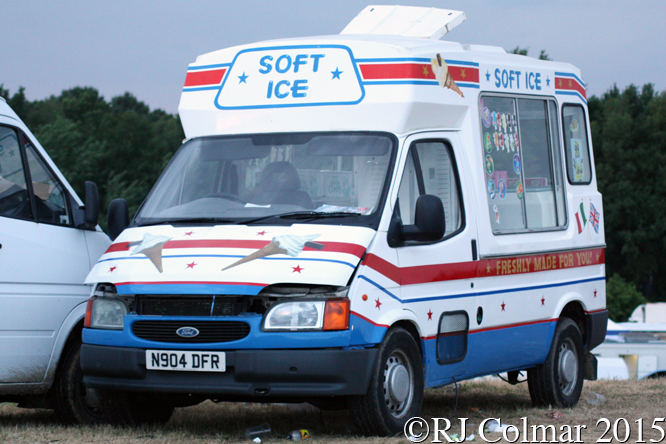
Ford Transit, Porsche Curves, Le Mans,

The further traveled, but more modestly decorated 1995 Transit 150 above is seen on the banking of the Porsche Curves at Le Mans, France, during the 24 Hour race around 05:24 am !
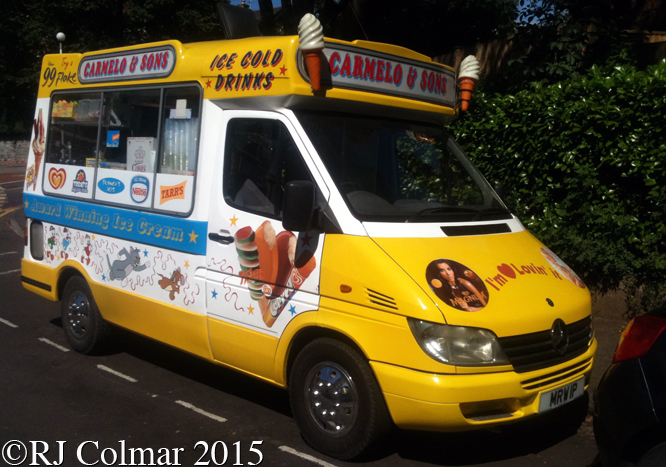
Mercedes Benz Sprinter 311, Bristol,

It would appear that while Bedford CF Ice Cream vans are disappearing they are being replaced by Mercedes Benz Sprinters like the 2000 311 example operated by Carmelo & Sons seen above in Clifton, Bristol.

Thanks for joining me on this “Delicious And Wholesome” edition of “Gettin’ a li’l psycho on tyres” I hope you will join me again tomorrow when I’ll be looking at Lord Hesketh’s all new 1975 Formula One Challenger. Don’t forget to come back now !

Share

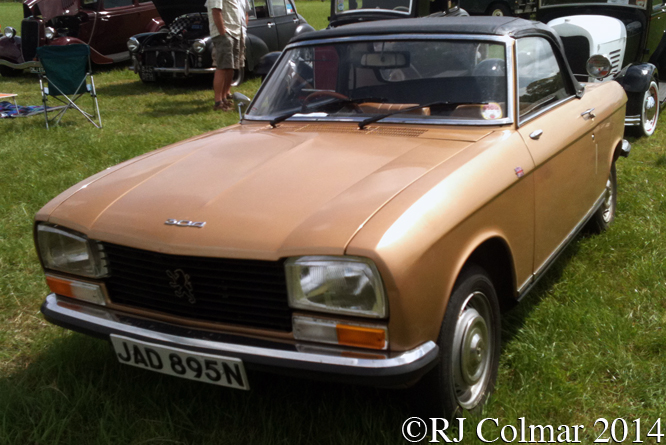
Twin Barrel Carb – Peugeot 304 Cabriolet

On the 23rd of April 1965 Peugeot launched it small front wheel drive family car the 204 powered by a 53 hp motor that would be fitted to a range of body styles that included a sedan/saloon/berline, convertible/cabriolet, hatchback/coupe, estate/wagon, and a van.

Peugeot 304 Convertible, Bristol and South Gloucestershire Stationary Engine Club Rally

Between 1969 and 1971 the 204 was the best selling car in France and leading up to this success Peugeot spotted a gap in the market for a mid size car that was larger than the 204 but smaller than the large rear wheel drive 504 that had been voted European Car of the Year upon it’s launch in 1968.

Peuget 304 Convertible, Castle Combe,

The mid size 304 shared many features with the 204 including it’s drive train with a by now uprated 65hp engine, mid chassis pan and front doors, all of which saved tremendous costs and increased the viability of the 304 which was styled by Pininfarina to mimic the larger 504 with a larger rear over hang than the 204.

Peugeot 304 Convertible, Bristol and South Gloucestershire Stationary Engine Club Rally

The 304 was launched in 1969 with fully independent suspension, floor mounted gear shift, front disc brakes and head lights that could easily be adjusted for driving on the left or the right according to the local market needs at the point of sale.

Peuget 304 Convertible, Castle Combe,

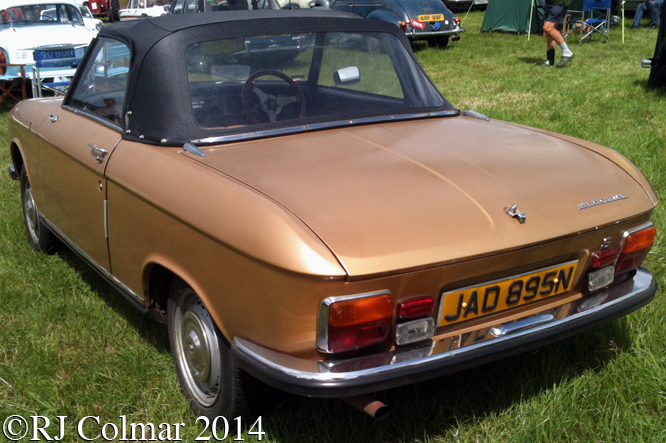
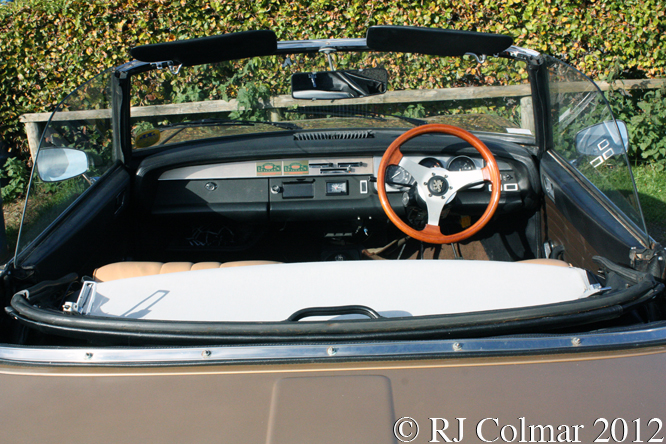
The cabriolet 304 was introduced in March 1970 alongside a coupé both of which replaced equivalent 204 models in the Peugeot range.

Peuget 304 Convertible, Castle Combe,

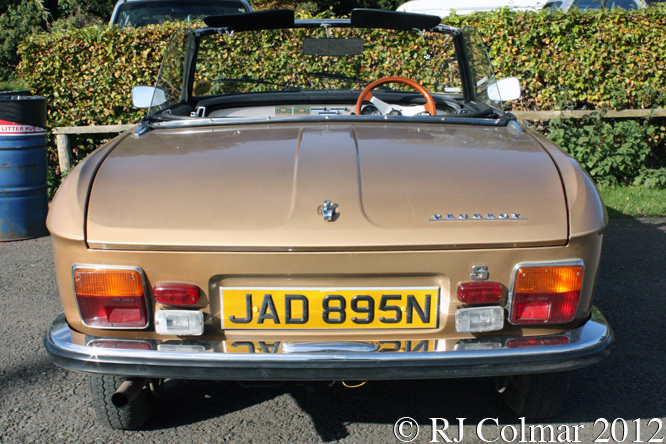
In March 1972 the 304 Cabriolet and Coupé were the first to receive a further uprated ‘S’ motor with a a twin choke/twin barrel carburetor that produced 75 hp, however these two models were deleted from the Peugeot range and not replaced in July 1972 and August 1973 respectively, almost certainly as a result of the recession which stalled global economies as an outcome of the oil crisis. The estate / wagon continued in production until 1980 by which time a new 305 series had been introduced to replace it.

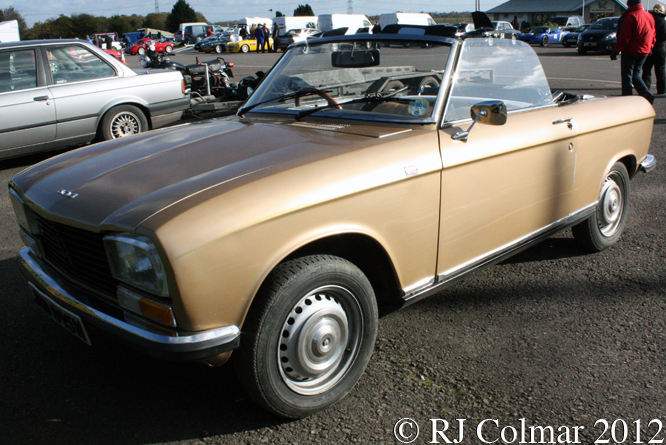
Today’s featured 304 Cabriolet seen at Castle Combe with the roof down and at the South Gloucestershire Stationary Engine Club Rally, Coalpit Heath, Gloucestershire was one of the last to be built and not registered in the UK until May 1975 nearly three years after it had been built.

Thanks for joining me on this “Twin Barrel Carb” edition of “Gettin’ a li’l psycho on tyres” I hope you will join me again tomorrow when I’ll be visiting a Golf Mk IV owners camp. Don’t forget to come back now !

Share

Happy Birthday Cheryl – Marcos Mantis GT2

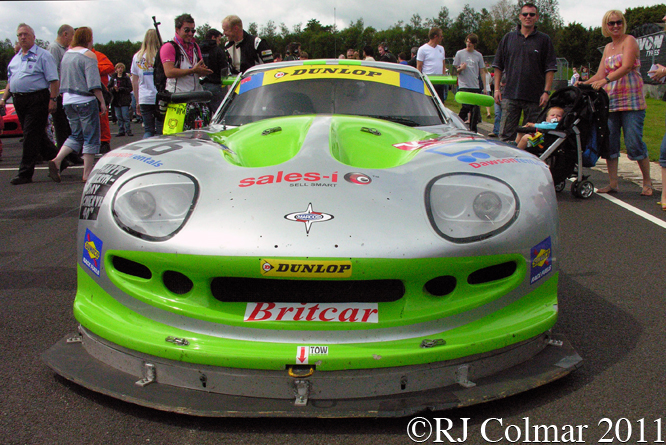
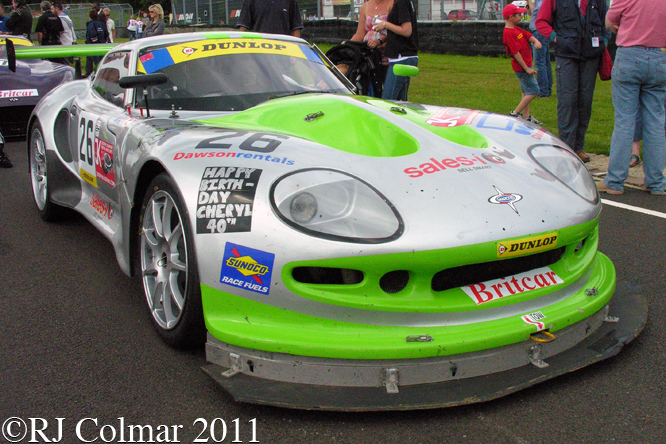
After the successes of the Rover V8 powered Mantula Rover based Marcos LM400, LM500 and LM600 GT cars which won the 1995, 1996 and 2000 British GT Championships Marcos announced the Dunlop sponsored spec Mantis Challenge in 1998 with spec normally aspirated quad cam Ford V8 motors.

Marcos Mantis GT2, Britcar, Castle Combe

In 2002 racers Warren and Charlotte Gilbert (nee Osborn) established Topcats Racing in Westcott, Buckinghamshire which has become a leading contender on the British Endurance GT seen and a leading independent service center for Caterham, Corvette, Lotus, Marcos and Mosler cars offering everything from a full service to an LS7 engine transplant.

Marcos Mantis GT2, Britcar, Castle Combe

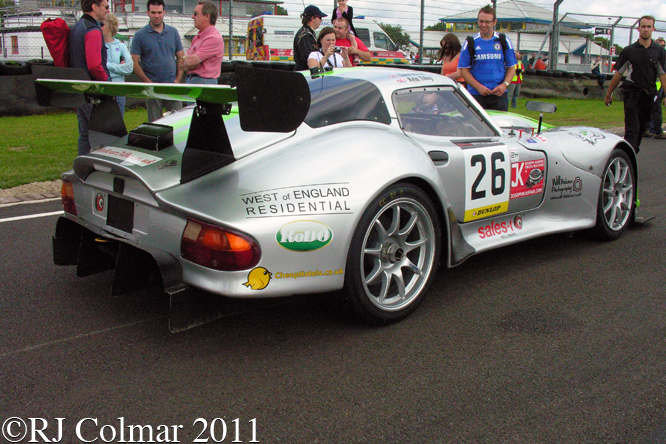
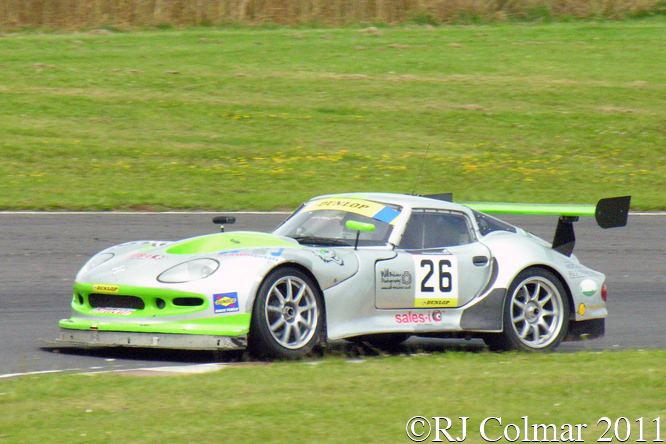
Today’s featured Britcar Class 2 Marcos Mantis is built around a space frame with a fiberglass body and is powered by a standard LS7, 7 litre / 427 cui V8 engine mapped to produce 505hp on 98 octane unleaded fuel which is transmitted to the rear wheels through a 6 speed Holinger sequential gearbox.

Marcos Mantis GT2, Head, Tilley, Britcar, Castle Combe

Additional features include electric power steering, quick fill fuel tanks, quick lift air jacks and spec 18″ Dunlop slick or wet tyres on center lock wheels, four of which can be changed in 22 seconds.

Marcos Mantis GT2, Britcar, Castle Combe

With a weight of 1050 kgs / 2315 lbs the car will reach 60mph in an ear splitting 3.5 seconds and a top speed of 190 mph.

Marcos Mantis GT2, Head, Tilley, Britcar, Castle Combe

Sam Head and Kyle Tilley drove the #26 car entry for most of 2011 and they are seen above at Castle Combe on the 27th of August where they finished a low 20th overall from a more representative 8th on the grid, this a month after Henry Fletcher and Raphael Fiorentino had finished 2nd overall and 1st in Class 2 at Spa.

At the seasons end the Topcats Class 3, 50 hp less, #36 Mantis finished 2nd in the Britcar Championship with Owen O Neill, Henry Fletcher, Jon Harrison and Raphael Fiorentino all taking turns at the wheel during the season and the #36 was classified 3rd with Jeff Wyatt replacing Kyle for one round at Snetterton and Neil Huggins and Jon Harrison being the cars drivers in the championship final at Brands Hatch.

Topcats appear to have retired their LS7 powered Mantis cars from competition at the end of 2012 after their 2 cars both now running in Class 2 finished 3rd and 11th in the Britcar Championship.

Wishing Cheryl a Happy Birthday.

Thanks for joining me on this “Happy Birthday Cheryl” edition of “Gettin’ a li’l psycho on tyres” I hope you will join me again tomorrow when I’ll be looking at another Desse. Don’t forget to come back now !

Share

Braving The Elements – Bristol 450

Bristol Cars introduction to motor racing came as a supplier of 2 litre 6 cylinder motors which were used by chassis manufacturers that included AFN who produced Fraser Nash cars, Cooper, Lister, Lotus and smaller operations like Warrior.

Bristol 450, Autumn Classic, Castle Combe

The first use of a Bristol 2 litre engine at Le Mans came in 1949 when Norman Culpan drove his Fraser Nash High Speed from Yorkshire to the La Sarthe circuit where he was joined by AFN director HJ Adlington and the pair recorded a third place finish 11 laps down on the winning Ferrari 166MM driven by Luigi Chinetti and Lord Selsdon, after the race Norman drove his car back to Yorkshire and AFN produced a run of 34 cars known as Le Mans Replica and Le Mans Mk II’s, these cars have also since been replicated by Crosthwaite & Gardiner, Werner Oswald and others.

Bristol 450, Autumn Classic, Castle Combe

In 1952 Percy Kemish and Stan Ivermee were responsible for setting up the Bristol’s Racing Department which included employees Ken Evans, Rupert Gildersleeve, and Stan Sparks.

Bristol 450, Autumn Classic, Castle Combe

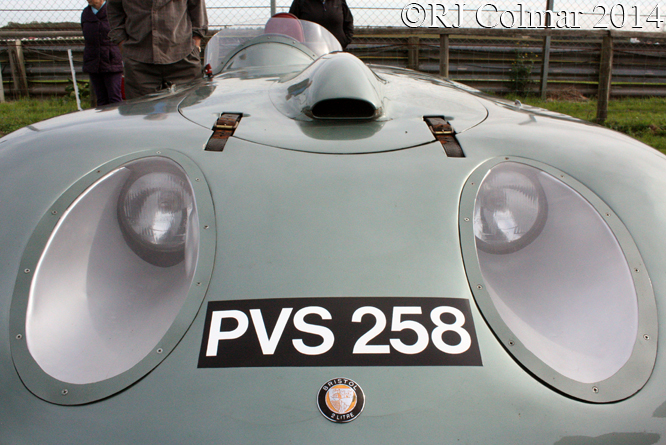
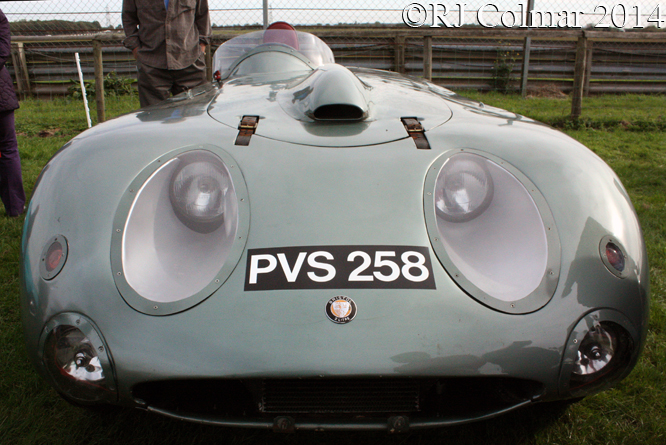
The chassis for the first Bristol 450 Le Mans challengers were based heavily on the Bristol powered ERA G-Type, an open wheeler with an unusually wide chassis and offset driver which had been bought from ERA proprietor Leslie Johnson at the end of the 1952 season, while the aerodynamically tested coupé body appeared remarkably crude with lights that looked like they had been added as an after thought.

Bristol 450, Autumn Classic, Castle Combe

Two Bristol 450’s made the grid for the 1953 Le Mans race one retired when a connecting rod broke causing the car to skid off the Mulsanne Straight on the 30th lap and the second retired after a crankshaft balance weight sheered through the sump and exhaust causing a fire after completing 70 laps.

05 Bristol 450_4569sc

With the crankshaft balance weights removed Peter Wilson and Jack Fairman drove a 450 to a 2 litre class victory and 5th place overall in the Reims 12 hour race in July 1953.

Bristol 450, Autumn Classic, Castle Combe

For 1954 the 450’s received refined coupé bodies with faired in headlights and two pronounced tail fins, this time the team finished 1st, 2nd and 3rd in class at Le Mans as Peter Wilson with Jim Mayers, Tommy Wisdom with Jack Fairman and Mike Keen sharing with Tommy Line brought their cars in 7th, 8th and 9th places overall, at Reims the 450’s came home in 10th, 11th and 12th places overall, 2nd, 3rd and 4th in the 2 litre class.

Bristol 450, Autumn Classic, Castle Combe

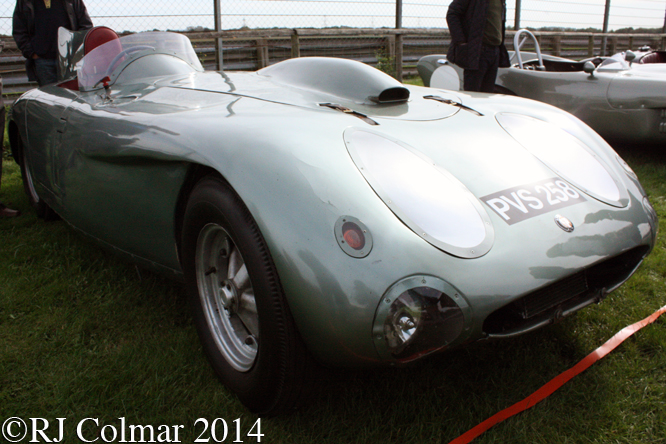
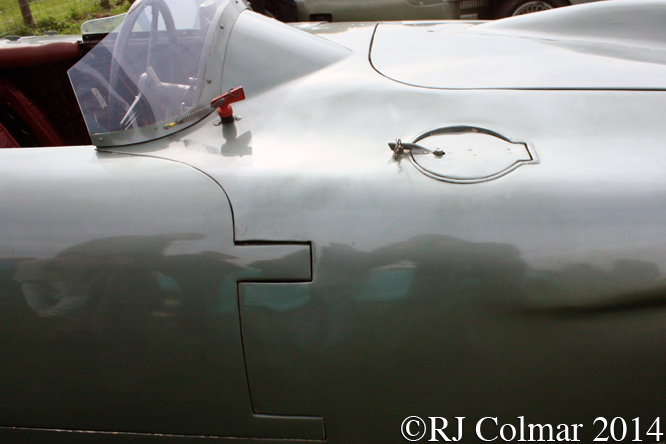
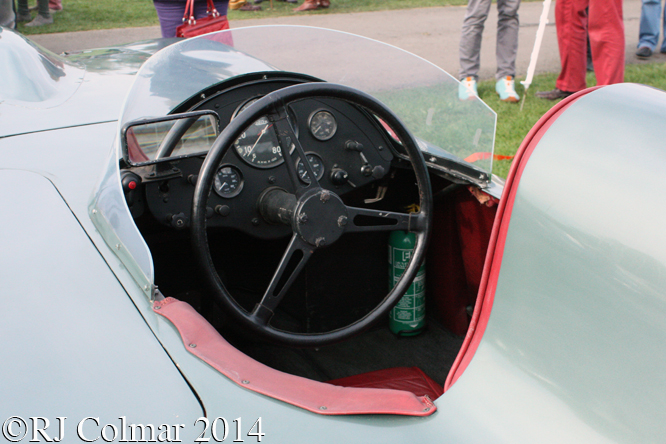
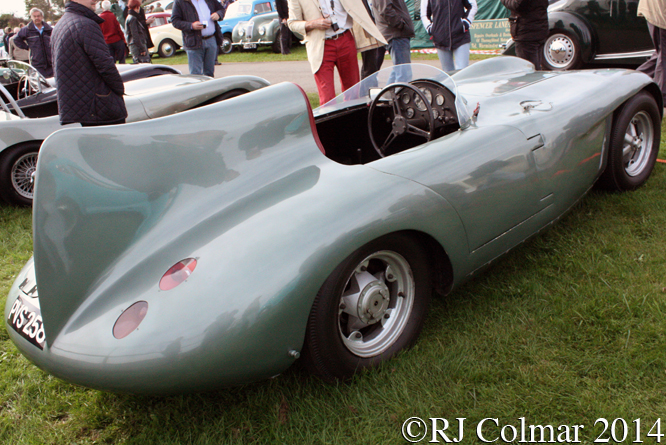
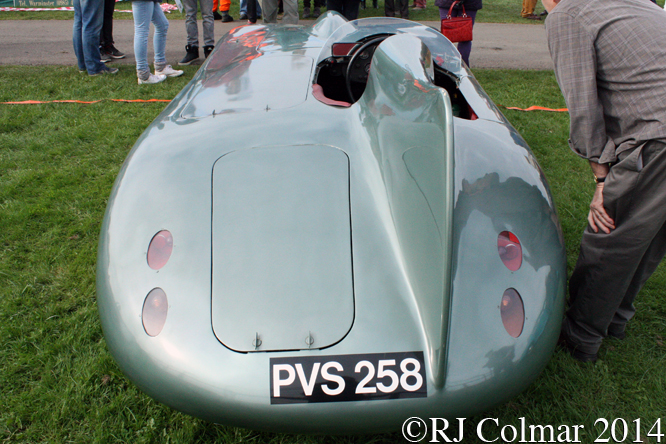
For 1955 more speed was sought by taking the roofs off the cars and running them with a screen for the driver who now had to brave the elements and deck over the passenger seat as seen in these photos taken at last years Autumn Classic meeting at Castle Combe.

Running with the same driving squad as 1954, the now 150 mph cars achieved exactly same result at Le Mans as in 1954, this time with Mike Keen and Tommy Line pipping Tommy Wisdom and Jack Fairman for 8th place.

The teams prize monies for the 1955 race were donated to the fund set up to help the victims of the 1955 Le Mans disaster and the Racing Department was disbanded before the Bristol Cars Division was separated from the Bristol Aeroplane Company in Autumn 1955.

The teams cars were all broken up bar today’s featured car, which is said to have been built up from the best parts of the broken up cars but without one of the motors built for the 450 racing programme, for many years this 450 belonged to Bristol Cars proprietor Tony Crook.

Thanks for joining me on this “Braving The Elements” edition of “Gettin’ a li’l psycho on tyres” I hope you will join me again tomorrow when I’ll be looking at a 1990’s Mercedes Benz Le Mans Challenger. Don’t forget to come back now !
Share

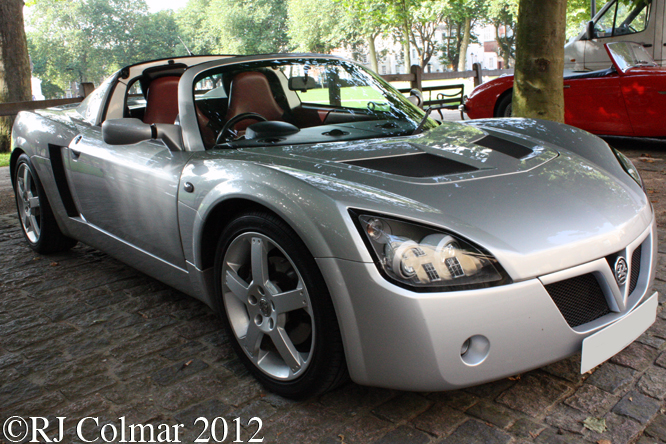
Vauxhall VX220 – Lotus 116

In 2000 Lotus needed to upgrade the Lotus Elise Series 1 to meet new European Crash Protection regulations. At the same time former Lotus owners General Motors were looking to build a new sports car for their Vauxhall (UK), Opel (Europe) and Daewoo (Asia) brands that would eventually also be restyled for the Saturn brand in the US.

Vauxhall VX220, Avenue Drivers Club, Queen Square, Bristol

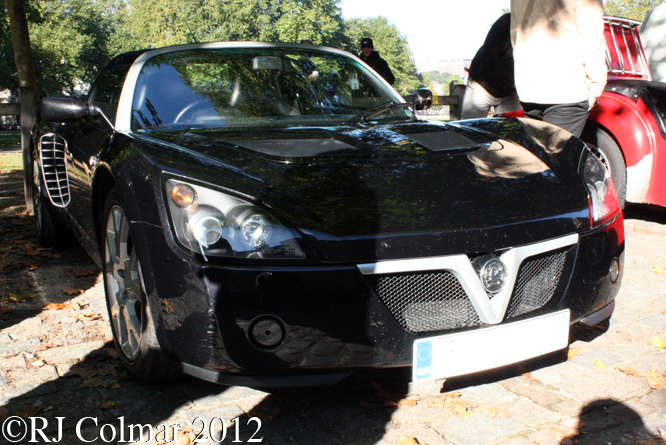
General Motors employed Lotus to design and build the new Vauxhall VX220, Opel GT and Daewoo Speedster models which are powered by mid mounted motors giving 145 hp normally aspirated or 197 hp in turbocharged form. Exterior design is credited to Niels Loeb and Martin Smith and interior to Steven Crijns.

Vauxhall VX220, Avenue Drivers Club, Queen Square, Bristol

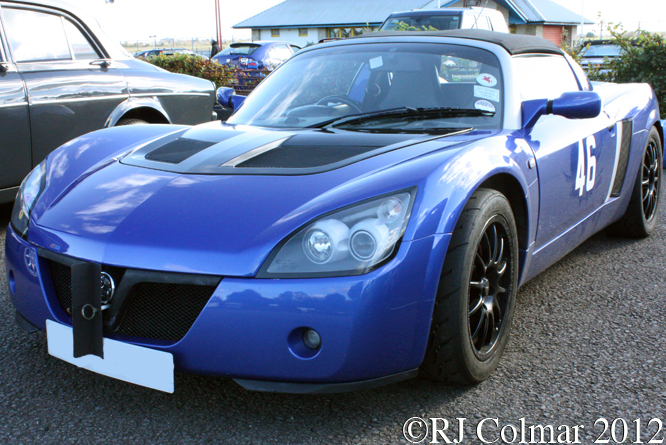
Since the Type 116 is powered by variants of motors that were originally designed for Opel by Lotus while the similar Lotus Elise Series 2 are powered by Rover K series and later Toyota sourced motors arguably the Type 116 has more Lotus input than the Lotus Elise S2 with which it shares the same chassis design.

Vauxhall VX220, Pegasus Sprint, Castle Combe

The turbocharged version of the 116 seen in these photos as the Vauxhall branded VX220 was capable of reaching 62 mph in just 4,0 seconds with a top speed of 150 mph.

Vauxhall VX220, Bristol

Production of the 116 in all it’s forms except the Saturn ran from 2000 to 2005 at Lotus’s Hethel factory in Norfolk.

Thanks for joining me on this “Vauxhall VX220” edition of “Gettin’ a li’l psycho on tyres” I hope you will join me again tomorrow. Don’t forget to come back now !
Share

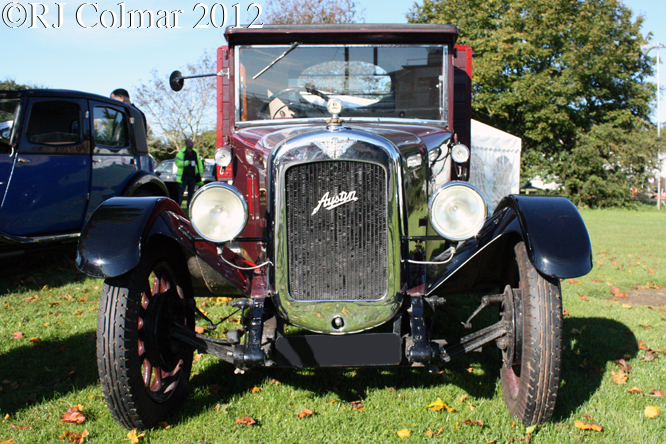
Auctioneers Commercial – Austin 12 Pick Up

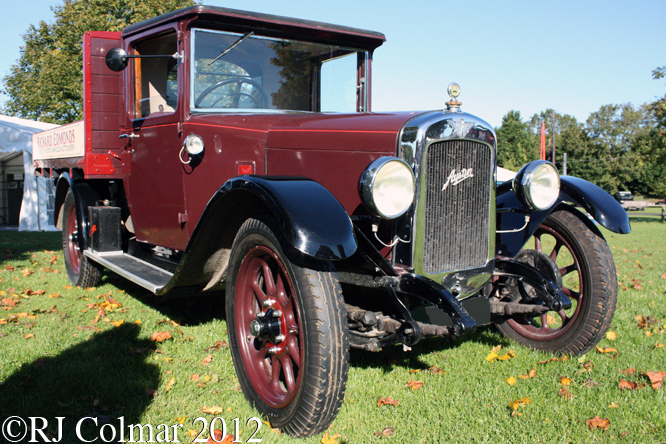
Austin 12 Pick Up, Castle Combe

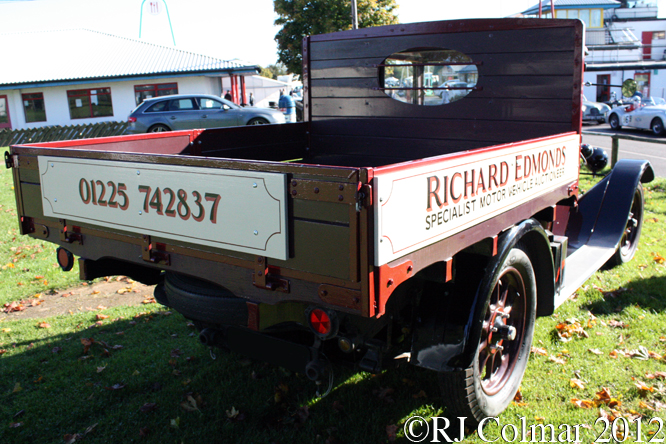
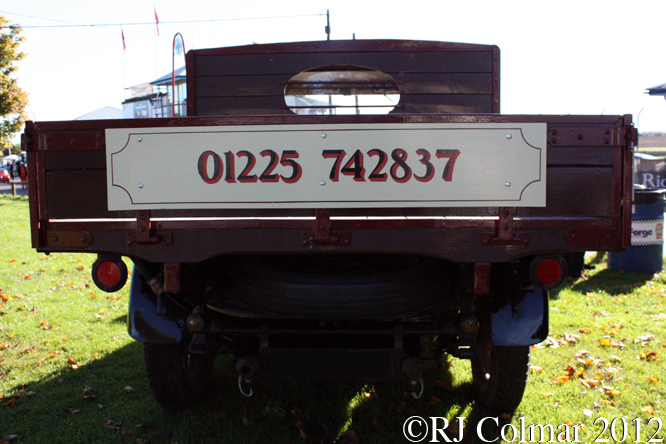
Today’s featured 1928 Austin 12 Pick Up is a regular visitor to the Castle Combe race circuit.

Austin 12 Pick Up, Castle Combe

This vehicle is powered by a 1861 cc / 113.5 cui 4 cylinder motor, the same as the Austin 12, later known as Heavy 12, motor cars.

Austin 12 Pick Up, Castle Combe

Austin 12’s were manufactured from 1921 to 1939 with a variety of body styles, the taxi version being the last and only version available from 1935 to 1939.

Austin 12 Pick Up, Castle Combe

In the late 1960’s an Austin 12 entered Children’s popular culture thanks to the Hungarian born writer and illustrator Val Biro’s illustrated Gumdrop books fictional stories based on the real Austin 12 that he owns.

Thanks for joining me on this “Auctioneers Commercial” edition of ‘Gettin’ a li’l psycho on tyres’, I hope you will join me again tomorrow. Don’t forget to come back now !
Share

The Power Of Dreams – Guglielmi Motorsport Lotus Exige

The Lotus Exige Series 1 coupé was launched in 2000, curiously just as production of the Lotus Elise Series 1 soft top on which it was based was about to be phased out in favour of the sharper styled Elise Series 2.

Guglielmi Motorsport, Lotus Exige, Britcar, Castle Combe

Like the Elise the Exige was powered by a Rover K series motor which all though not particularly powerful was enough to turn the lightweight Elise into a performance car with particular appeal to those who enjoy track days.

Guglielmi Motorsport, Lotus Exige, Britcar, Castle Combe

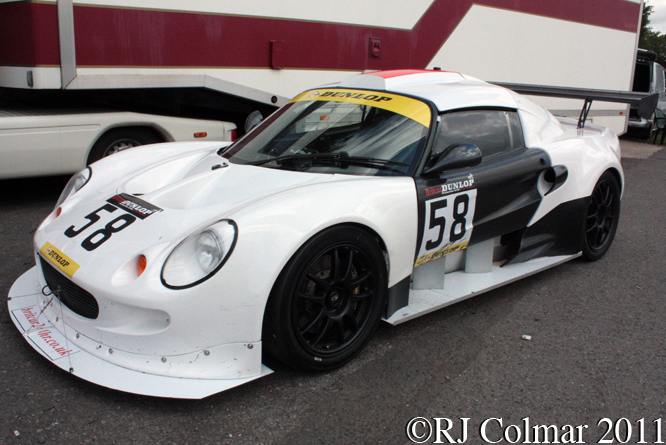
Today’s featured Exige was prepared by Guglielmi Motorsport who’s proprietor Steve Guglielmi was the 2001/2 double TVR Tuscan Challenge Champion. The Guglielmi Motorsport website suggests Steve retired from racing, although not from all competition, as of 2002 when he set up his Guglielmi Motorsport business to prepare road & track vehicles.

Ginetta G50, Lotus Exige, Britcar, Castle Combe

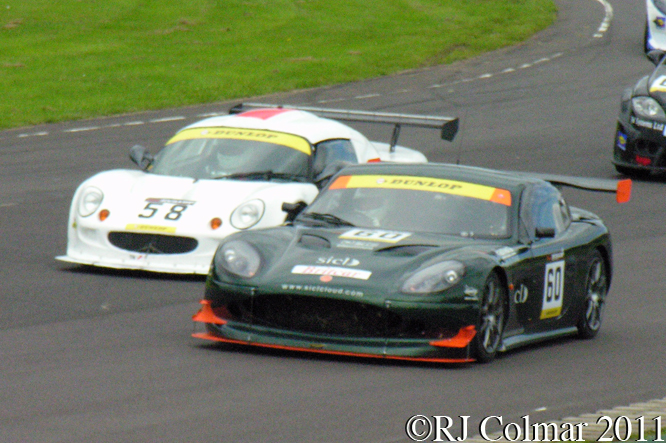
In 2011 Steve prepared this Exige which he shares with Jeff Mileman for the Britcar series. Above the #58 Guglielmi Exige is seen passing the #60 Ginetta G50 G4 coming out of Old Paddock Bend during the 2 hour Britcar race held at Castle Combe in 2011.

Mileham, Guglielmi, Lotus Exige, Britcar, Castle Combe

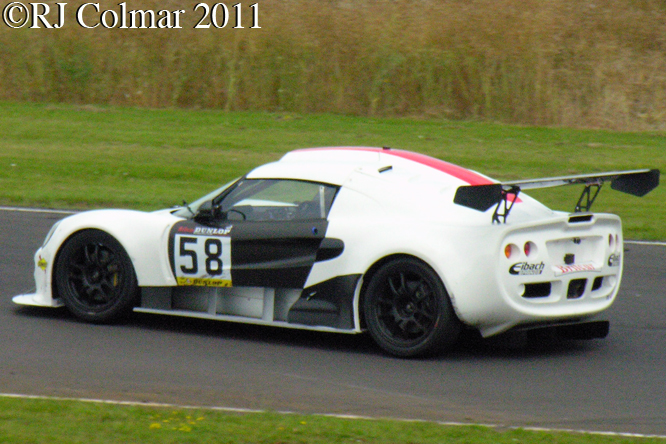
The #58 built is around an Elise 135R chassis with 220 hp Honda K 20 Civic Type R motor, which has since been upgraded to produce 250 hp and a Series 1 Exige body.

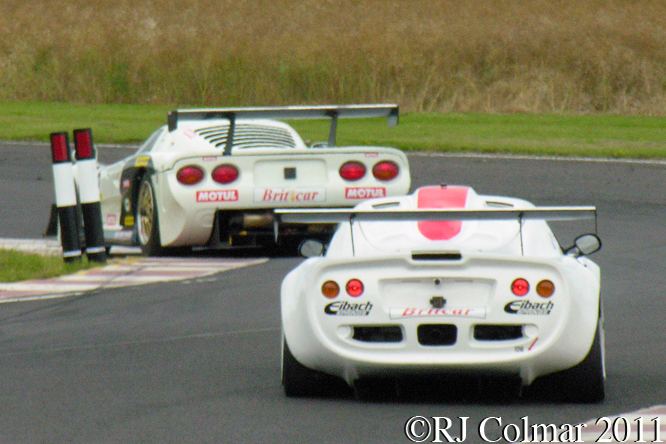
Mosler MT900 R, Lotus Exige, Britcar, Castle Combe

Steve plans to compete in this years Lotus Cup UK series this season, still sharing the Guglielmi Motorsport Lotus Exige with John Mileham, with whom he came 4th Overall and 1st Open Class in the opening round at Snetterton in April.

My thanks to Steve Guglielmi for sharing the details about his car.

Thanks for joining me on this “Power Of Dreams” edition of “Gettin’ a li’l psycho on tyres” I hope you will join me again tomorrow. Don’t forget to come back now !
Share