Tag Archives: Chrysler

Coalpit Heath Americana – Bristol and South Gloucestershire Stationary Engine Club Rally

There was an interesting array of US vehicles on display at the Bristol and South Gloucestershire Stationary Engine Club Rally in Coalpit Heath a couple of weeks dating from at least 1923 to 1956.

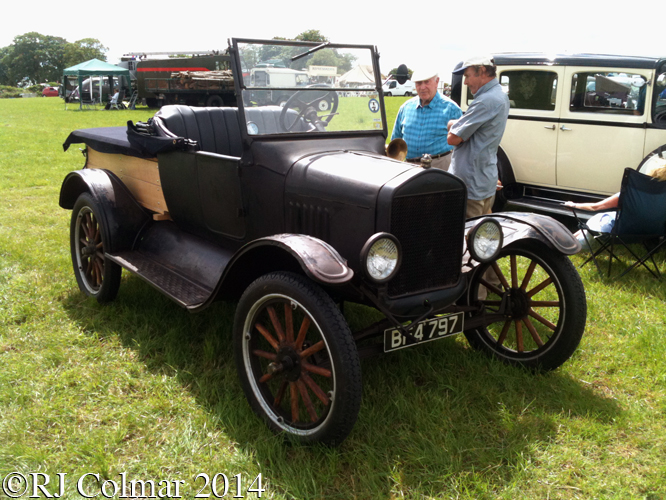
Ford Model T, Bristol and South Glos Stationary Engine Club Rally, Coalpit Heath

From 1923 this Ford Model T pickup is undergoing some restoration the wooden bed at the back looks better than new.

Studebaker Commander, Bristol and South Glos Stationary Engine Club Rally, Coalpit Heath

The 1929 Studebaker is a little more difficult to identify from the outside it looks like an 8 cylinder Commander but the official DVLA website gives the engine size as 4.5 litres / 274 cui too small to be an 8 and too big to be a 6 cylinder.

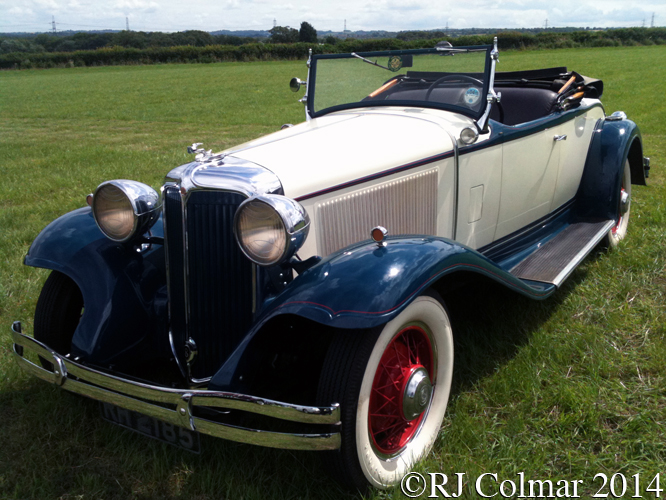
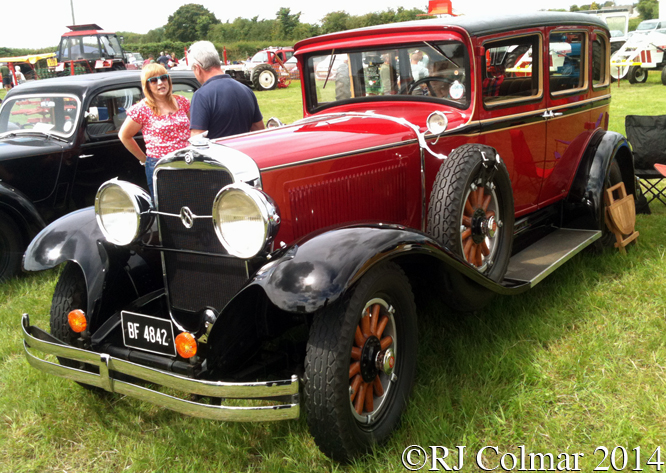
Chrysler CM6, Bristol and South Glos Stationary Engine Club Rally, Coalpit Heath

Chryslers appear to have been popular motors in the UK, this 3 litre CM6 was built in 1930 and registered in the UK on the 15th of January 1931.

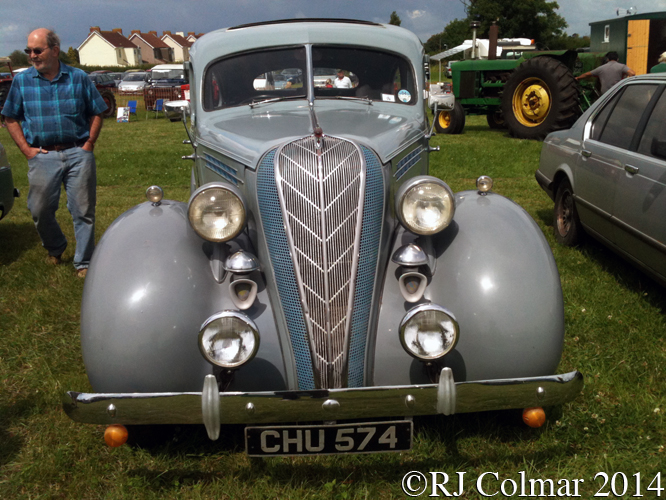
Terraplane, Bristol and South Glos Stationary Engine Club Rally, Coalpit Heath

Terraplane was an entry level brand belonging to Hudson that replaced the Essex brand between 1932 and 1934. Terraplane outsold Hudson and was eventually removed from the market. This 1936 Terraplane features the cascading waterfall grill that was imitated by Donald Healey on the 1936 Triumph Dolomite 14/65.

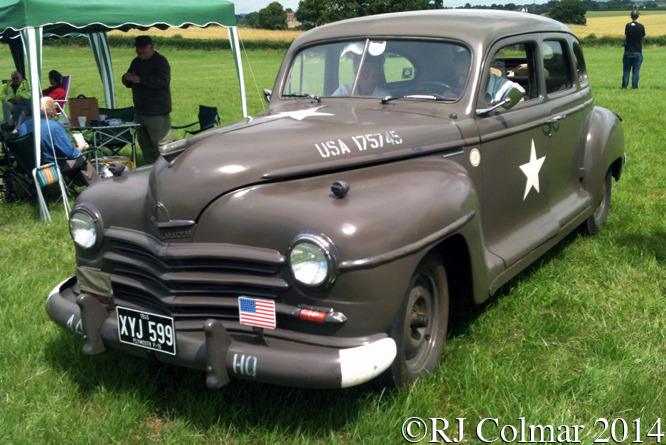
Plymouth P15, Bristol and South Glos Stationary Engine Club Rally, Coalpit Heath

Immediately after the end of hostilities in 1945 there was an estimated demand for 6 million new motor vehicles per year in the USA. Plymouth after re equipping it’s factories with it’s 20,000 machines managed to build 770 between October and December 1945. I believe this Plymouth P15 was one of them.

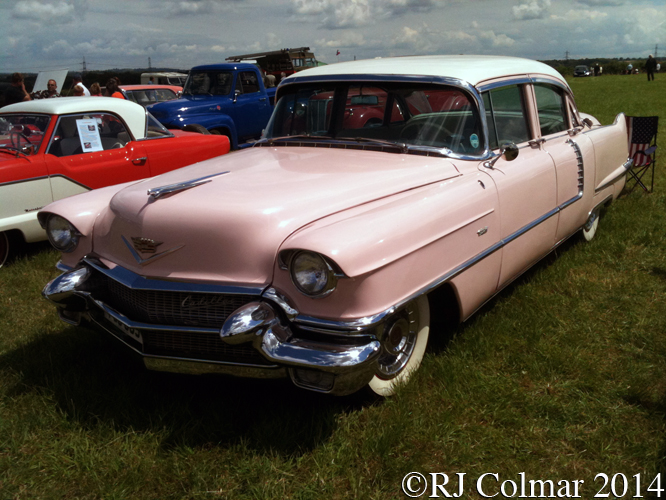
Cadillac Series 62 Sedan, Bristol and South Glos Stationary Engine Club Rally, Coalpit Heath

Despite eulogies from Elvis and Chuck Berry I have to confess until I saw one in the flesh I didn’t really get pink Cadillacs, having seen a couple now I’m still not sure I get them, but undeniably like this ’56 Cadillac Series 62 Sedan they do have a presence that few other land yachts can match.

Thanks for joining me on this “Coalpit Heath Americana” edition of “Gettin’ a li’l psycho on tyres” I hope you will join me for Ferrari Friday tomorrow. Don’t forget to come back now !

Share

Ruote Indipendenti – Maserati V8RI #4501

For 1935 Ernesto Maserati devised the V8RI challenger for the 750kg / 1653.47 lbs formula to take on Mercedes Benz, Auto Union and Alfa Romeo, the latter entries managed by Enzo Ferrari, for honours in the top echelon of motor sport known as the European Championship which comprised just five events.

The V8RI broke with Maserati tradition being the first car to run a motor in anything other than an inline configuration and further more it was the first Maserati motor not to feature twin overhead camshafts, Ernesto opting for a single overhead camshaft per bank of the 300 hp 4.78 litre / 292 cui supercharged V8.
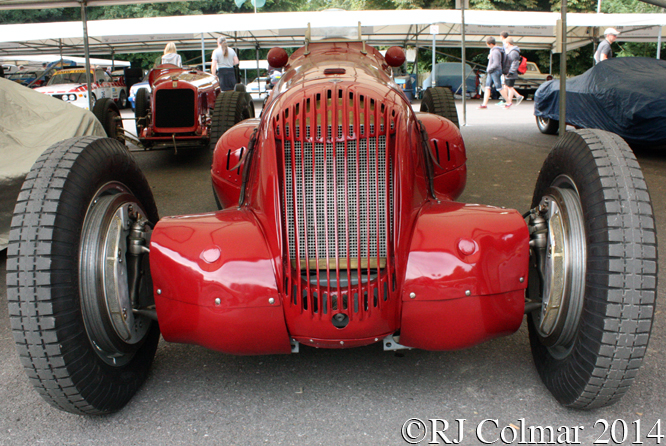
Maserati V8RI, Goodwood Festival Of Speed

The V8RI was also the first Maserati to feature, ruote indipendenti, independent suspension for all four wheels. The transmission and differential were designed as a single transaxle unit.

Being essentially funded by private entrants in particular Scuderia Subalpina it is perhaps not surprising that the first V8RI to appear, today’s featured chassis #4501 did not show up until midway through 1935 and then only at the non championship XI Grand Prix de la Marne where Phi Phi Etancelin placed second in Heat 1 and retired with a blown motor from the final.
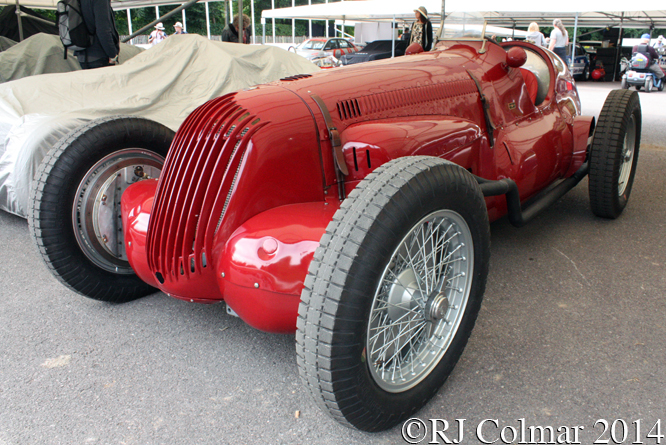
Maserati V8RI, Goodwood Festival Of Speed

The VR8I’s first European Championship appearance was at the penultimate round at Monza where Giuseppe Farina ‘won’ pole position which was drawn by lot, only to non start VR8I #4502 because of a recalcitrant motor. Phi phi completed 14 laps of the Italian Grand Prix in #4501 before crashing out and sustaining injuries which would keep him out of the cockpit for at least one race.

Farina made one further non championship start in a VR8I in 1935 at Circuito di Modena, but he retired after 7 laps with a fuel tank issue. Over the winter on 1935/36 Scuderia Subalpina became Scuderia Torino and Gino Rovere the teams patron took a controlling interest in Maserati.
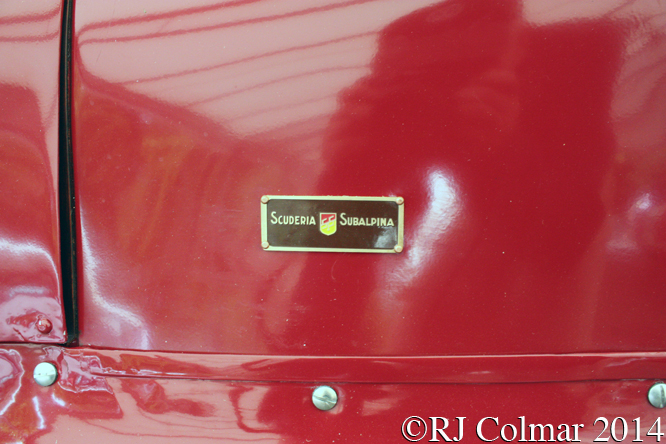
Maserati V8RI, Goodwood Festival Of Speed

For 1936 both Phi phi Etancelin and “Raph” bought V8RI’s to run privately and Phi phi scored the V8RI’s most important European result by winning the 1936 Grand Prix de Pau against a field of Alfa Romeo’s and Bugatti’s which were not considered serious challengers to the absent front line contenders from Auto Union and Mercedes Benz.

From 6th further starts in his private V8RI Phi phi finished just once in the Vanderbuilt Cup race at Roosevelt Raceway where he finished 9th. Coincidentally from the results available to me this was the first and only time in 1936 where ‘Raph’ raced his private V8RI being disqualified for a push start on lap 9.
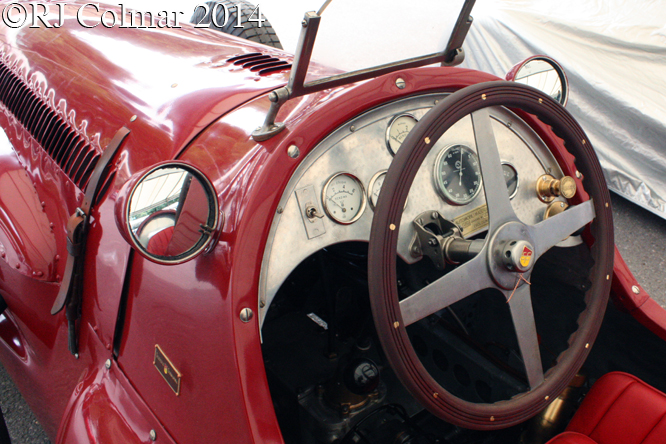
Maserati V8RI, Goodwood Festival Of Speed

The works / Torino V8RI’s are known to have appeared on five occasions in 1936 with an only finish of 7th place for Count Felice Trossi and Ernesto Bianco at the Italian Grand Prix. This result helped Trossi finish 7th equal in the 1936 European Championship with Alfa Romeo’s Antonio Brivio and Auto Union’s Ernst von Delius, Trossi’s other finish in a 4C Maserati came at the German Grand Prix where he shared 8th with Richard Seaman after the Englishman’s Torino V8RI retired with brake issues early in the race.

#4501 was modified in 1936 with attention given to the independent suspension and transaxle but from the results available to me it never appeared at any races with these modifications.
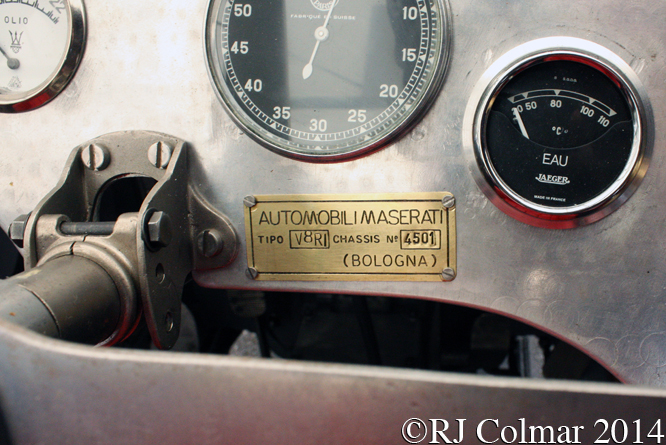
Maserati V8RI, Goodwood Festival Of Speed

In 1937 Maserati withdrew from the European Championship, which was dominated by German machines producing over 500 hp. Alfordo Mandirola drove his privately entered V8RI in at least two non championship events in Europe in 1937 scoring a best 7th place in the Grand Prix Valentino run in Turin.

Later in 1937 all four V8RI’s were entered in the Vanderbuilt cup race, #4501 to be driven by Deacon Litz however was the only V8RI not to show. Wilbur Shaw finished 9th in the race driving a V8RI while the other two V8RI’s retired.
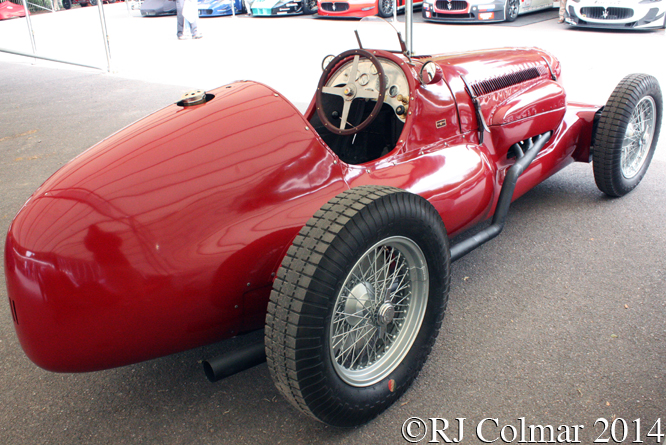
Maserati V8RI, Goodwood Festival Of Speed

With a reduced engine capacity and the supercharger removed #4501 appeared at the 1939 Indianapolis 500 where both Deacon and rookie George Robson failed to qualify the car. Deacon however qualified another V8RI, which also featured a modified body, 31st and finished 33rd after a couple of dropped valves brought his race to a halt on lap 7.

Jim Brubaker, from Pennsylvania bought #4501 and between 1946 and 1949 it failed to qualify for the Indy 500 four more times.
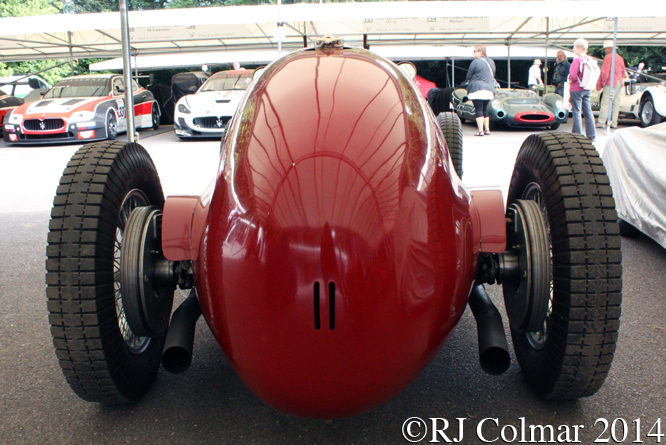
Maserati V8RI, Goodwood Festival Of Speed

In October 1950 Phil Cade became the owner of #4501 and he competed with it on the East Coast in circuit races and hillclimbs from 1951. Somewhere between 1952 and ’53 Phil fitted a Chrysler Hemi V8 and continued competing with the car in this form until 1960, among Phil’s successes was winning the Watkins Glen Seneca Cup in 1958.

In 2003 Bob Valpey bought #4501 from Phil and reunited it with it’s Maserati V8 motor. #4501 currently belongs to Michael Gans who completed an eight year restoration of the car prior to the Goodwood Festival of Speed where it is seen in these photographs.

My thanks to historian Adam Ferrington, #4501’s owner Micheal Gans and the numerous Nostalgia Forum contributors who unwittingly contributed to this post on various threads of the forum.

Thanks for joining me on this “Ruote Indipendenti” edition of “Gettin’ a li’l psycho on tyres” I hope you will join me again tomorrow. Don’t forget to come back now !
Share

Classic Run Americana – Chipping Sodbury

Just over a week ago a friend mentioned he was taking part in the Chipping Sodbury Classic (Car) Run and I thought it would be fun to pop over to see what was happening.

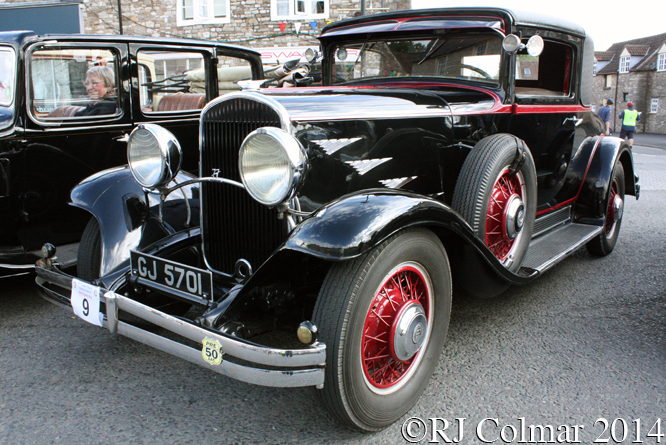
Chrysler 77 Royale Coupé, Classic Run Chipping Sodbury

There were a trio of Chryslers taking part two late twenties, E80 convertibles and this 1930 77 Royale Coupé a vehicle spold on it’s superior engineering which included standard “weatherproof hydraulics” for the braking system and came in without extra’s at $1725.

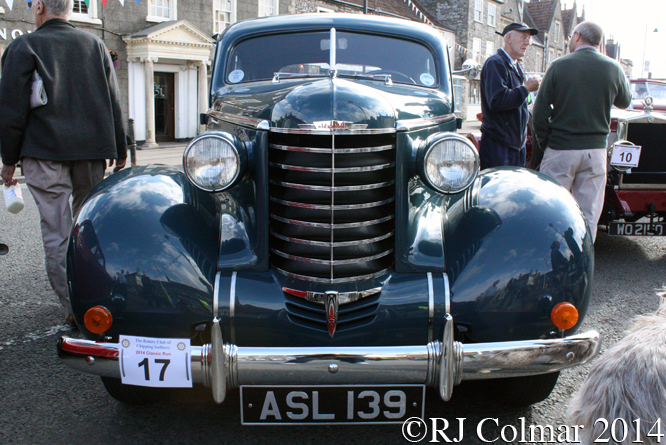
Oldsmobile Saloon, Classic Run Chipping Sodbury

By 1937 US cars were displaying a good deal more Art Deco style than they had been just seven years earlier, an Oldsmobile Six also known as as an F37 and also “The Four Door Touring Sedan, a vehicle in US culture by the 1983 low budget made for TV production of “A Christmas Story” which was declared to be “culturally, historically, and aesthetically significant” by the U.S. Library of Congress and selected for preservation in the National Film Registry.

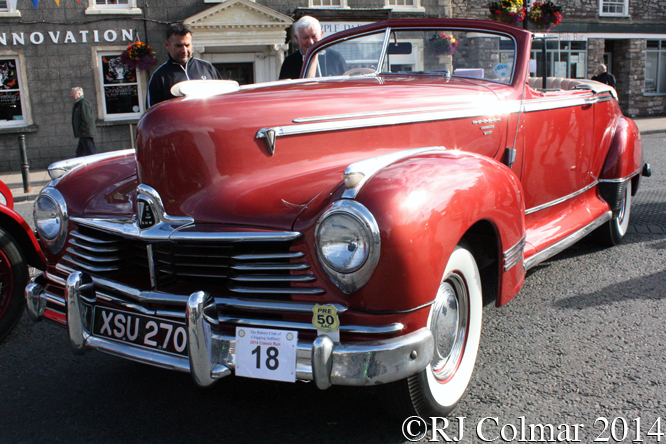
Hudson Commodore 8, Classic Run Chipping Sodbury

In 1942 Hudson was ordered to stop making vehicles for civilian use in order to contribute to the war effort. On the 30th of August 1945 Hudson resumed civilian vehicle manufacture with the mildly face lifted Hudson Commodore 8 at the top of it’s range. The convertible seen above is a 1947 model which was replaced by a completely new design in 1948.

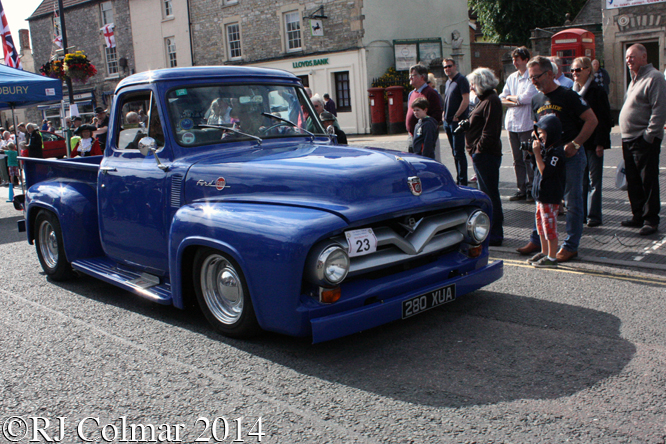
Ford F100, Classic Run Chipping Sodbury

Inspired by the F-100 Super Sabre Jet fighter Ford changed the name of it’s second generation F Series pickup from F1 to F100, the example above was built in 1955 and is powered by a 4.7 litre 286 cui motor.

Ford Mustang, Classic Run Chipping Sodbury

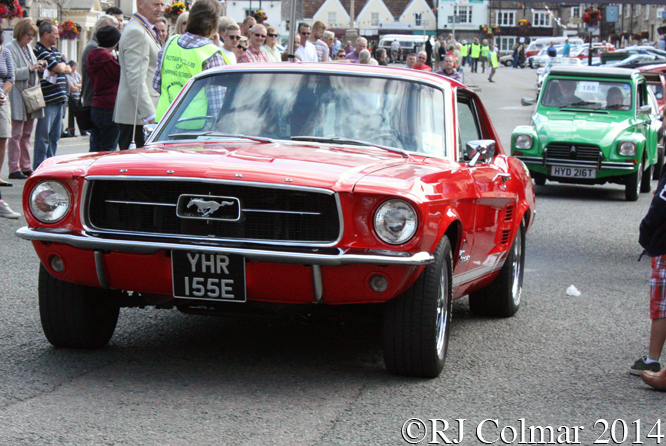
Today’s tenuous link brings together the Hudson Commodore 8 convertible and the Ford Mustang. One of the team who contributed to the design of the pre war Hudson Commodore 8 was Elizabeth Ann Thatcher who left Hudson in 1941 when she married Cadillac designer Joe Oros who went on to become head of the design team at Ford that created the Mustang. The example seen above is a second generation model built in ’67.

Pontiac GTO Convertible, Classic Run Chipping Sodbury

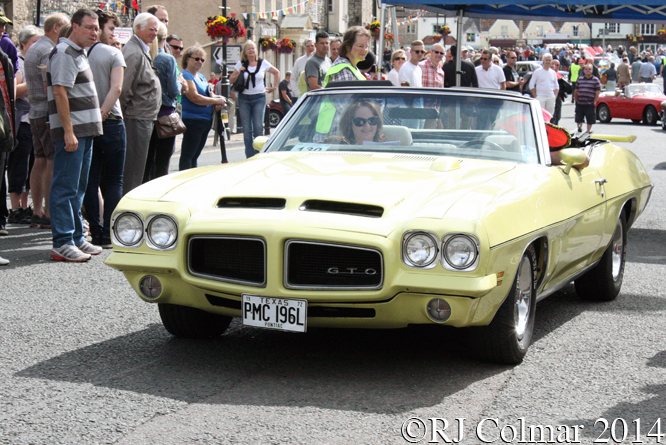
Today’s final featured vehicle is a 1972 Pontiac Le Mans sport convertible with a GTO options including a rare spoiler on the boot / trunk lid. The reason the spoiler is rare is because soon after production of the accessory started the mould broke and the item was subsequently deleted from the options list.

Thanks for joining me on this “Classic Run Americana” edition of “Gettin’ a li’l psycho on tyres” I hope you will join me again tomorrow when I’ll be looking at some Ferraris at the recent San Marino Motor Classic. Don’t forget to come back now !

Share

Americana – San Marino Motor Classic

San Marino Motor Classic, Horton/ McNabb

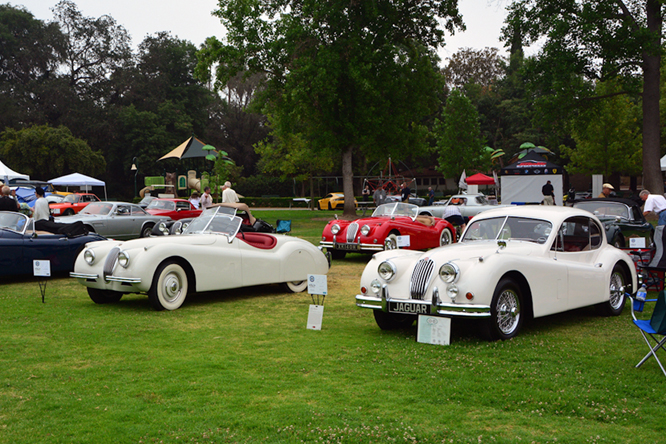
The first weekend of June saw Geoffrey Horton take his Jaguar XK140 FHC seen above to the San Marino Motor Classic.

Duesenberg Model A, San Marino Motor Classic, Horton/ McNabb

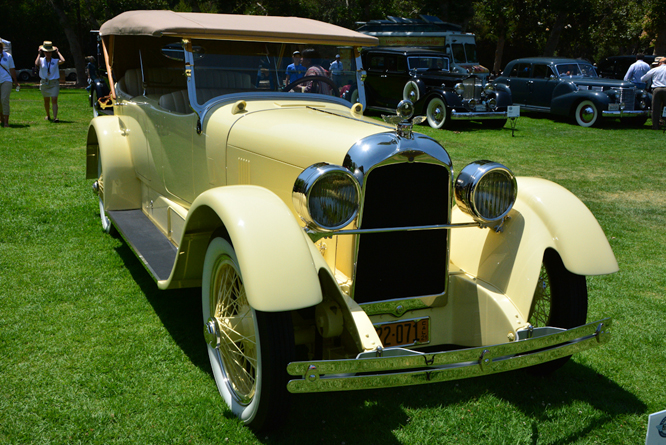
Among the US vehicles on display was this 1921 Duesenberg Straight Eight also known as the Model A first seen in 1920 but which did not go into production until 1921 by which time the motor had been fitted with an overhead camshaft.

Chrysler Imperial, San Marino Motor Classic, Horton/ McNabb

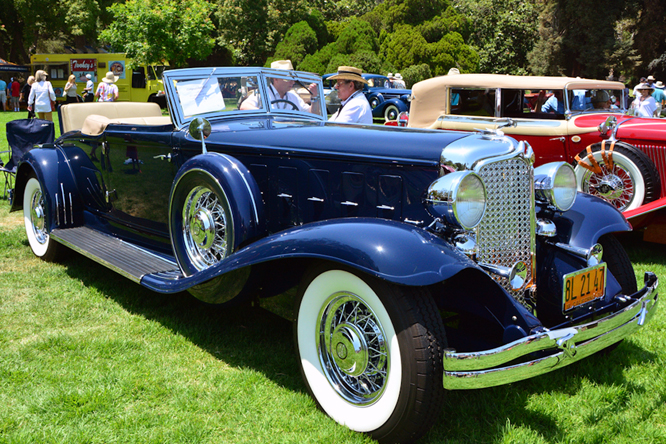
Powered by a 6.3 litre / 384 cui L head straight 8 the 1932 Chrysler Imperial was also marketed as the ‘Imperial 8’.

Ford Thunderbird, San Marino Motor Classic, Horton/ McNabb

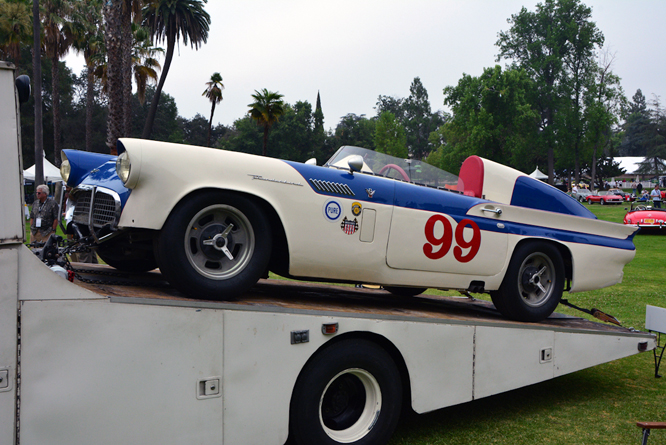
In 1957 Ford built two competition Thunderbirds with supercharged Lincoln motors and Jaguar transmissions, of which I believe only one original, the #98, still exists. The car above appears to be a copy of the #99 which was dubbed the Battlebird by the media back in the day.

Chevrolet El Morocco, San Marino Motor Classic, Horton, McNabb

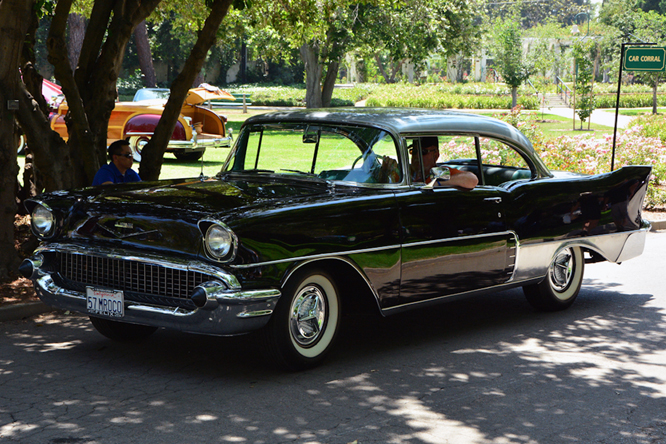
I had great fun trying to figure out if the vehicle above was either a 57′ Chevrolet or a Cadillac and it turns out to be a bit of both. Cadillac owner Ruben Allender came up with the idea of offering a $1,000 conversion to turn a Chevrolet into a Cadillac in 1956. It is thought 20 examples were built in the first year and possibly 16 more in 1957 when production ceased.

Watson Offy, San Marino Motor Classic, Horton/ McNabb

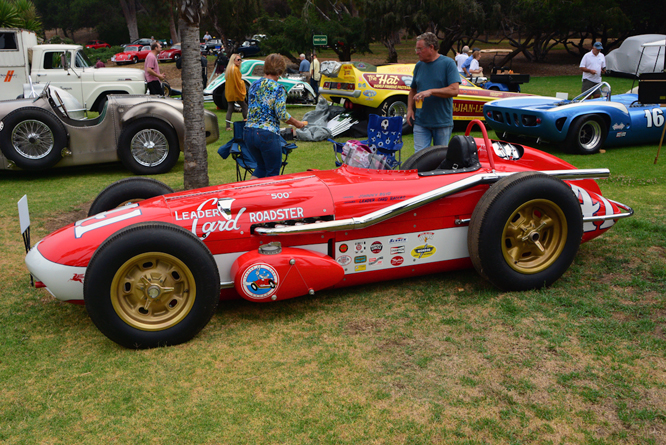
Finally for today I’ll leave you with this delicious vehicle labelled as a “1961 Indy Roadster”. The #41 was carried by Johnny Boyd’s Leader Card 500 Roadster sponsored Watson Offy in the 1961 Indy 500. Johnny qualified 20th and retired at just over half distance with a broken clutch.

My thanks to Geoffrey Horton and Paul McNabb for sharing today’s photographs more of which will appear on Tuesday and Friday next week.

Thanks for joining me on this “Americana” edition of “Gettin’ a li’l psycho on tyres” I hope you will join me again for Ferrari Friday tomorrow. Don’t forget to come back now !

Share

Floating Power – Plymouth PA Rumble Seat Sport Roadster

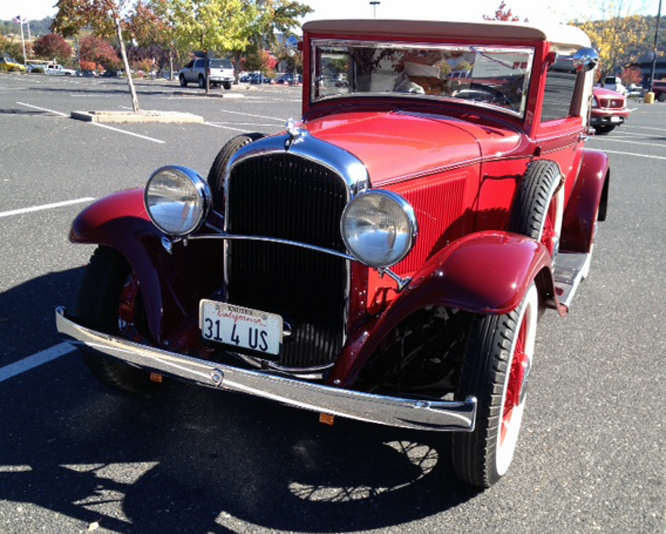
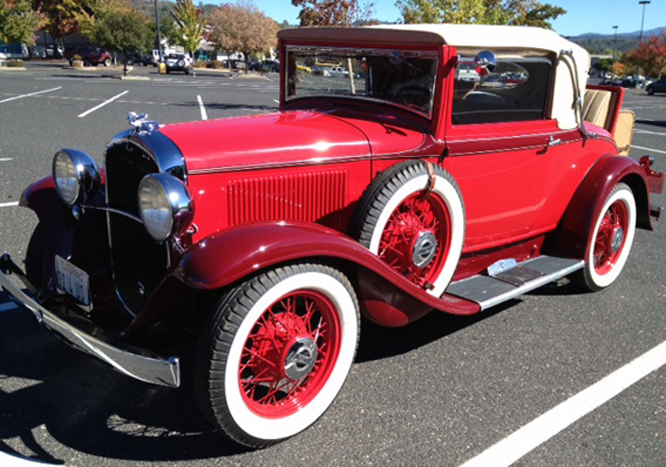
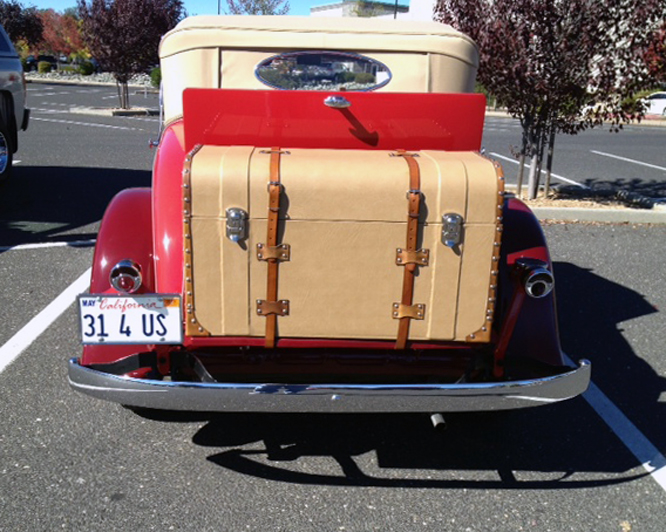
In July 1931 Chrysler announced a new Plymouth model for 1932 the PA which apart from dimensions like the 109″ wheel base and 196 cui 4 cylinder motor size shared little with the Model U which it replaced.

Plymouth PA, California,

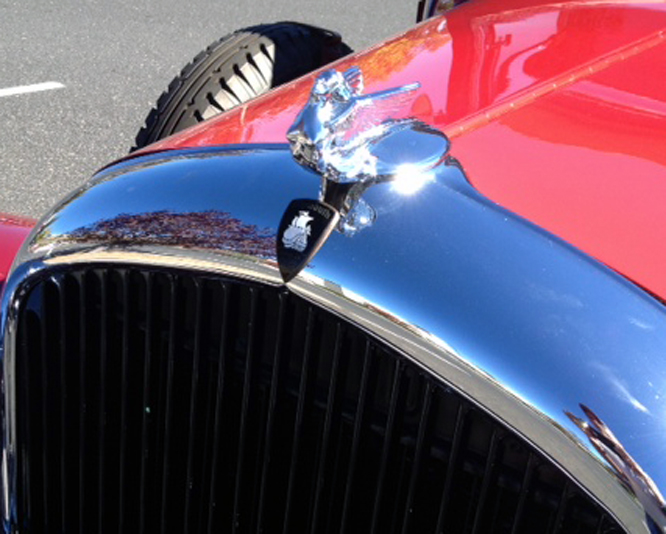
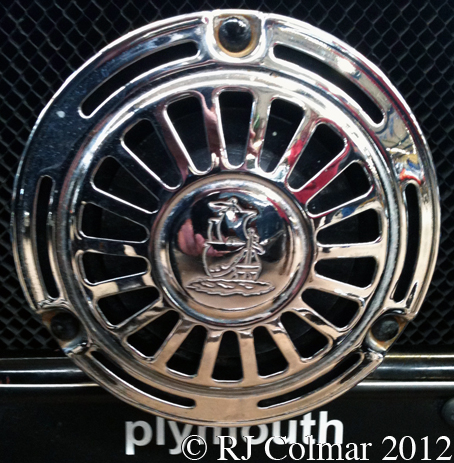
Despite being Chryslers budget brand the PA model featured a flying lady sculpture adorning the radiator, the item was designed by Herbert V. Henderson and manufactured exclusively for Plymouth by the Jarvis Company in Grand Rapids, Michigan.

Plymouth PA, California,

One significant difference between the Model U and PA was the “Floating Power” mountings for the latter which were developed by Owen Skelton to minimise the inherent vibrations caused by a 4 cylinder motor. Owen found that by using rubber and affixing the mountings along the motors center of gravity axis which slopes from front to rear he could significantly improve the comfort for occupants of a vehicle.

Plymouth PA, California,

Within months of being patented Floating Power was adopted by all Plymouth and Chrysler models and would remain a feature of MOPAR vehicles over the next 28 years.

Plymouth PA, California,

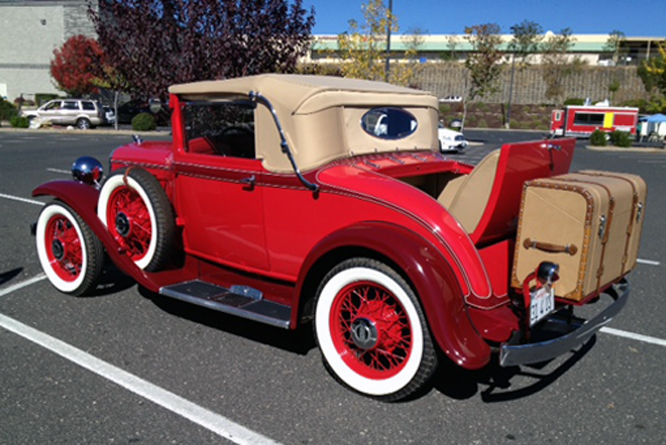
Production of the PA came to an end in July 1932 with 106,896 examples including a variety of 2 and 4 seat body styles.

Plymouth PA, California,

Floating Power and a commitment by former Ford employee, now head of the Plymouth brand Fred L. Rockelman to give his customers more car for their money helped Plymouth reach No:3 in the sales charts replacing Buick in 1931, a position it would only relinquish in 1954 when Buick recaptured 3rd spot.

My thanks to Geoffrey Horton for sharing these photographs, of a 1931 rumble seat “sport” roadster,which he took in a California car park in 2012.

Thanks for joining me on this “Floating Power” edition of “Gettin’ a li’l psycho on tyres” I hope you will join me again tomorrow for another edition of Ferrari Friday. Don’t forget to come back now !

Share

Breaking Into The Top Ten – Plymouth Model U

When Chrysler were looking to break into the lower price end of the automobile market Joseph W. Frazer suggested to Walter P. Chrysler that he name the car after Plymouth Binder Twine well known to the farming community and Walter agreed to “give them a name they’re familiar with.”

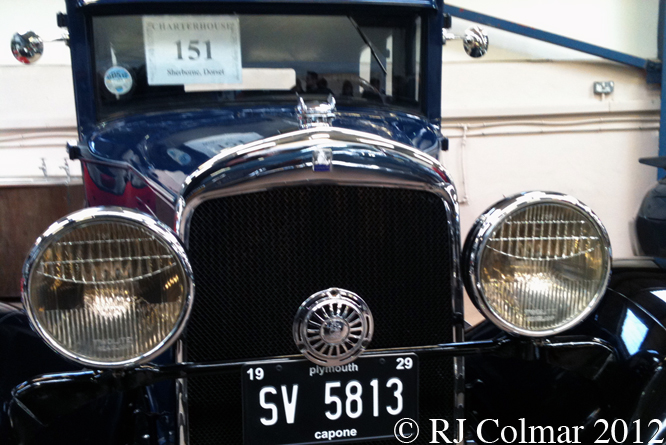
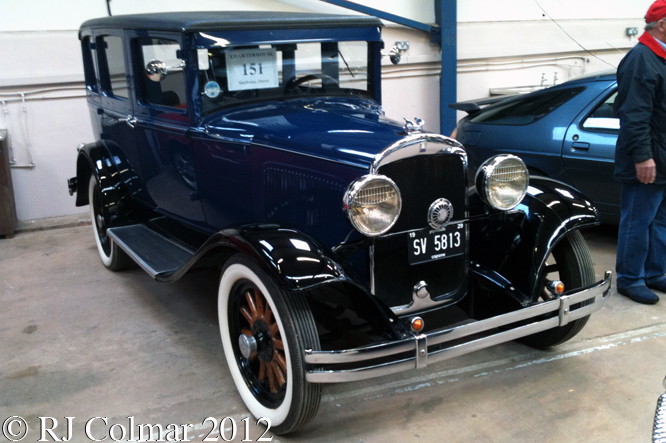
Plymouth Model U, Chaterhouse Auctions, Bristol Classic Motor Show, Shepton Mallet

On launching the new brand in 1928 Chrylser announced “We have named it the Plymouth because this new product of Chrysler engineering and craftsmanship so accurately typifies the endurance and strength, the rugged honesty, the enterprise, the determination of achievement and the freedom from old limitations of that Pilgrim band who were the first American colonists.”

Plymouth Model U, Chaterhouse Auctions, Bristol Classic Motor Show, Shepton Mallet

The first Plymouth was the model Q launched in 1928 and it’s appeal led it to rank 15th in the US Automobile sales charts for 1929 Plymouth evolved the Model Q into the Model U featured today.

Plymouth Model U, Chaterhouse Auctions, Bristol Classic Motor Show, Shepton Mallet

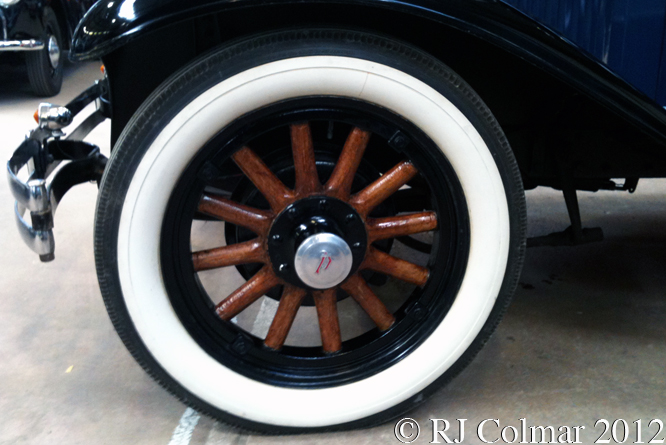
The Model U was powered by a 2.2 litre / 134 cui Silver Dome motor produced around 45 hp which could propel a Model U up to 60 mph, unlike it’s cheaper rivals from Willy’s and Ford the Model U was equipped with hydraulic brakes.

Plymouth Model U, Chaterhouse Auctions, Bristol Classic Motor Show, Shepton Mallet

At $725 with standard 19 inch wooden wheels the Model U came in tenth in the US automotive sales ratings and the models success saw Plymouth production move to the, at the time, worlds largest car manufacturing plant which covered some 23 acres of floor space on at Lynch Road in Detroit.

Thanks for joining me on this “Breaking Into The Top Ten” edition of “Gettin a li’l psycho on tyres” I hope you will join me again tomorrow. Don’t forget to come back now.

Share

DB Six – Dodge Brothers Senior Six Opera Coupé

Five years after the Dodge Brothers, Horace and John, died unexpectedly due to unrelated causes their widows sold the company to Dillon, Read & Co in, up to the time, the largest ever cash transaction involving some US$ 146 million. At the end of 1925 Dillon, Read & Co also acquired a majority in Graham Inc and the three Graham brothers worked for Dodge Brothers until 1927 when Dodge introduced it’s first 3.6 litre / 244 cui six cylinder models.

Dodge Brothers, Senior Six Opera Coupe, VSCC, Castle Combe

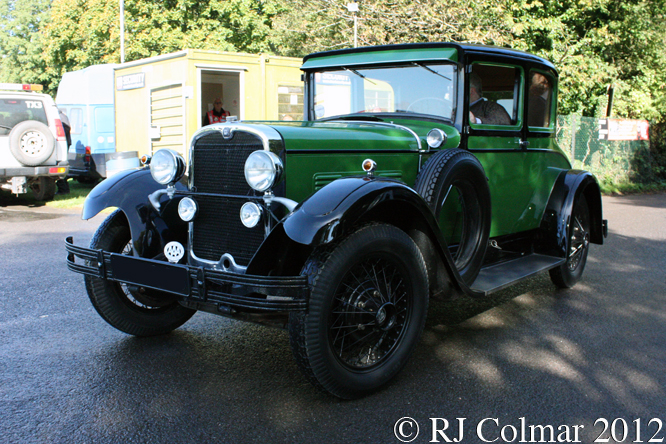
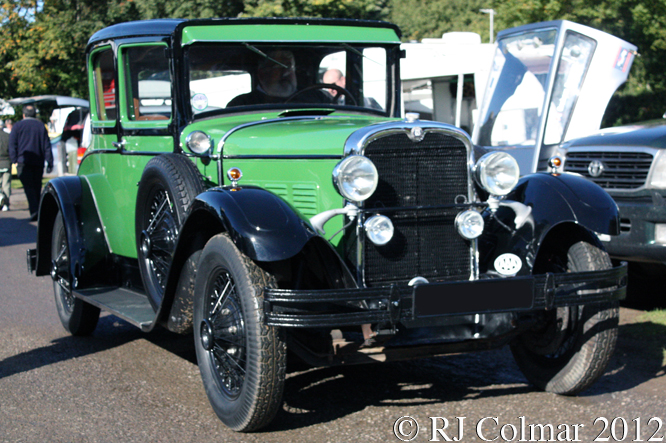
The L head six produced 60 hp and complemented the 40 hp Fast four in the Dodge range which was loosing market share falling from second largest manufacturer in 1920 to 7th place by 1927 prior to Chrysler’s acquisition of Dodge Brothers in 1928.

Dodge Brothers, Senior Six Opera Coupe, VSCC, Castle Combe

Identifying the exact age of today’s Senior Six Opera Coupé, seen at Castle Combe a couple of years ago, has proved extremely difficult officially it’s listed as a 1929 model however I have only been able to match it to models with the distinctive horizontal bonnet / hood vents dated 1927 and 1928.

If you know the exact years the horizontal vent Sixes were in production please do not hesitate to chime in below.

Thanks for joining me on this “DB Six” edition of “Gettin’ a li’l psycho on tyres” I hope you will join me again tomorrow. Don’t forget to come back now !
Share