Tag Archives: Colmar

Flower Power – Lotus 51A

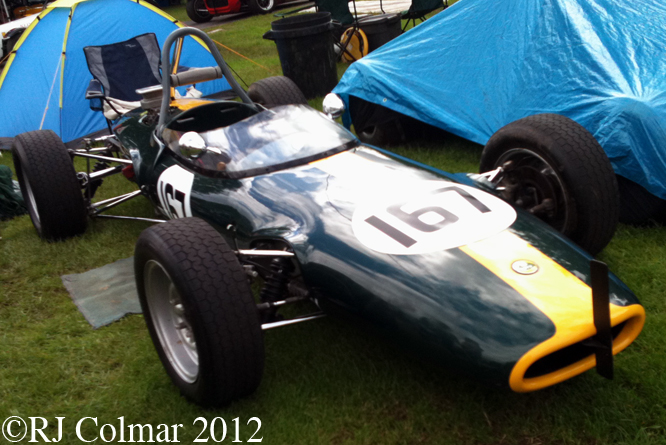
Conceived by Geoff Clarke, manager of the racing school at brands Hatch, Formula Ford was introduced in 1967 for novice drivers as a means of getting a start in racing at an affordable cost.
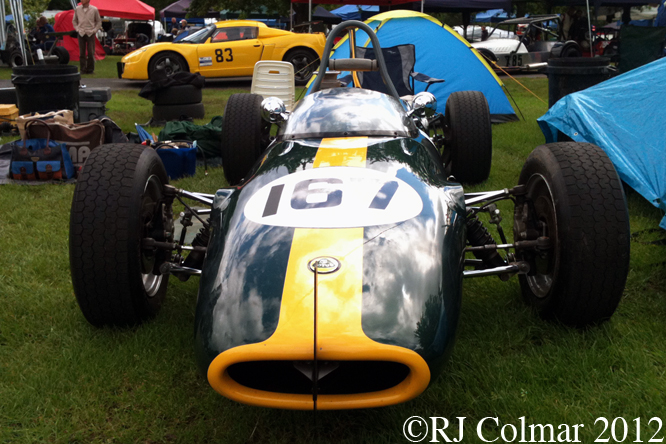
Lotus 51A, Prescott

The original Formula Ford cars were based on those used at the racing school but fitted with a stock 1500cc / 91.5 cui pre crossflow Ford Cortina GT motor in place of the much more expensive to maintain Formula 3 race tuned motors.
Lotus 51A, Prescott

Brands Hatch played host to the very first Formula Ford race on July 12th, 1967. The race was one by Ray Allen driving a Lotus 51 similar to the one featured in todays blog.
Lotus 51A, Prescott

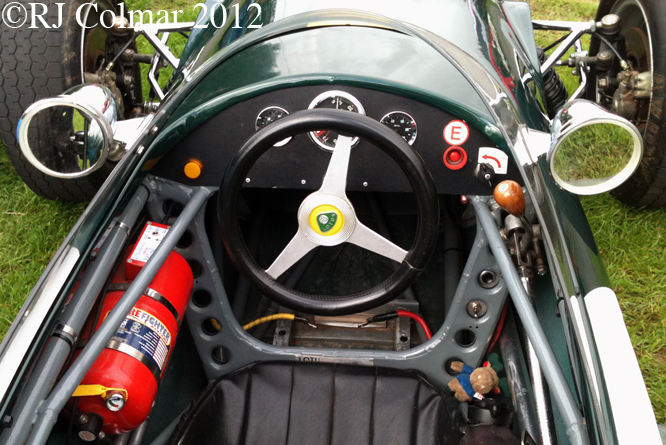
The first batch of Lotus 51 frames, including Ray Allen’s car, were actually welded up as Lotus 31‘s for use in Formula 3 but were retrospectively given the Lotus 51 tag when built to Formula Ford spec.
Lotus 51A, Prescott

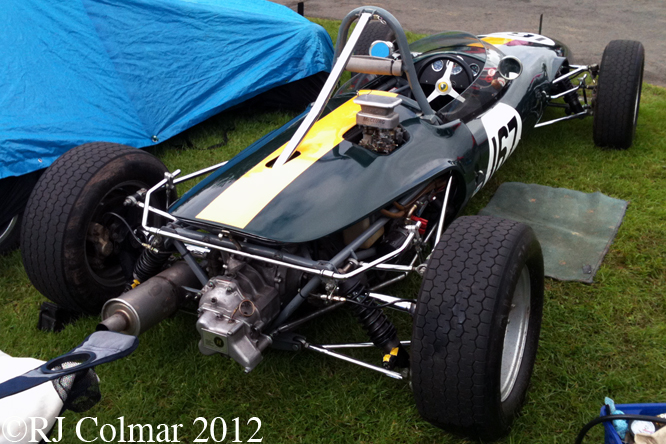
Differences between the Lotus 51 and later 51A, seen here at Prescott, were minimal. For example brackets for an oil reservoir were not required on many 51A’s, if they ran with wet sump motor’s.
Lotus 51A, Prescott

Of the estimated 251 Lotus 51’s built, one, known as the 51R and unofficially as the Flower Power Lotus, was built as a road legal car complete with lights and mud guards.

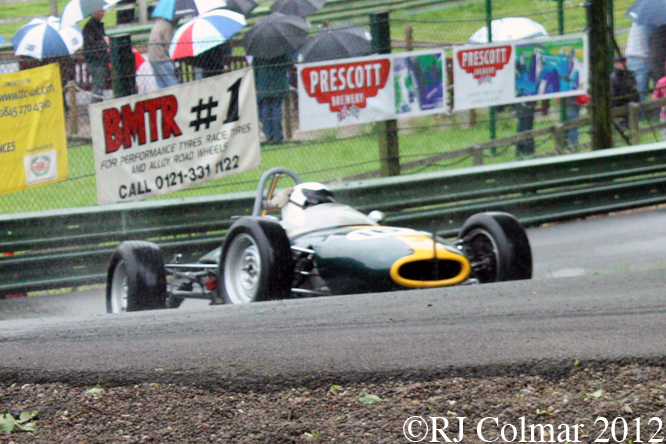
Today’s featured Lotus 51A is driven by hill climber Briony Serrell.

Thanks for joining me on this ‘Flower Power’ edition of “Gettin’ a li’l psycho on tyres” I hope you will join me again tomorrow. Don’t forget to come back now !

Share

Big John’s Return – Ferrari 512M

Today’s featured Ferrari is a 512M replica of the type that I looked at last June.

Ferrari 512M, Siverstone Classic

My research indicates this car appears to be one of at least 2 replica’s built by Bob Houghton in the UK around 1990.

While I was looking into the history of todays featured car I was surprised to learn that 1964 World Champion ‘Big’ John Surtess drove a Ferrari 512S, chassis #1038, in a little remembered return to the Ferrari fold, with Jacky Ickx to finish 2nd in 1970 Spa 1000 kms behind the Porsche 917 driven by Jo Siffert and Brian Redman.

Surtees who became World Champion, driving for Ferrari in 1964, walked out on the team at Le Mans in 1966 after a disagreement over driver arrangements for the 24 hour classic. In the process Surtees threw away a good shot at the 1966 World Championship in which he eventually finished 2nd despite driving an unfancied and unreliable Cooper Maserati for the balance of the 1966 season which had started well with a win for Ferrari in the 1966 Belgian Grand Prix.

Jacky Ickx again drove chassis #1038 on it’s second and final outing at Le Mans in 1970 sharing with Peter Schetty. A single accident in the rain had eliminated four other Ferrari 512S’s and a fifth had dropped out soon after the start. Ickx was in 6th place four hours after the start of the race and climbed all the way up to second around midnight before skidding off at the Ford Chicane killing one marshal injuring a second and writing off the car which was never to be seen again.

Thanks for joining me on this “Big John’s Return” edition of “Gettin’ a li’l psycho on tyres” I hope you will join me again tomorrow. Don’t forget to come back now !
PS 18 08 12 Thanks to Tim Murray for pointing out that John Surtees won the Belgian Grand Prix driving a Ferrari 1966 not the Monaco Grand Prix as originally stated.

Share

Low Lead 454 – Chevrolet Stingray Corvette (C3)

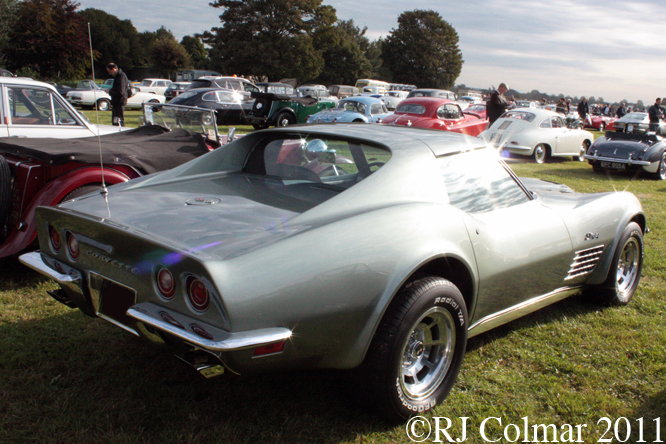
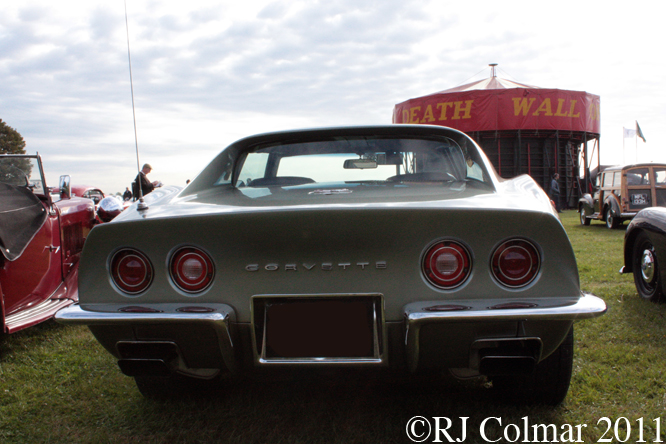
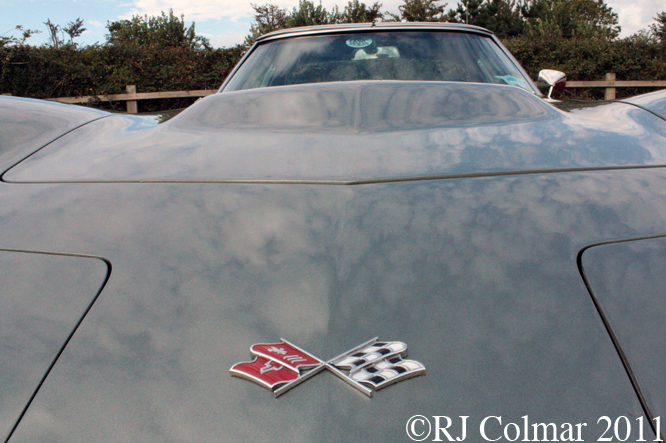
Longest running of the Chevrolet Corvette incarnations was the third generation C3 built between 1968 and 1982.

Chevrolet Stingray Corvette, Goodwood Revival

The C3 Corvette took it’s styling cues from the 1965 Mako Shark II Concept Car.

Chevrolet Stingray Corvette, Goodwood Revival

A new feature of the C3 Corvette’s was the T Top removable roof panels, an idea first patented Gordon Buehrig in 1951 for his, unsuccessful, TASCO Sports Car.

Chevrolet Stingray Corvette, Goodwood Revival

The T-Top proved so successful that production of convertible Stingray Corvettes ceased in 1975 and was not revised again until 1986.

Chevrolet Stingray Corvette, Goodwood Revival

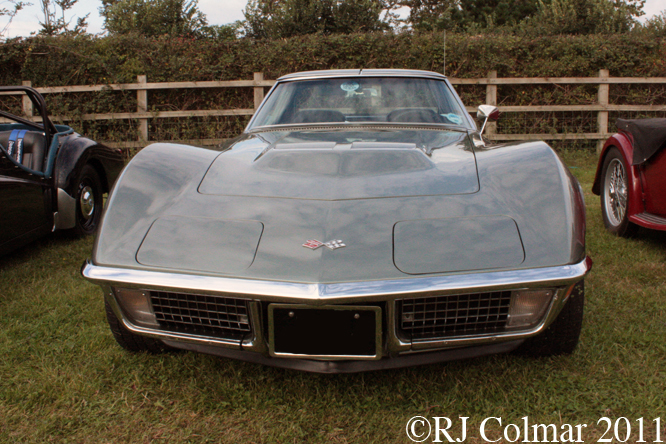
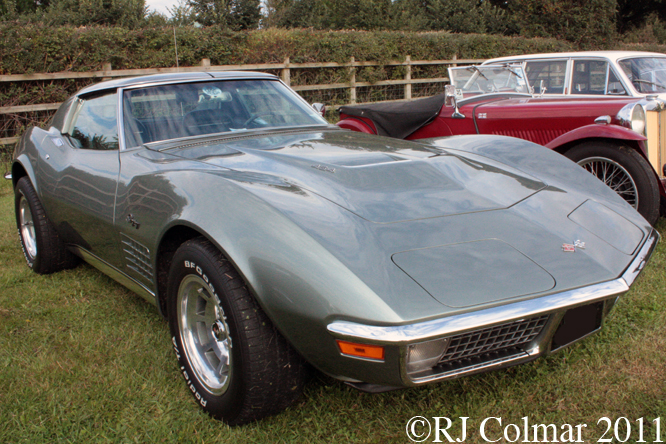
For 1971 the engine options were base L48, performance LT1 and ZR1 using the 350 cui 5.7 litre small block and the 454cui / 7.4 litre LS5 and LS6 big block options. With the introduction of low lead fuel in 1971 the LS6 454’s power was detuned from 450 hp as used on the Chevelle SS to 425 hp. I have been unabke to determine if the car in these photo’s taken at last years Goodwood Revival is one of the 188 LS6 powered cars or one of the 5097 365 LS5 powered cars built in 1971.

Chevrolet Stingray Corvette, Goodwood Revival

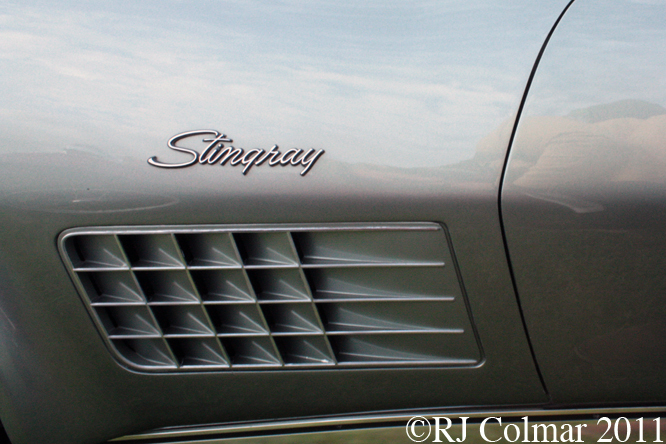
The absence of “Sting Ray” name plates as used on the C2 Corvettes distinguish 1968 Corvette’s, the single word “Stingray” moniker was used from 1969 until 1976.

Chevrolet Stingray Corvette, Goodwood Revival

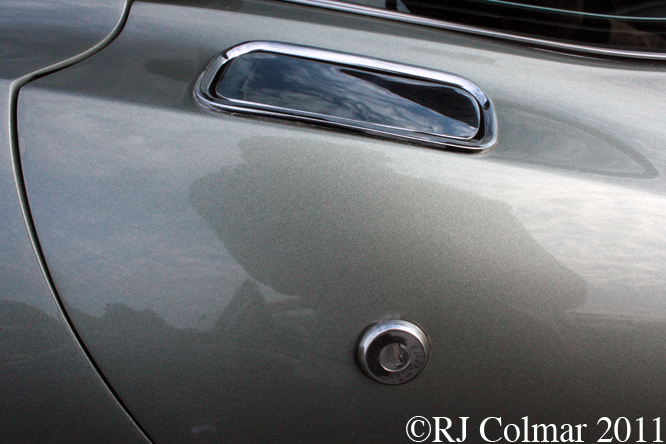
The futuristic door entry mechanism replaced with the hitherto ubiquitous release button and door handle combining them into a single recessed unit.

Chevrolet Stingray Corvette, Goodwood Revival

The C3 is said to be the first US car to do away with the side vent window in the door, power window’s were an option for the remaining pain of glass.

Chevrolet Stingray Corvette, Goodwood Revival

Among the 1971 options were white striped tyres at $28 or white lettered tyres at $42, 6,711 and 12,499 vehicles were delivered with these options respectively.

Chevrolet Stingray Corvette, Goodwood Revival

’71 Corvette advertising concluded that “it’s underneath what counts when it comes to performance”.

Chevrolet Stingray Corvette, Goodwood Revival

Despite strikes interrupting production 9,936 Stingray Corvette Coupé’s were manufactured in 1971.

Thanks for joining me on this “Low Lead 454” edition of “Gettin’ a li’l psycho on tyres” I hope you will join me again tomorrow. Don’t forget to come back now !
Share

Peraluman Zagato – Lancia Fulvia Sport 1.3

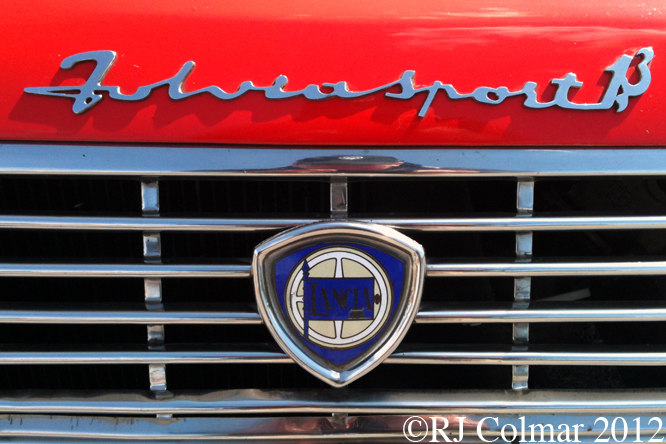
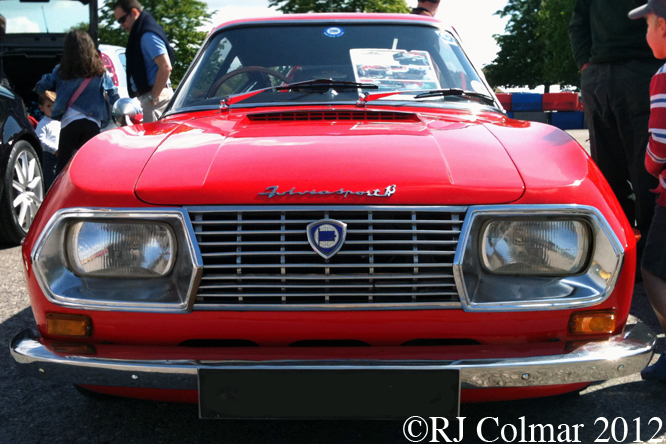
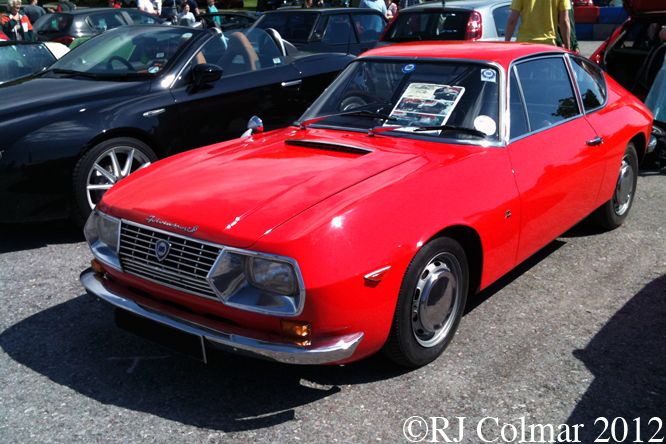
The Lancia Fulvia Sport with an aluminium alloy body designed by Elio Zagato using Lancia Fulvia Coupé running gear was launched in 1965.

Lancia Fulvia Sport 1.3, Simply Italian, Beaulieu,

Initially Fulvia Sports were powered by an 88hp 1216 cc / 74.2 cui narrow angle, 12°53’28”, V4 with one overhead camshaft operating all the inlet valves and a second operating all the exhaust valves all of which operate in a single cylinder head thanks to the narrow angle of the cylinders.

Lancia Fulvia Sport 1.3, Simply Italian, Beaulieu,

The longitudinally mounted motor is canted over at 45 degrees from horizontal which allows a low bonnet / hood line. Often wondered if the Fulvia Sport influenced the headlight bezel design of the Datsun 120A-FII.

Lancia Fulvia Sport 1.3, Simply Italian, Beaulieu,

Today’s featured 1969 Fulvia Sport 1.3 is fitted with an 87hp 1298 cc / 79.2 cui V4 with the cylinder pairs inclined at just 12°45’28”.

Lancia Fulvia Sport 1.3, Simply Italian, Beaulieu,

Fulvia Sport’s were assembled at Zagato’s factory near Milan using Peraluman, a trade name for a aluminium alloy with up to 5.6% magnesium content which is easier to work and more corrosion resistant than ordinary a aluminium.

Lancia Fulvia Sport 1.3, Simply Italian, Beaulieu,

FIAT acquired Lancia in 1969 which appears to have led to later Fulvia Sports being fitted with steel bodies and aluminium doors which added overall weight but saved both material and production costs.

Lancia Fulvia Sport 1.3, Simply Italian, Beaulieu,

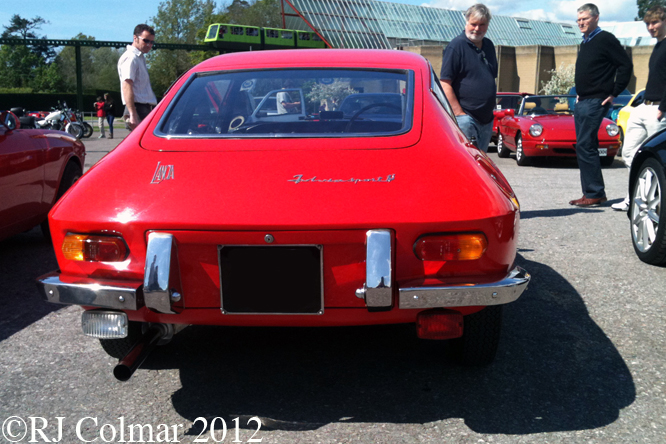
Peraluman bodied Fulvia Sports like the one seen here at the recent Simply Italian day at Beaulieu, are most easily distinguished by the small rear light clusters which do not wrap around the rear quarter panel. It is thought somewhere between 600 and 700 Fulvia Sports were manufactured.

Thanks for joining me on this “Peraluman Zagato” edition of “Gettin’ a li’l psycho on tyres” I hope you will join me tomorrow for Americana Thursday. Don’t forget to come back now !

Share

Camouflaged Origins – MG F-type Magna #F1013

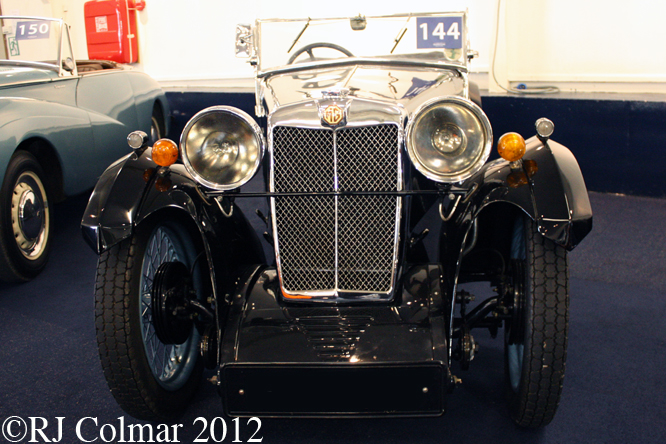
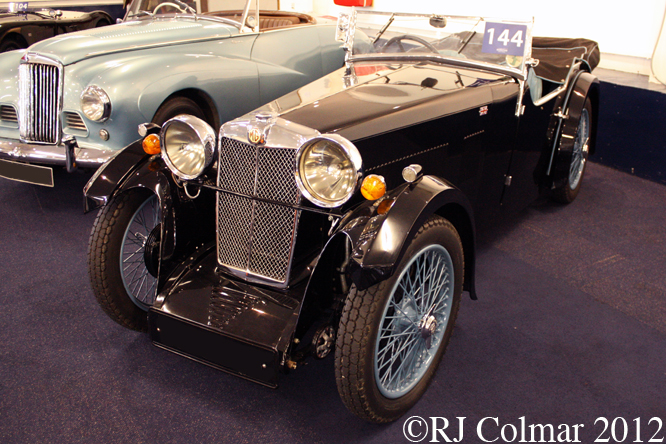
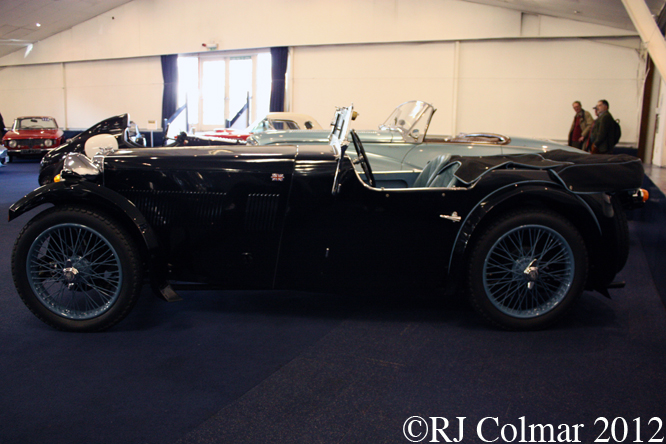
In 1931 MG introduced the the D-Type and F-Type the former with a four cylinder version of a motor which originated from the Wolseley Hornet. The F Type had a six cylinder engine that used the same four cylinder block with an extra two cylinders added.

MG F-type Magna, Silverstone Auctions, Race Retro

MG did it’s best to camouflage the Woleseley origins of the 37hp twin carburetor six cylinder motor with dummy side panels.

MG F-type Magna, Silverstone Auctions, Race Retro

Sitting in between the M-type Midget and the 18/80 Six models the 4 seat F-type was considered under powered and under braked when carrying three passengers along with the driver.

MG F-type Magna, Silverstone Auctions, Race Retro

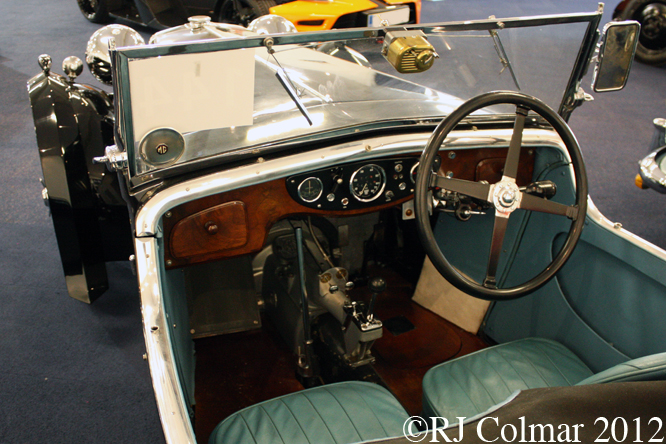
This 1932 F-type Magna was taken of the road in 1955 and a ten year restoration was set in motion when a stunt actor acquired it in 1979. Allegedly the actor bought the car after driving an MG J2 while working on the film “Death On The Nile

MG F-type Magna, Silverstone Auctions, Race Retro

A two seater F2 version of the F-type was introduced in 1932 the body of which would be used on the aforementioned J2.

MG F-type Magna, Silverstone Auctions, Race Retro

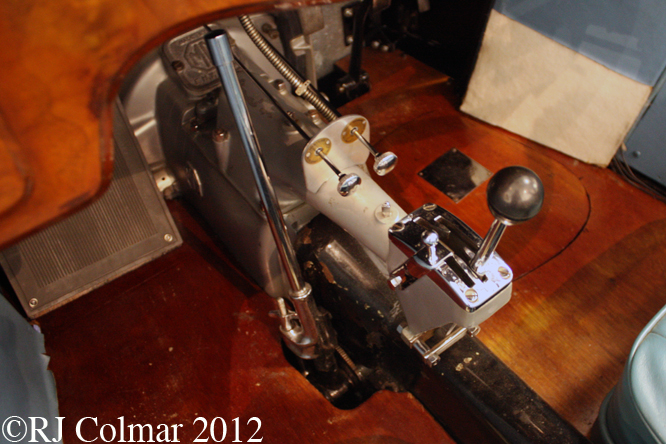
The F-type’s non-synchromesh four speed gearbox was manufactured by ENV. 1250 F-types were built from 1931 until 1932 when the model was replaced by the L-type Magna.

Thanks for joining me on this “Camouflaged Origins” edition of “Gettin’ a li’l psycho on tyres”, I hope you will join me again tomorrow. Don’t forget to come back now !

Share

TATA Loadbeta TDI

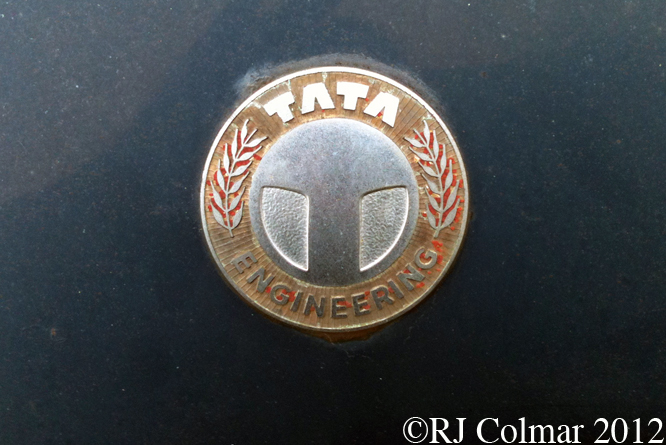
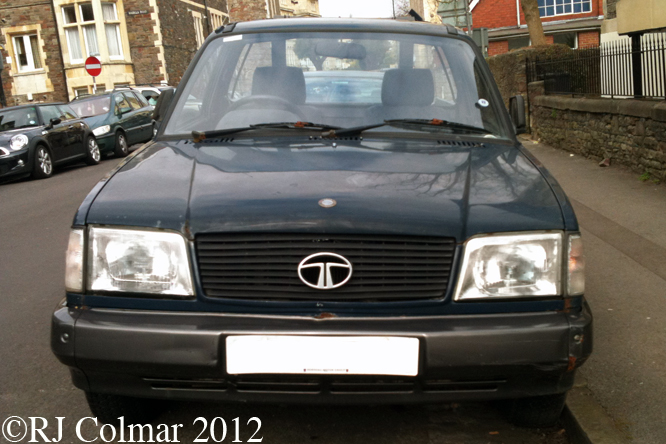
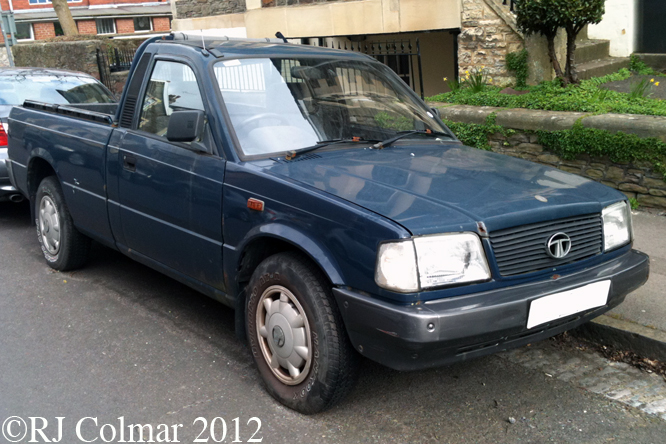
The Tata Loadbeta TDI, UK market, TL, Mobile, 207 TDi and Telcoline elsewhere, was launched in 1988.

TATA Loadbeta TDI

TATA Motors began manufacturing commercial vehicles in 1954, in collaboration with Mercedes Benz until 1969, and has grown to become India’s largest commercial vehicle manufacturer. In the 1990’s TATA diversified into car MPV and SUV manufacture, initially all sharing some styling similarities to the Loadbeta cab seen here. Since the turn of the Millenium TATA has engaged in collaborations with numerous manufacturers, including Rover which gave birth to the short lived CityRover and acquisitions which have included Jaguar and Land Rover. The last acquisition included the rights to the Lanchester brand.

TATA Loadbeta TDI

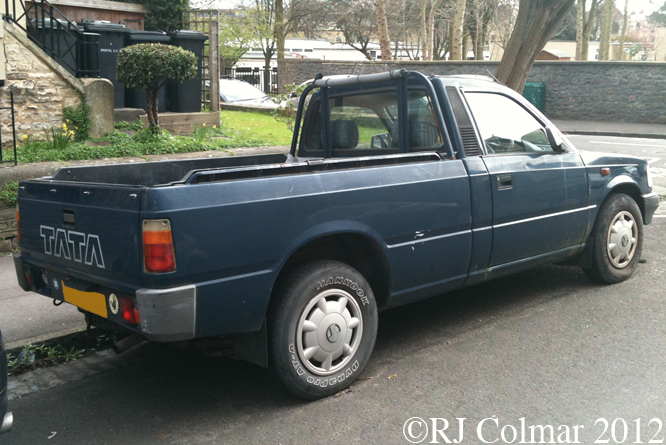
This 2001 Loadbeta is powered by a 90 hp 4 cylinder Turbo Diesel 1948cc / 118.8cui motor.

TATA Loadbeta TDI

Capable of carrying 1000 kgs / 2,200 lbs the load space can easily carry a standard Euro pallet.

TATA Loadbeta TDI

Production of the original Loadbeta in two and four wheel drive forms ceased in 2003, three further incarnations of the Tata pickup have appeared since then.

Thanks for joining me on this “TATA Loadbeta TDI” edition of “Gettin’ a li’l psycho on tyres” I hope you will join me again tomorrow. Don’t forget to come back now !
Share

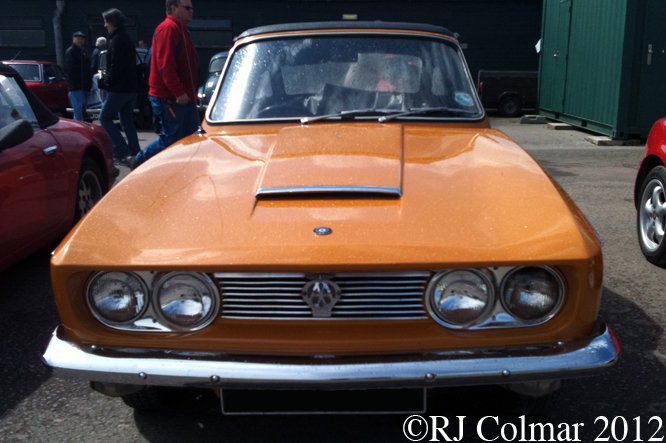
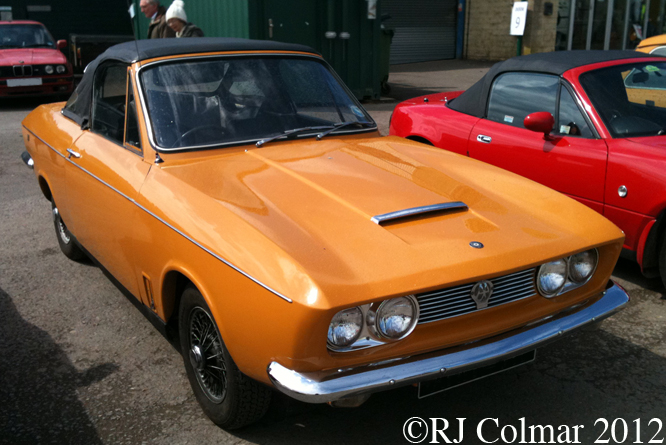
Power & Roadholding – Bond Equipe 2 Litre Convertible

In 1967 Bond expanded it’s range of four wheel vehicles from the hitherto single Triumph Herald based Equipe 4S to include a Triumph Vitesse based Equipe 2 Litre GT.

Bond Equipe Convertible, Bristol Classic Car Show

The following year the chassis was upgraded to the new Mk II Vitesse type which featured improved power and rear suspension leading to the marketing strap line “The New Bond is great on power, great on road holding.

Bond Equipe Convertible, Bristol Classic Car Show

1968 also saw the launch of the Convertible version of the six cylinder Equipe 2 litre which was marketed like all Equipe’s through Standard Triumph dealerships.

Bond Equipe Convertible, Bristol Classic Car Show

With an envious eye on Bond’s distribution agreement with Standard Triumph, Reliant, manufacturers of Scimitar cars, purchased Bond in 1969 with a view to expanding the distribution of it’s own vehicles. However these plans came to nought in the wake of Triumphs merger into the British Leyland conglomerate which rationalised that the sales of Bond’s alongside Triumphs own products was superfluous.

Bond Equipe Convertible, Bristol Classic Car Show

The 1969 model seen here is one of just 841 convertibles built between 1968 and 1970 when production of all Bond’s in Preston was wound down and the manufacturing facilities closed by their new owners Reliant.

Thanks for joining me on this “Power & Roadholding” edition of “Gettin’ a li’l psycho on tyres” I hope you will join me again tomorrow. Don’t forget to come back now !

Share