Tag Archives: Fiat

Otto Vú – FIAT 8V

It is believed work commenced on the 2 litre FIAT Tipo 106 70° V8 design credited to Dante Giacosa in 1945.
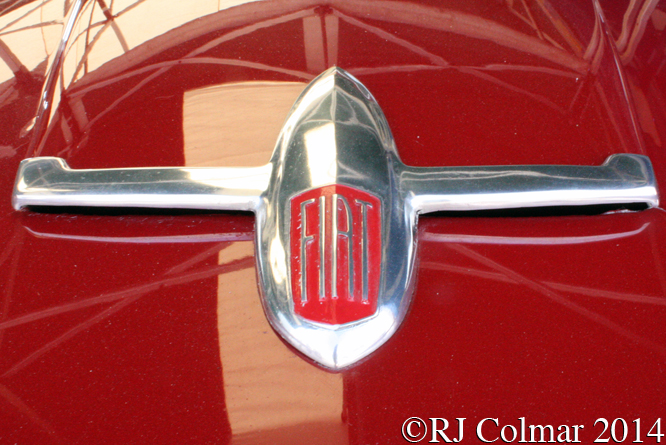
FIAT 8V, Silverstone Classic

The engine which was manufactured in 105, 115 or extremely rare 120 hp variants was only used for the 8V model in FIAT’s range, but was notably also adopted by SIATA for their 208S model.
FIAT 8V, Silverstone Classic

8V’s, so called because Ford held the copyrights to the V8 name, were fitted into a tube frame chassis with independent suspension taken form the contemporary FIAT 1100 parts bin.
FIAT 8V, Silverstone Classic

Bodywork for the 114 8V’s, also known as Otto Vú’s, was primarily farmed out to a variety of coach builders including Zagato, Ghia and Vignale although 34 had bodywork designed by FIAT’s Fabio Luigi Rapi and made by FIAT’s Reparto Carrozzerie Speciali.
FIAT 8V, Silverstone Classic

While the production numbers were extremely low, by FIAT’s standards, they were built in sufficient numbers to qualify for use in GT competition where they enjoyed many successes.
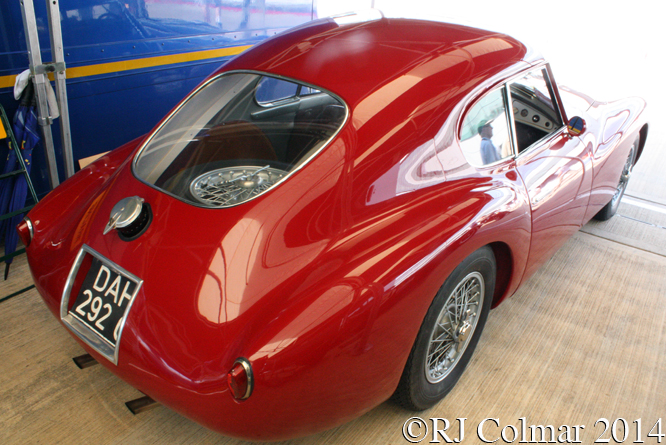
FIAT 8V, Silverstone Classic

Among those successes were Elio Zagato’s, from the coach building company, outright victories in the 3 hour race at Bari in 1954, repeated in 1955 by Carlo Siciliani on the same event and a win in the 1955 Berlin Grand Prix, drivers of 8V’s won the Italian under 2 litre GT championships up to and including 1959.
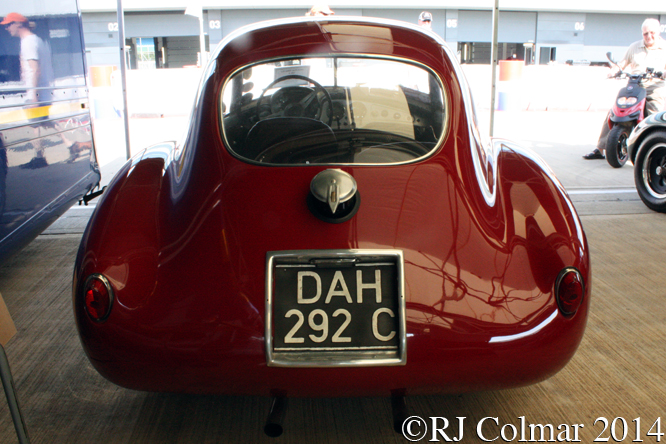
FIAT 8V, Silverstone Classic

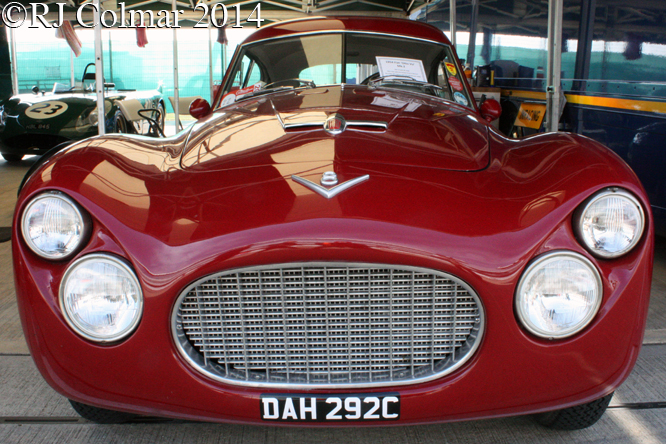
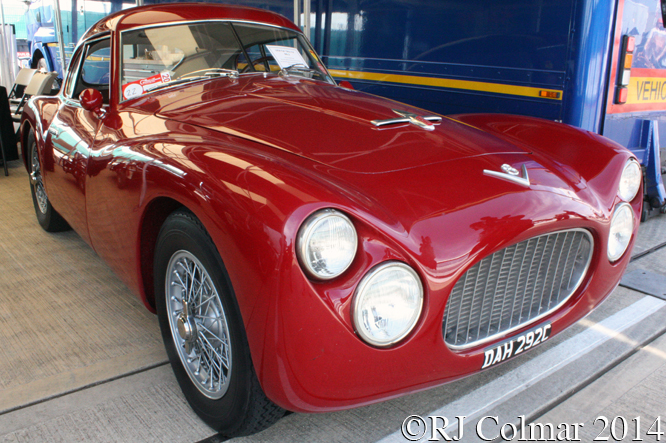
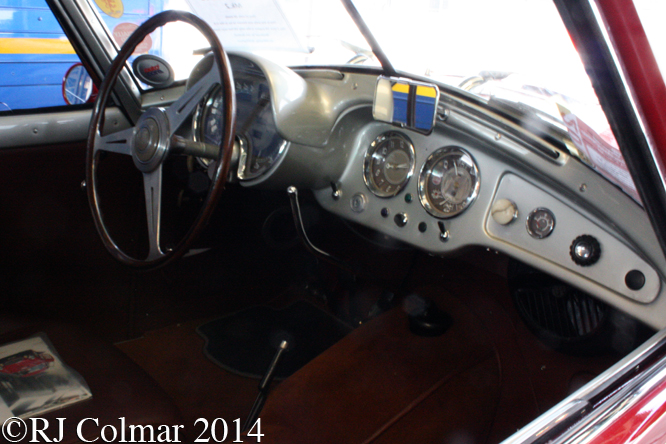
The example seen here at last years Silverstone Classic is a 1954 MkII Berlinetta one of just 28 with the later version of Rapi’s bodywork built by Reparto Carrozzerie Speciali, it has been restored by Ian Nuttall of IN Racing in Nottingham.

Thanks for joining me on this “Otto Vú” edition of “Gettin’ a li’l psycho on tyres” I hope you will join me again tomorrow when I’ll be looking at a Group B Rally Car that conquered Africa in the mid 1980’s. Don’t forget to come back now !

Share

Nuova Balilla – FIAT 508C

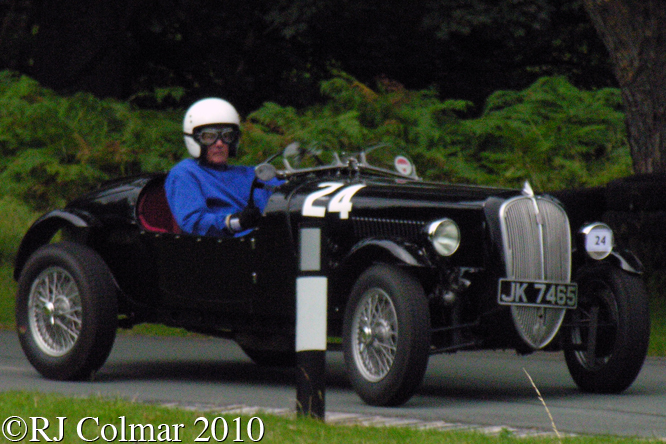
The FIAT 508C replaced the earlier 508, 508S and 508B models in 1937, 508C’s are also variously known as Nuova Balilla’s and 1100 in deference to their 1089 cc / 66 cui motor 4 cylinder motors producing 30 hp in standard spec and 40 hp in sporting CMM spec.

FIAT 508C, Cyril Hancock, VSCC Loton Park,

The FIAT 500 Topolino like styling of the 508C is credited to Dante Giacosa who was responsible for styling both models.

Modestly priced with independent front suspension and four speed gearbox the 508C was considered both a peoples car and a drivers car.

Cyril Hancock’s example seen above at Loton Park is a 1938 model first registered in the UK on March 3rd 1938.

With minor restyling and the 1100B name more popularly known as the “big nose” or ‘1100 musone’ in Italian production continued until the outbreak of hostilities.

Production of the 508C resumed after the ’39-’45 hostilities, with further modifications, in 1949. The post war model became the 1100E which remained in production until 1953.

Thanks for joining me on this “Nuova Balilla” edition of “Gettin’ a li’l psycho on tyres” I hope you will join me again tomorrow when I’ll be looking at a Safari Rally Lancia. Don’t forget to come back now !
Share

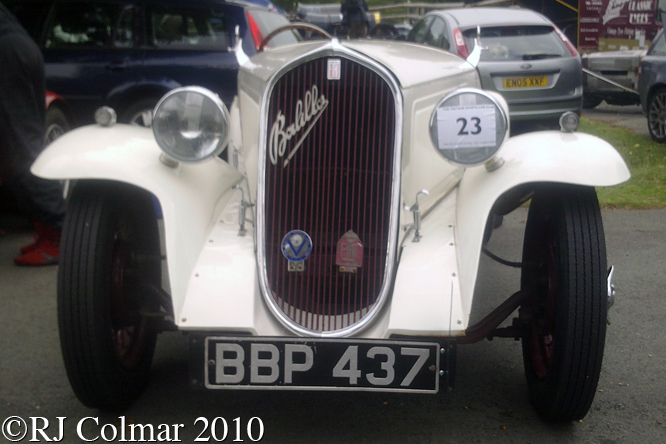
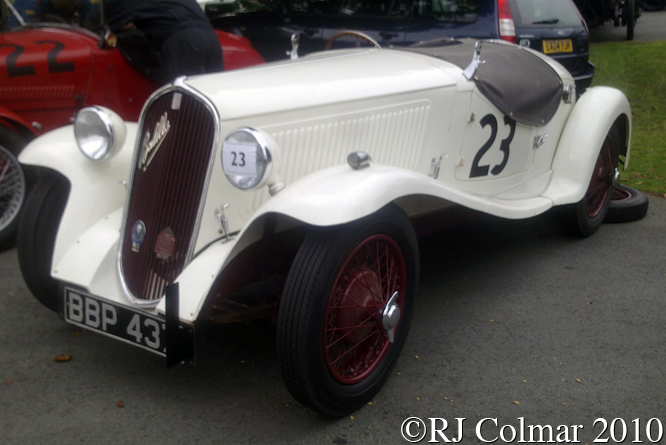
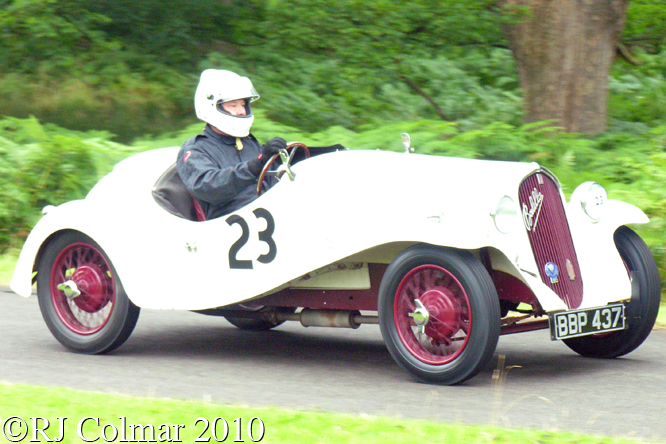
Genoese Revolt – FIAT 508S Balilla Spider Sport

Motor cars were over 100 years from becoming an everyday form of transport when a Genovese boy, Giovanni Battista Perasso, threw a stone, or stones, at an Austrian officer of the military occupation and kicked off the Genoese revolt against the Austrians in 1746.

Subsequently Giovanni’s nickname ‘Balilla’ was used for a Milanese Tractor, by the Italian Royal Navy for a class of Submarine, Ansaldo used the name for Italy’s only WW1 fighter aircraft to go into production the 1917 Ansaldo A1 and by FIAT for their 508 range of cars built between 1932 and 1937.

FIAT 508S Balilla, VSCC Loton Park,

A team working under Tranquillo Zerbi director of FIAT’s Technical Department designed the Balilla to incorporate some of the qualities of high end automobiles, like crank handle operated side window’s, into a vehicle with a modest price.

The original 508 was fitted with a side valve 1 litre / 61 cui 4 cylinder motor that produced 20 hp enough for the Balilla to reach 50 mph.

FIAT 508S Balilla, VSCC Loton Park,

In 1933 the 508S was fitted with an upgraded motor that produced up to 30hp that was later increased to 36hp with the aid of an overhead valve head.

Production of the Balilla ceased in 1937 and the model was replaced by the FIAT 508C Nuova Balilla 1100.

FIAT 508S Balilla, Patten, VSCC Loton Park,

Balilla’s were built at FIAT’s facility in Lingotto in Italy with six different body styles; Belina 2 door 4 seat saloon / sedan, 2 seat cabriolet Spider, 4 door 4 seat Torpedo of which ironically a special version was built for Italian Military operations in occupied area’s of North Africa, Spider Sport with styling by Ghia, Coupé and Van.

Assembly of some Balilla variants including the Spider Sport was further facilitated at Walter Motors in Czechoslovakia, Centralne Warsztaty Samochodowe in Poland, NSU-Fiat in Germany and Simca-Fiat in France.

Dr Dick Patten’s 1934 Spider Sport bodied Ballila, seen in these photographs at Loton Park, is listed as having a 1089 cc / 66 cui motor which presumably was sourced from a later post 1937 FIAT 508C Nuova Balilla 1100.

Thanks for joining me on this “Genoese Revolt” edition of “Gettin’ a li’l psycho on tyres” I hope you will join me again tomorrow when I will be looking at a competition Hillman Imp. Don’t forget to come back now.

Share

Light Rally History – Race Retro

Today’s blog features some of the tremendously storied rally cars that appeared at the recent Race Retro exhibition.

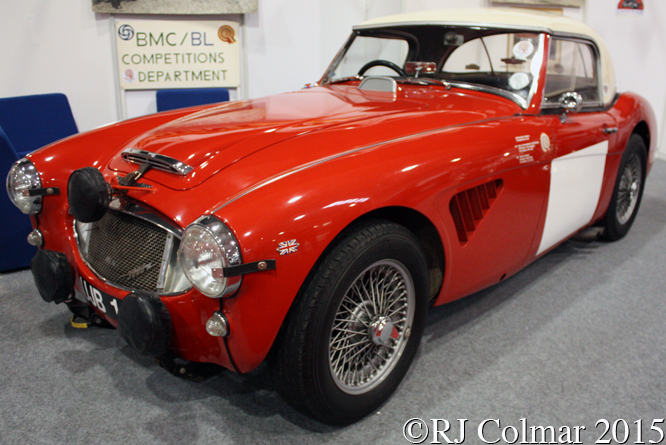
Austin Healey 3000 Mk1, Race Retro, Stoneleigh,

From 1960 comes this ex BMC works Austin Healey 3000 Mk 1 among it’s achievement’s was a 17th place overall and first in class driven by Pat Moss, Stirling’s younger sister, and Ann Wisdom on the 1961 Tour Of Corsica.

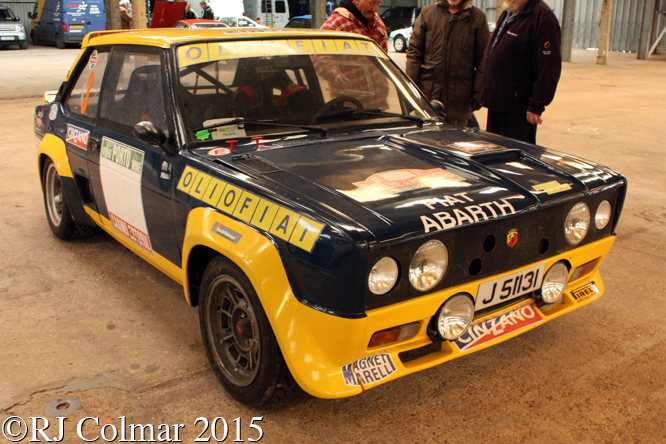
FIAT 131 Abarth, Race Retro, Stoneleigh,

When FIAT introduced the 131 Miafiori Abarth in 1977 the company went on a rampage of the World Rally Championship winning the titles in 1977, with the Olio Fiat colours seen here, 1978 and 1980 winning 20 World Championship Rallies over that period, I am not entirely sure of the history of this car registered in Jersey it appears in 1977 colours but with a 1980 head light and grill arrangement.

Ford Escort RS1800, Race Retro, Stoneleigh,

The original STW201R a works Ford Escort RS1800 was driven to victory in the 1977 East African Safari Rally by Björn Waldegård and Hans Thorszelius, the car was subsequently handed to Ford Heritage only to loose it’s identity original works colour scheme and be crashed at the hands of a TV Journalist. This car appears to be a replacement painted in the Rothmans Rally Team colours as worn by Ari Vatanen’s cars when he won the World Rally Drivers Championship with Dave Richards in 1981.

Toyota Celica TC, Race Retro, Stoneleigh

Björn Waldegård and Hans Thorszelius won the Safari Rally again in 1984 and with Fred Gallagher in 1986 driving the Toyota Celica TC models like the 1986 winner seen here, Finlands Juha Kankkunen with Fred Gallagher in the passenger seat won the Safari Rally in 1985 to make it a hat trick for the rear wheel drive Celica TC model.

Peugeot 309 Gti, Race Retro, Stoneleigh,

Englands only World Rally Champion Richard Burns drove this Group A front wheel drive Peugeot 309Gti to a 16th place finish with Robert Reid on his second Lombard RAC Rally start in 1991.

Ford Focus WRC, Race Retro, Stoneleigh,

Finally this 2001 all wheel drive Ford Focus WRC has won four Rallies outright, with Colin McRae winning the 2001 Cyprus and 2002 Acropolis Rallies with Nicky Grist, Jari Matti Latvala the 2003 Tempest Rally with Miikka Anttila and Nejat Avci winning the Pirelli Turkey Rally in 2005 with co driver Memisyazici Batuhan, today this car is owned by Steve Rockingham.

Thanks for joining me on this “Light Rally History” edition of “Gettin’ a li’l psycho on tyres” I hope you will join me again tomorrow for Oldsmobile Thursday. Don’t forget to come back now !

Share

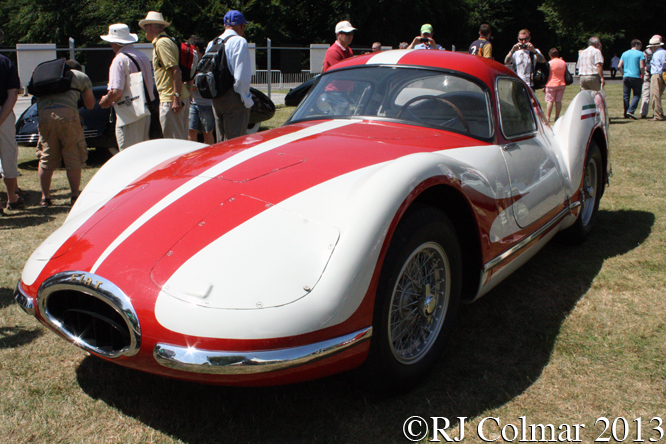
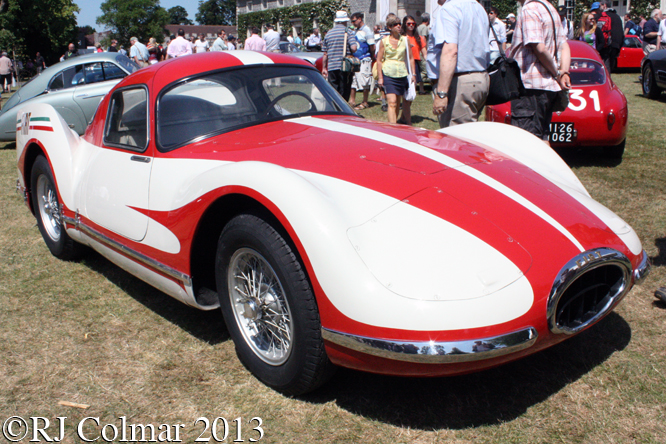
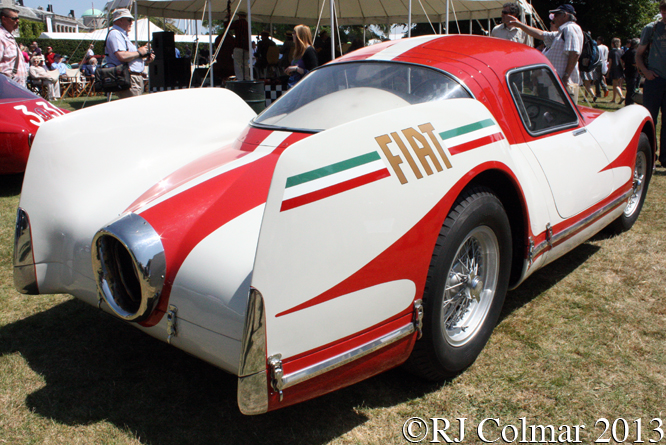
Cd 0.14 – FIAT 8001 Turbina

Spurred on by the news that Rover was looking to transfer it’s WW2 jet engine technology to production car use FIAT joined the fray in 1948 led by technical director Dante Giacosa.

FIAT Turbina, Goodwood Festival of Speed,

FIAT at the time was building building gas turbines for aeronautical and civil applications but in order to maintain secrecy from others in the FIAT empire Giacosa had a team of three engineers develop a purpose built turbine from scratch.

FIAT Turbina, Goodwood Festival of Speed,

Former Isotta Fraschini stylist Fabio Luigi Rapi was responsible for the shape of the 8001 Turbina which when tested at Turin Polytechnic indicated the drag co efficient was down to a record low of cd 0.14.

FIAT Turbina, Goodwood Festival of Speed,

Carlo Salamano first tested the 8001 Turbina on the famous oval test track set on the roof of FIAT’s Lingotto building in Turin in February 1954.

FIAT Turbina, Goodwood Festival of Speed,

With 300hp available the the 8001 Turbina was thought to be easily capable of breaking the 152 mph gas turbine powered world record set by Rover in 1952, however before the Turbina got a chance to go record breaking Frenchman Jean Hebert set a new gas turbine powered record of 191.8 mph in Renault’s purpose built record breaker “Etoile Filante” in September 1956 and it was recognised immediately that this was beyond the FIAT’s capability.

Thanks for joining me on this “Cd 0.14” edition of “Gettin’ a li’l psycho on tyres” I hope you will join me again tomorrow. Don’t forget to come back now !
Share

Open Road Demon – FIAT SB4 Mephistophele

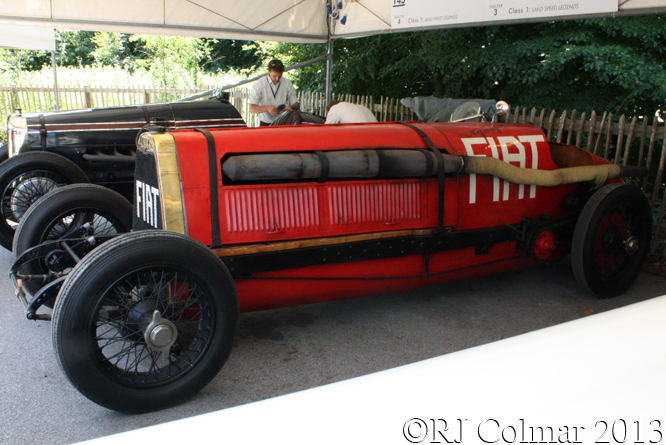
Some years after possibly serving on the western front as an ambulance driver Ernest Arthur Douglas Eldridge started appearing at Brooklands with a succession of cars that included a 1907 Isotta-Fraschini powered by a 20 litre / 1220 cui Maybach aero engine and a more modest and successful 10 litre / 660 cui FIAT.

In 1922 John Duff was racing his FIAT SB4 at Brooklands when the 18 litre / 1098 cui motor exploded in spectacular fashion and afterwards accepted an offer from Ernest Eldridge to buy the car.

Ernest managed to acquire a 260 hp 6 cylinder 21.7 litre / 1324 cui FIAT A 12 “Bis” aero engine to replace the blown SB4 original but had to lengthen the chassis of his SB4 by some twenty inches, allegedly using parts from a London Bus, to get the new engine to fit.

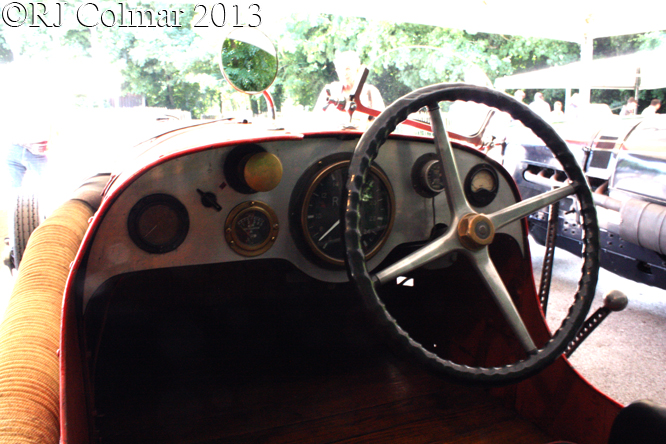
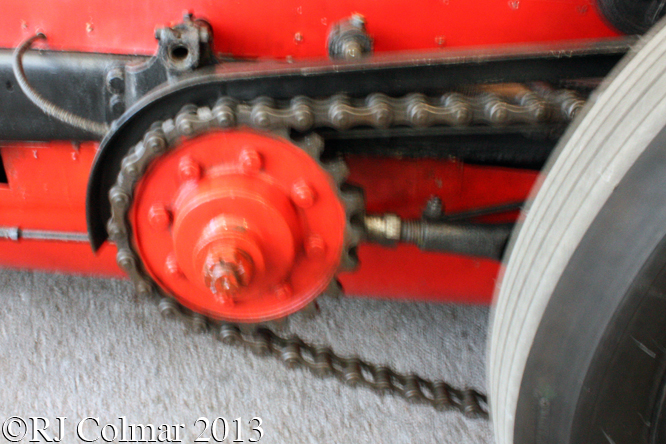
FIAT Mephistophele, Goodwood Festival of Speed,

The power output of the 2 plugs and 4 valve per cylinder engine was increased by fitting four carburetors and 4 plugs per cylinder that were charged by four magnetos.

With 320hp to power his two ton car Ernest turned up at Brooklands in 1923 and immediately set a new one way standing start 1/2 mile record by covering the distance in 23.17 seconds (77.68 mph).

In June 1924 Ernest took today’s featured car Arpajon near Montlhéry in France where he was faster than a Delage V12 that was running on the same day and smashed the Land Speed Record that had stood at stood at a smidgen over 124 mph since 1914. Delage however protested the result because Ernest’s FIAT had no reverse gear as required by the regulations of the day.

FIAT Mephistophele, Goodwood Festival of Speed,

The FIAT was taken to Paris where a device was fitted that allowed the car to reverse and returned to Arpajon on June 12th 1924 and Ernest claimed the World Land Speed Record over one mile at a speed of 145.89mph / 234.98kph, that night the FIAT was allegedly parked across the street from the Delage show room where the slower Delage V12 took center stage.

This would be the last World Land Speed Record to be set on a public road, at the Monterey circuit the FIAT, now named after the Faustian demon Mephistopheles, also broke the 5 and 10 km records.

Ernest sold Mephistophele to the French driver “Le Champion” in 1925 and moved onto building Grand Prix Specials of his own devising which used Amilcar chassis and Anzani motors.

FIAT Mephistophele, Goodwood Festival of Speed,

In 1926 Ernest ran two cars in the Indy 500 for Douglas Hawkes who was classified 14th with 91 laps completed and himself, classified 19th with 45 laps completed.

While attempting to break records at Monterey in the winter of 1926 the front axle of his car collapsed and Ernest lost an eye in the ensuing accident.

Afterwards he continued record breaking notably with a Chrysler at Monterey before becoming “Record Attempt Manager” for Capt Eyston.

FIAT Mephistophele, Goodwood Festival of Speed,

The record Ernest claimed in Mephistophele stood until September 1925 when Malcolm Campbell raised the World Land Speed Record to just over 150mph driving the aero engined Sunbeam V12, which I looked at last week.

Mephistophele was acquired by FIAT Chairman Avvocato Giovanni Agnelli in 1969 and when not out on the road it can be seen at Centro Storico Fiat in Turin.

Thanks for joining me on this “Open Road Demon” edition of “Gettin’ a li’l psycho on tyres” I hope you will join me again tomorrow when I’ll be looking at an Amilcar. Don’t forget to come back now !
Share

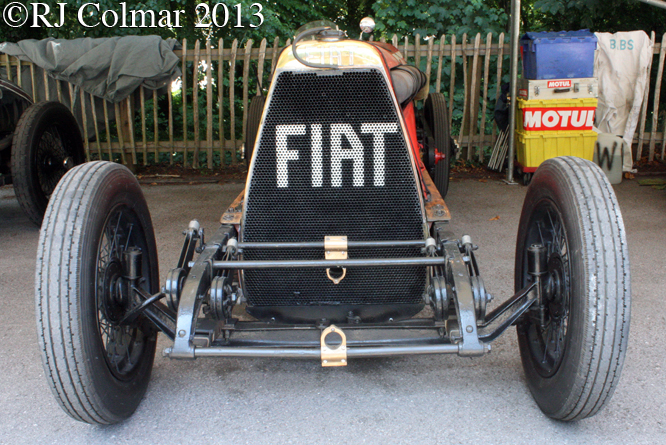
Unfinished Business – FIAT S76

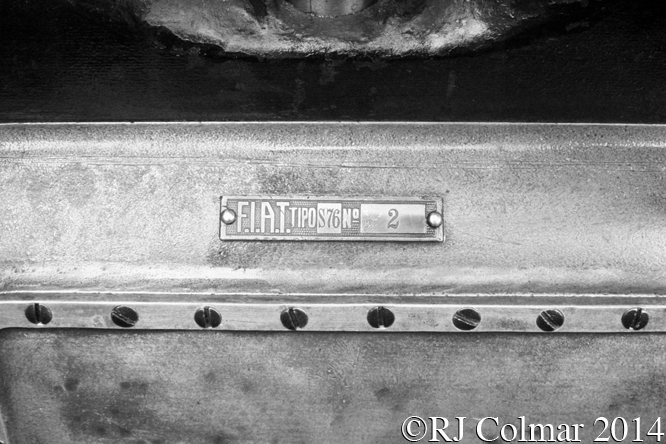
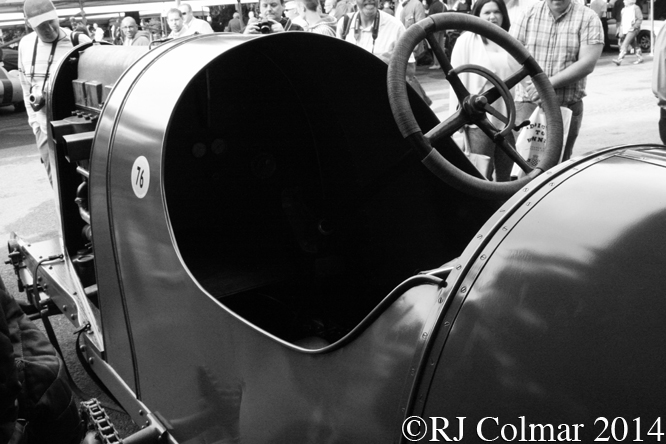
The FIAT S76, also known as “The Beast Of Turin”, was designed to capture the World Land Speed Record in 1911 which at the time stood at 127.66 set by Fred Marriot driving the steam powered Stanley Rocket in 1906 and the petrol powered Benz No.1 which recorded 125.94 mph set by Frenchman Victor Hémery, both speeds recorded over a flying kilometer.

FIAT S76, Goodwood Festival of Speed,

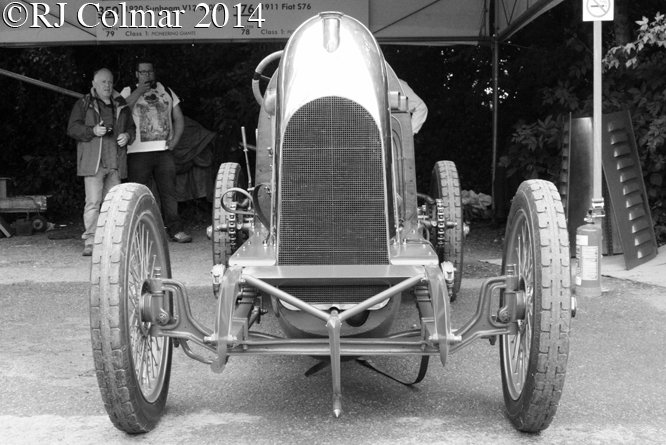
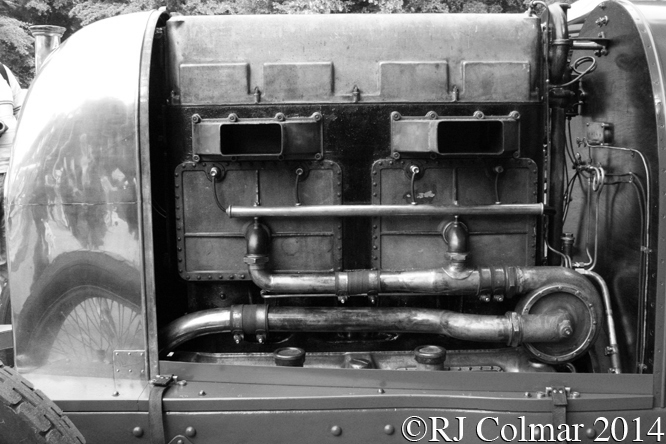
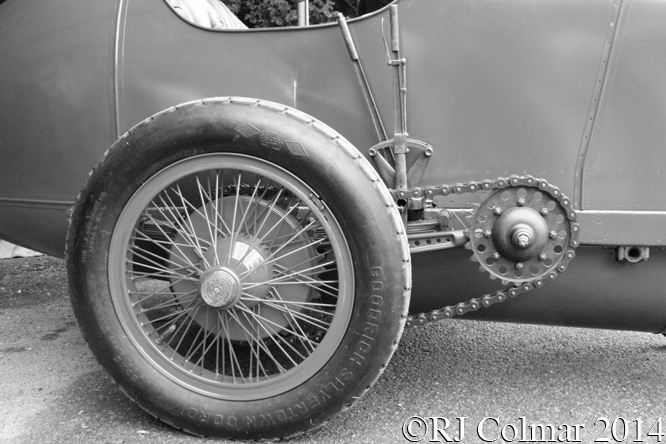
There is disagreement over how many spindly S76 chassis were built some say one, Duncan Pittaway who built today’s example says two. Duncan’s chassis flexes under the weight of the twin cam, four valve per cylinder, four cylinder motor with a capacity of 28.3 litres / 1,727 cui.

FIAT S76, Goodwood Festival of Speed,

With dual ignition the motor was good for nearly 300 hp and in 1911 Pietro Bordino drove an S76 270 miles north on public roads from Brooklands near London to Saltburn by the Sea where it was timed at a promising 116 mph on soft sand. One over enthusiastic US promoter believed incorrectly that Bordino had covered 116 mph in an hour.

FIAT S76, Goodwood Festival of Speed,

In 1912 Arthur Duray drove an S76 at Oostend in Belgium where the car was unofficially timed at 139 mph. Unfortunately bad weather and trying to fit two runs in with a tram timetable precluded a successful conclusion to the attempt.

FIAT S76, Goodwood Festival of Speed,

There is a myth that one of the S76’s later the same year was timed at an unofficial 180 mph at Long Island or Daytona Beach, a speed that was never officially reached on land until 1927, Duncan absolutely refutes such myth’s about the S76, though a US promoter did go public on his intention to organise an event twixt an S76 and a record holding Blitzen Benz type but that event NEVER TOOK PLACE.

FIAT S76, Goodwood Festival of Speed,

Duncan found the chassis for today’s featured car, which he believes Duray drove in Belgium, in Australia where the provenance, origin and even chassis type is vigorously being questioned by respected historians. The motor was found in the Politecnico di Torino who received it from FIAT.

FIAT S76, Goodwood Festival of Speed,

Once Duncan had the chassis and motor he repaired the chassis
and set about building a gearbox from original FIAT drawings and returning the motor to working order which required building new connecting rods as long as my forearm and new pistons. Duncan says the most difficult part was recreating the body from photographs and drawings which he handed over to Roach Manufacturing.

Now the S76 is complete it has become an internet sensation after a clip of it being started for the first time appeared on youtube. Duncan hopes to take his S76 to Oostende to complete a properly timed run to show that the S76 was the fastest car in the world going into the 1914-18 war.

Thanks for joining me on this “Unfinished Business” edition of “Gettin’ a li’l psycho on tyres”, I hope you will join me again tomorrow. Don’t forget to come back now !
Share