Tag Archives: Goodwood

Dream Car – Vauxhall Cresta PA

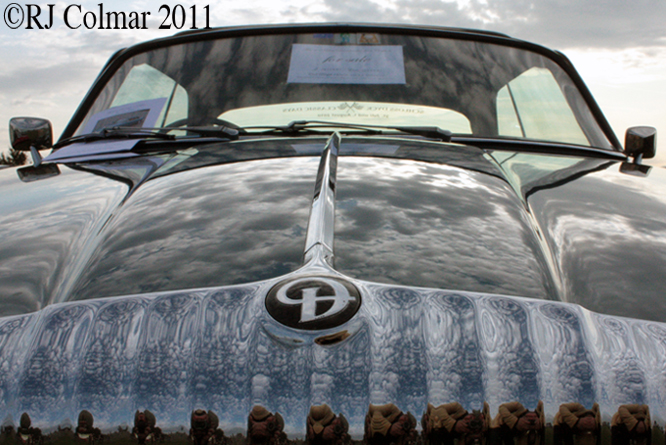
I don’t believe it is any exaggeration to say that no other British mass production vehicle quite captured the spirit of the US Dream Car concepts of the 1950’s quite like the second iteration of the Vauxhall Cresta known as the PA.
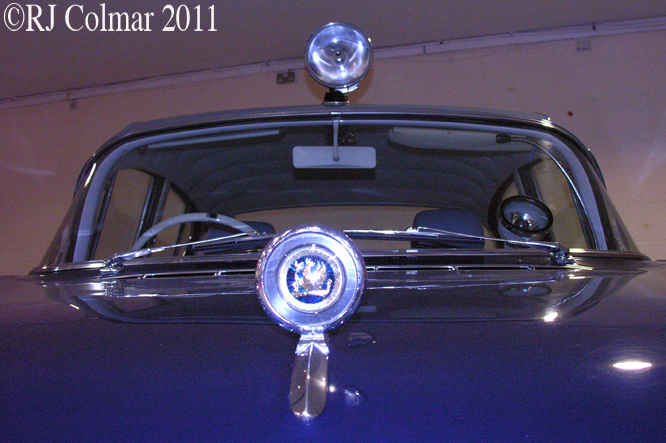
1958 Vauxhall Cresta, Race Retro

With unadulterated optimistic styling that mimics both the Packard Caribbean production car and Lincoln Futurama Concept car of 1955 the Cresta PA personifies the Rock’n’Roll era of the 1950’s in much the same way as the 1957 Cadillac Series 62.
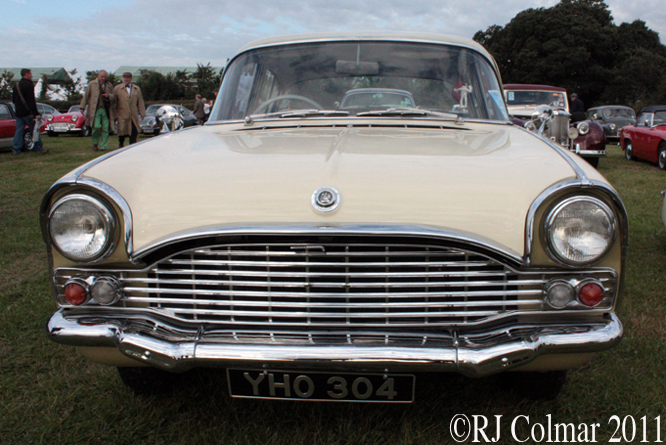
1958 Vauxhall Cresta, Goodwood Revival

The Cresta PA could seat six with a three abreast bench seat up front, which thanks to a column shift for its three speed gearbox and dashboard mounted handbrake facilitated easy smooching twixt driver and companion.
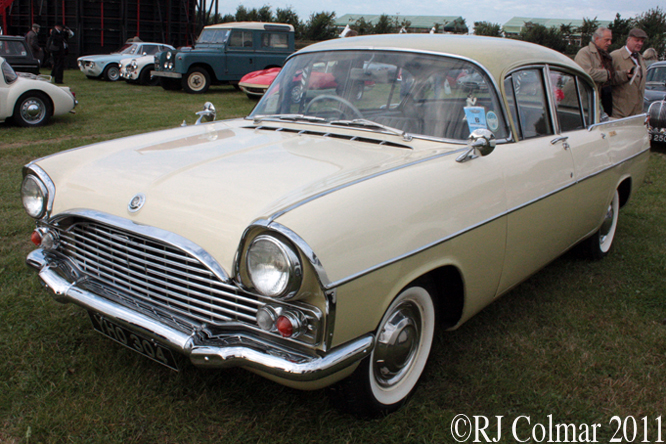
1958 Vauxhall Cresta, Goodwood Revival

Both of the cars featured in today’s post were powered by a 2262 cc / 138 cui straight 6 cylinder motor that delivered 70 hp enough for the Cresta to reach 60 mph from rest in 16.8 seconds and a top speed of 89 mph.
1958 Vauxhall Cresta, Race Retro

This two tone blue example appears to be a 1958 model, it was used by John Walker and Frank Dimblebee in the 1960 Monte Carlo Rally.
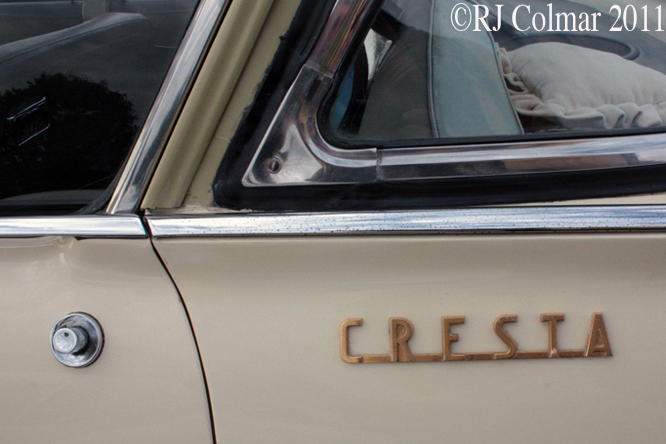
1958 Vauxhall Cresta, Goodwood Revival

Seats covered in leather and nylon, fitted woven carpets and a heater came fitted as standard for the 1960 model above.
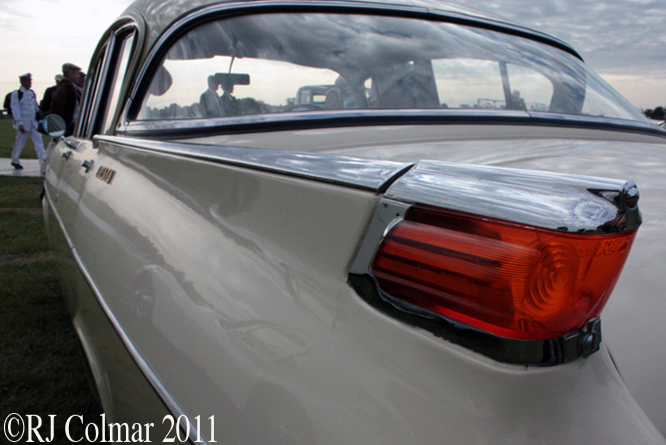
1958 Vauxhall Cresta, Goodwood Revival

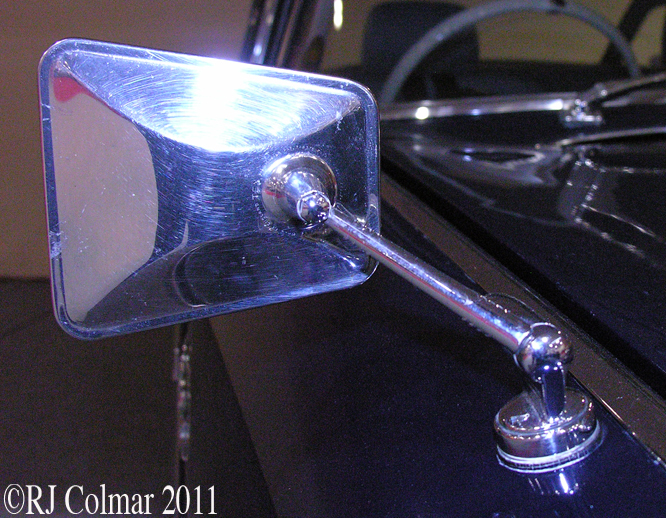
Options included radio, fog lights, reversing lights, locking filler cap and external mirrors.
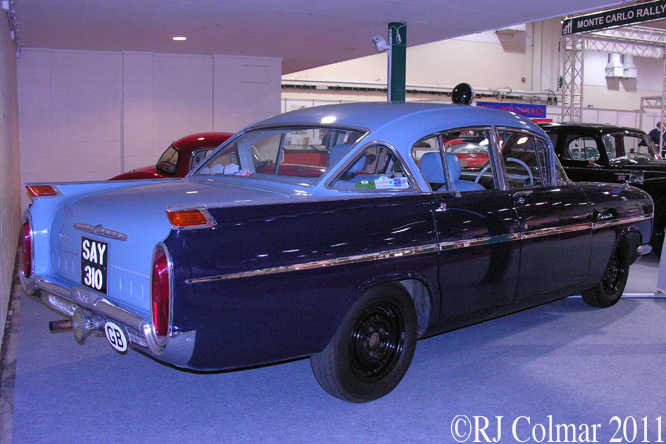
1958 Vauxhall Cresta, Race Retro

The asking price for one of these classics in good condition today is around £10,000 which reflects the fact that few of the 81,841 PA’s built between 1957 and 1962 have survived.
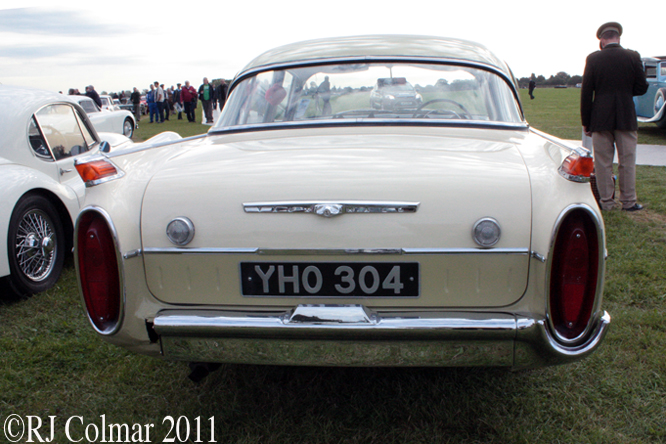
1960 Vauxhall Cresta, Goodwood Revival

Fans of British ska band The Specials may remember a Cresta PA featured in the video for their seminal hit ‘Ghost Town‘, that was a 1962 model fitted with a larger 104 hp 2651 cc / 162 cui straight six.

Hope you have enjoyed this British Dream Car edition of ‘Gettin’ a li’l psycho on tyres’ and that you will join me again tomorrow. Don’t forget to come back now !

Share

Perfect Daily Driver – Daimler Sovereign Coupé

Today’s post is dedicated to yet another GALPOT Birthday Boy Racer187 who some of you may know as the Rowdy Racer with a Daimler SP 250 I blogged about late last year.

Daimler Sovereign Coupé

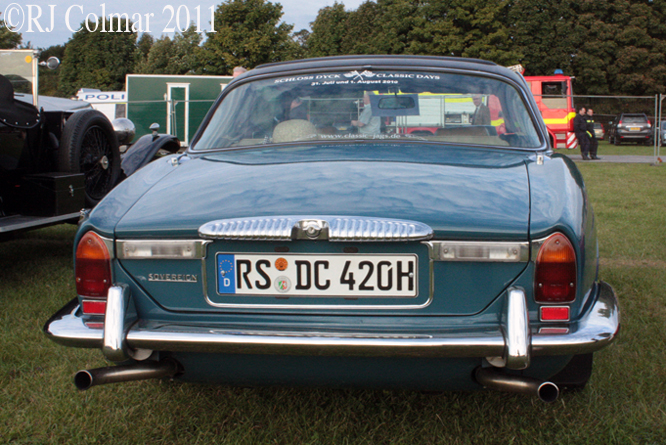
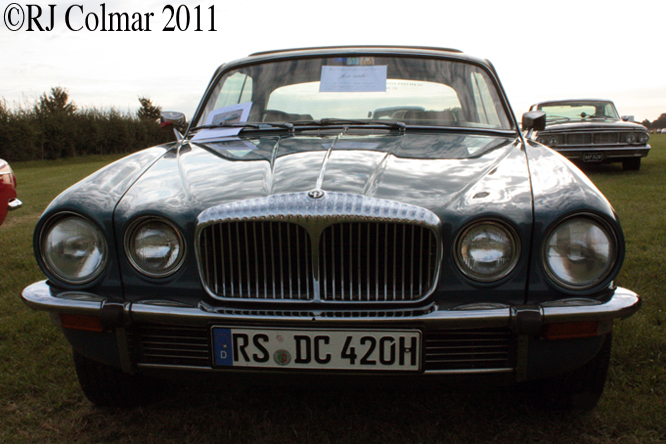
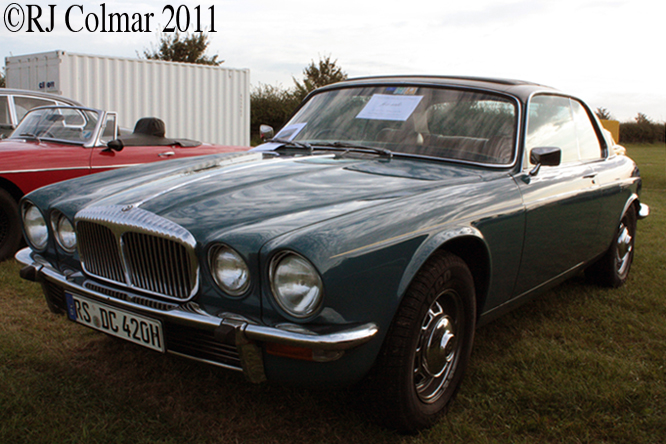
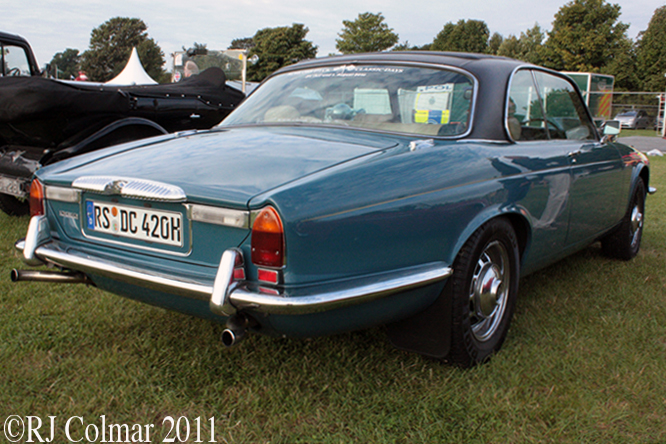
Today’s vehicle in featured vehicle in honor of Ryan is a Daimler Sovereign Pillarless Coupé which of the badge engineered Daimlers is my personal favorite.

Daimler Sovereign Coupé, Goodwood Revival

This particular Right Hand Drive (RHD) 4.2 liter six cylinder model, described by the owner a a ‘Perfect Daily Driver’ appears to have been driven around 500 miles from Remscheid in Germany all the way to the Goodwood Revival.

Daimler Sovereign Coupé, Goodwood Revival

The Daimler Sovereign Pillarless Coupé was in production from 1974 to 1978 and apart from its fluted grill and badges was externally identical to the Jaguar XJ Coupé but less than a third of the Jaguar / Daimler Coupé’s were Daimler variations.

Daimler Sovereign Coupé, Goodwood Revival

Due to issues with the paint going brittle as it oxidized and flexing in the pillar less roof vinyl roofs were standard on both variants of the Coupé to hide the cracked paint where the roof flexed. The vinyl roofs then acted as moisture traps when the paint beneath did crack causing rusting issues. Modern paints do not become so brittle and some restorations of these models have the vinyl roof removed.

Daimler Sovereign Coupé, Goodwood Revival

This particular car has been subjected to a fully documented bare metal restoration which includes being repainted in Jaguar Squadron Blue.

Daimler Sovereign Coupé, Goodwood Revival

What I particularly like about this restoration is that it features the correct vinyl roof and XJ / Sovereign Series II bumpers, all of the XJ / Sovereign Coupés were built with Series II bodies and chassis.

Wishing Racer187 aka Ryan Smith a very Happy Birthday.

Thanks for joining me on this Sovereign Pillarless Coupé edition of ‘Gettin’ a li’l psycho on tyres’, I hope you will join me again tomorrow. Don’t forget to come back now !
Share

Vintage Splits – Vauxhall 30/98

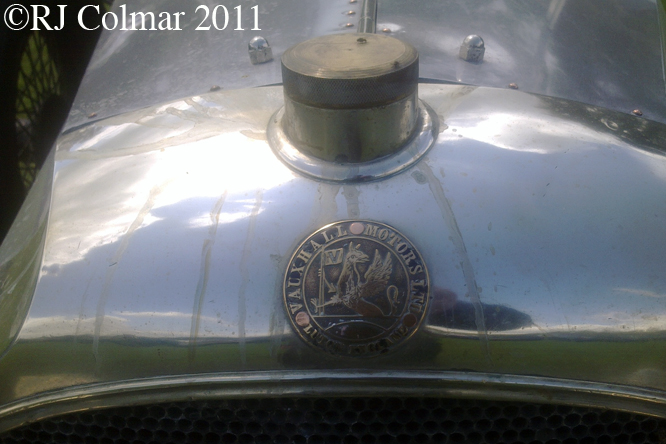
Two weeks ago I blogged about some Vauxhall 30/98’s that I saw at VSCC meetings on the Hills at Prescott and Loton Park. Todays Photographs are of another 30/98 I saw earlier this year at Goodwood Festival of Speed.

Vauxhall 30/98, Goodwood Festival of Speed

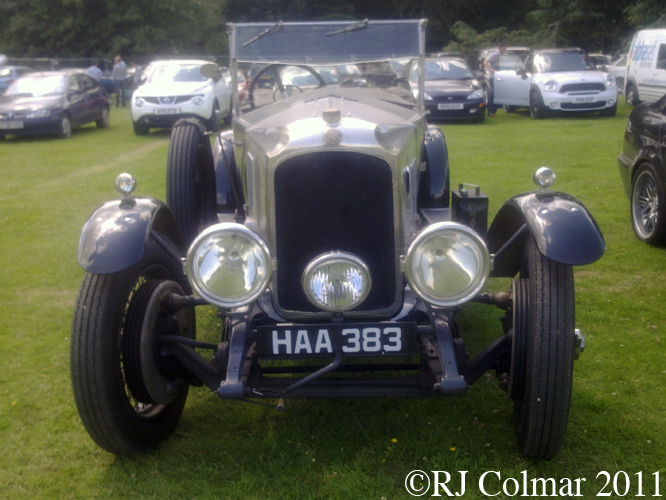
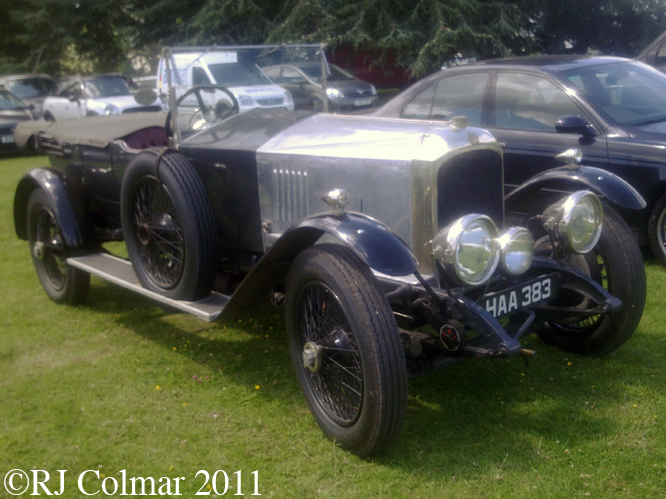
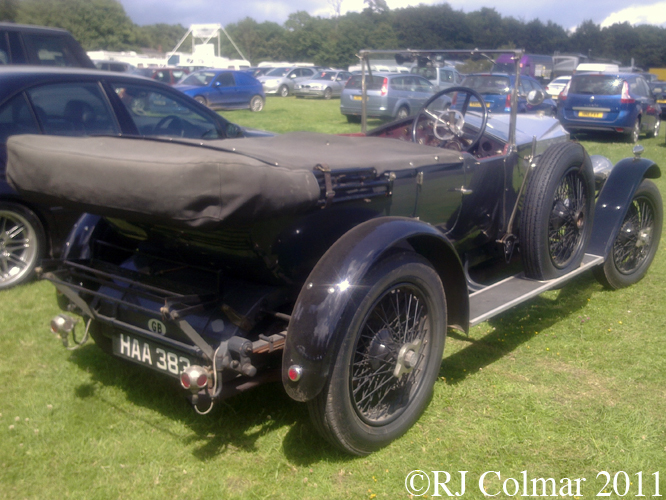
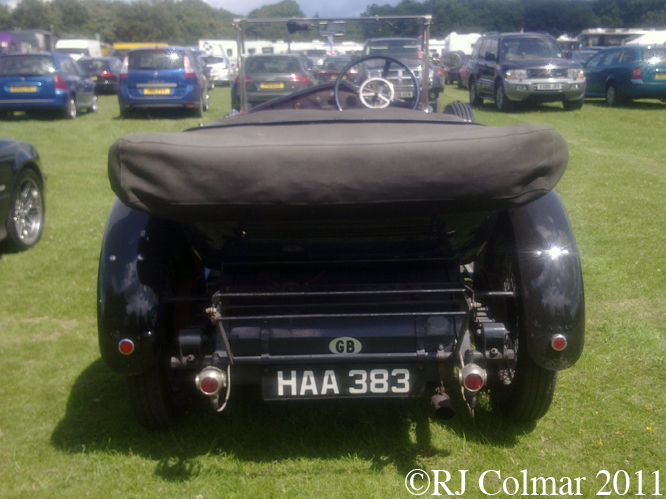
The known history of elements of this car date back to the 1949 when Alan Southon built a Vauxhall 30/98, registration HAA 383, from parts that were once on the inventory of the Phoenix Green Garage in Hampshire. Sometime after completion Alan used the car in the Brighton Speed Trials.

Vauxhall 30/98, Goodwood Festival of Speed

During the 1950’s the remains of HAA 383 were found in a field in Scotland and the car was reassembled by Carrick Watson still with the registration HAA 383, body number OE 101, chassis number OE 304 and engine number OE 232.

Vauxhall 30/98, Goodwood Festival of Speed

At some point the body OE 101 was reunited with it’s original OE 101 chassis in return for a new chassis and body. The new body was fitted to chassis OE 304 along with an older OD engine.

Vauxhall 30/98, Goodwood Festival of Speed

While the new chassis received the OE 232 engine, a Peppercorn Tourer style body, a Peugeot front axle, a back axle from a Vauxhall 23/60 and the number plate that was generated when Alan Southon built his car from the parts obtained from the Phoenix Green Garage.

Vauxhall 30/98, Goodwood Festival of Speed

HAA 383 has since competed in a number of VSCC events and taken part on the Fluella Pass Hill Climb near Davos in Switzerland. The car has also recently been fitted with a replacement cylinder head made in Australia where 60% of all 30/98’s were originally sold.

My thanks to Pre War Car on who’s site further details about HAA 383 are to be found.

Thanks for joining me on another Carceology edition of ‘Getting’ a li’l psycho on tyres’, I hope you will join me again tomorrow ! Don’t forget to come back now !

Share

Wobbly Web Wheels – Lotus 12

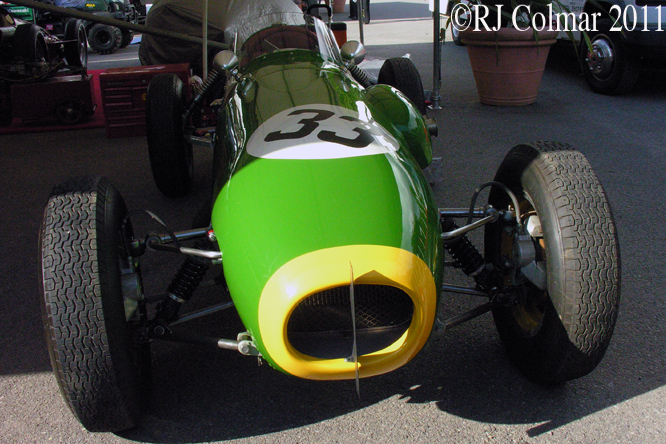
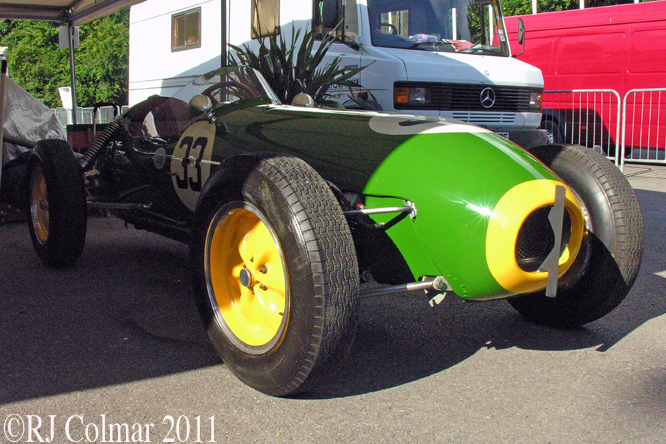
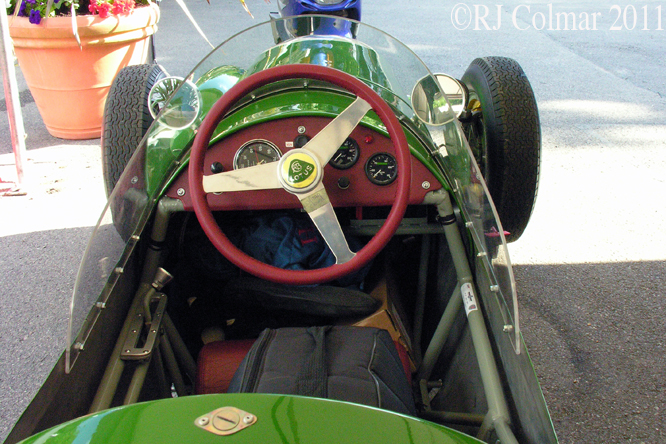
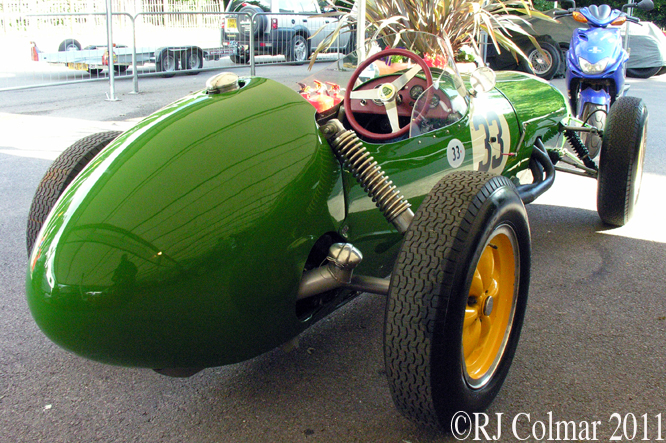
Despite only being fitted with mock up engine and all new rear transaxle made of wood the Lotus 12 with a chassis made of Reynolds 531 tubing looked sensational to the select members of the press lucky enough to it in the stable block at the back of a hotel in Hornsey in October 1956.

Lotus 12

Lotus 12, Goodwood Festival of Speed, June 2011

The space frame chassis had independent wishbone suspension on the front and was to be powered by a 4 cylinder Coventry Climax motor built to meet the then second tier Formula 2 regulations. The gearbox mounted to the rear transaxle was to feature a sequential shift as used on motor cycles.

Lotus 12

Lotus 12, Goodwood Festival of Speed, June 2011

Typical of designer Colin Chapmans maxim to add lightness the magnesium ‘wobbly web’ wheels, inspired by a design Colin had seen on a US military aircraft, were fitted with six wheel nuts instead of the more common central knock off nut because Formula 2 races did not, as a general rule, require pit stops to change tyres and the six small wheel nuts weighed less than the one knock off nut.

Lotus 12

Lotus 12, Goodwood Festival of Speed, 2011

Colin Chapmans first foray into open wheel racing under his own Lotus banner while innovative was not as successful in 1957 as had been the Vanwall for which Colin had designed the chassis, but this did not prevent him from fitting the 12 with an oversize version of the Formula 2 Coventry Climax engine and running two examples at the Monaco Grand Prix in 1958 for Graham Hill and a second F2 spec car for Cliff Allinson to mark Lotus first entry into the top Formula One tier of the sport.

Lotus 12

Lotus 12, Goodwood Festival of Speed, 2011

The first two Lotus 12’s featured de Dion suspension but Chapman refined his design by fitting his own version of the Macpherson struts fitted with universal joints that became known as the Chapman strut, a system also used on the Lotus Elise. In Formula One races the Lotus 12 scored some promising sixth place finishies and a remarkable 4th place in Belgium but the most important Colin Chapman was now playing on the big stage where he would leave an indelible mark right up until his untimely demise im 1982.

Thanks for joining me on this Wobbly Web edition of ‘Gettin’ a li’l psycho on tyres’ I hope you will join me again tomorrow when we will be looking at a big cat. Don’t forget to come back now !

Share

From The Mystery Batch – Ferrari 196 S

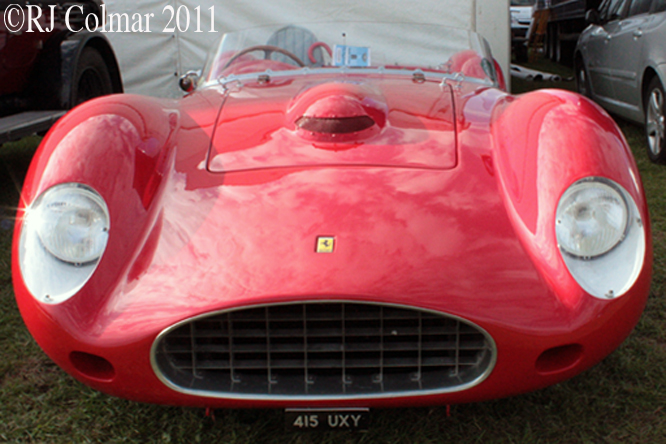
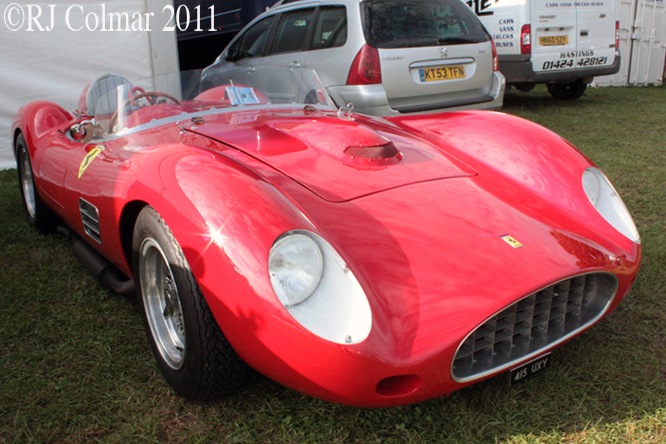
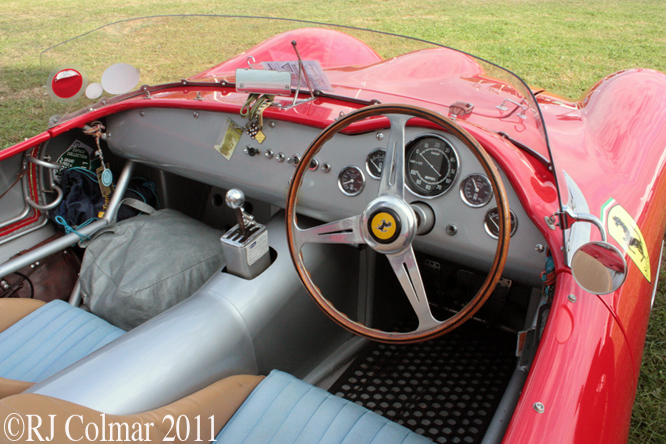
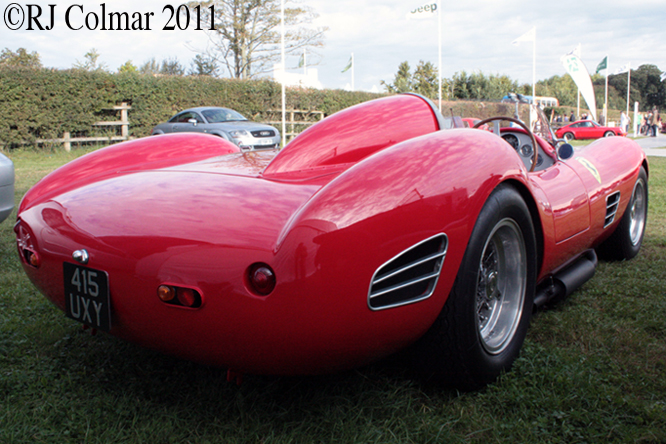
Early in the morning just after I arrived in the car park at the Goodwood Revival a couple of weeks ago I heard the low rev rumble of what was obviously a highly strung racing car, I looked over my shoulder to see a bright red car that looked like a Ferrari, sounded like a Ferrari and even smelled like a Ferrari right behind me. A while later I caught up with the car and mindful of keeping a stock of photo’s of Ferrari’s for Ferrari Fridays here at GALPOT I happily snapped away not entirely sure of what it was I was looking at.

It certainly looked like something from the late 1950’s, an HPI (like Carfax) check of the registration revealed that this car was built in 1958 and had a 2417 cc 147 cui engine an engine size I’d normally associate with a 246 Dino V6 from the early 1970’s.

Yet the car looked like a 12 cylinder Testa Rossa. Searching through Google images I came across another photo of what appears to be the same car labelled as a 1958 Ferrari 196S Fantuzzi Spyder.

I had a look at Barchetta website to see if I could identify the chassis number but could find no 196S model for 1958. There are however two 246S models listed for 1959 and 1960 the first chassis #0776TR owned by Sir Antony Bamford appears to also be known as a 196S, which looks similar to today’s featured car, but has a prominent additional scoop on the drivers side of the bonnet along with a perspex scoop for the carburetors.

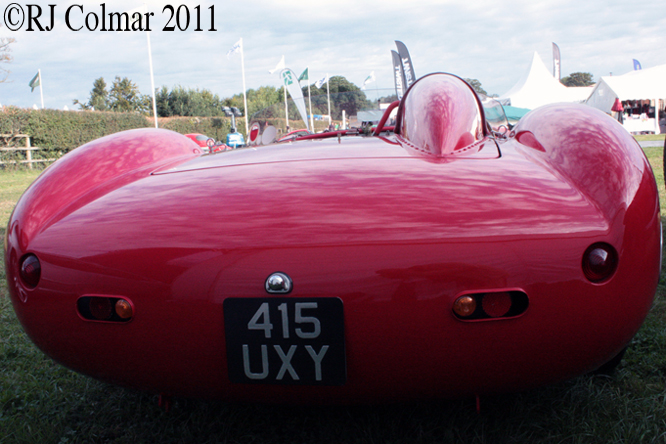
The second 246S listed on the Barchetta site is chassis #0784 which I looked at a couple of weeks ago. Having drawn a blank as to which car 415 UXY was I tried asking at Ferrari Chat and was surprised to learn from Ed Niles and tx246 that this car is one of a batch of 12 196S replicas built more or less from scratch possibly in Modena possibly by ‘”Old Timers” that worked for Fantuzzi. Due to risk of these people losing their pensions, they work in secret.’

Searching ‘Ferrari 196S Replica’ in Google revealed two more cars from this mystery batch of around 12 which appear to have been built in the 1990’s, one yellow and one red the latter lists the name of the first owners as Mecanic – Import a specialist vehicle dealer in Belgium whom I have tried to contact and asked for more details about the ‘”Old Timers” that worked for Fantuzzi’ as of the time of writing I have had no reply.

My thanks to Ed Niles and tx246 at Ferrari Chat for their help unraveling today’s mystery car.

Thanks for joining me on the trail for another carcaeoloy hunt, I hope you will join me again tomorrow when I’ll be looking at a Lotus open wheeler. Don’t forget to come back now !

Share

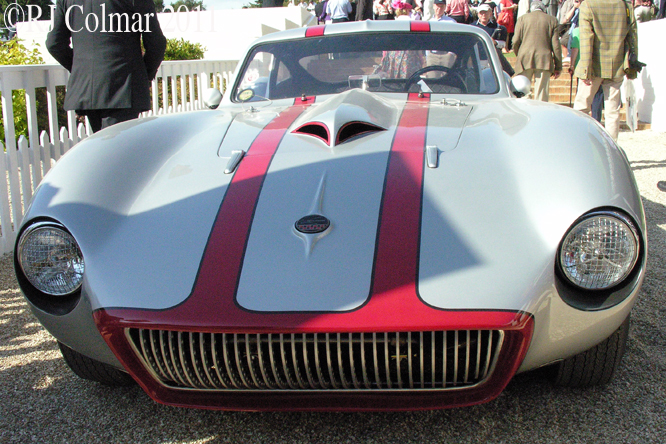
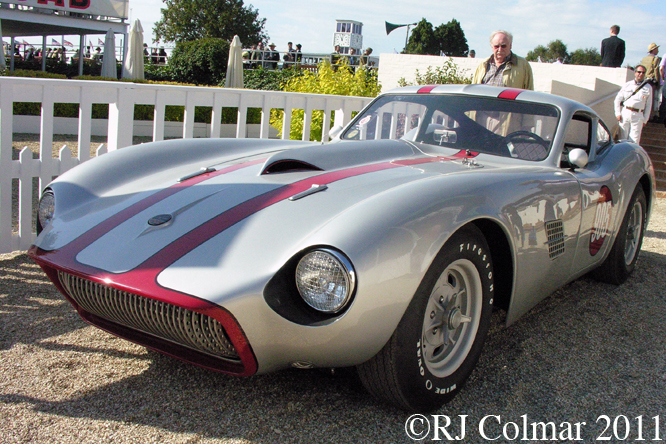
The Very Wildest – Kellison J4 Grand Turismo

According to Griff Borgeson writing in Sports Car Illustrated in May 1960 when the Kellison J4 Grand Turismo was shown at the Los Angeles International Motorshow in December 1959 one ‘hipster’ summed up the audiences reaction by quipping ‘That is the very Wildest’.

Developed by former Korean Air Force Vet and missile engineer James Kellison, at just 39 inches tall and 67 inches wide the Coupé was also one of the lowest and widest cars present.

James opened a repair shop to generate the cash to turn his design into a kit car that could be built in around 130 hours. The 160lb fibre glass body was designed to fit either a salvage yard chassis or a bespoke 140lb chassis designed by stress engineer Chuck Manning.

The sales literature advised potential customers that the $6700 Kellison with independent suspension, custom finished interior and luggage space for three large suitcases was a luxurious touring car and the first American car to surpass Europe’s most distinguished designs.

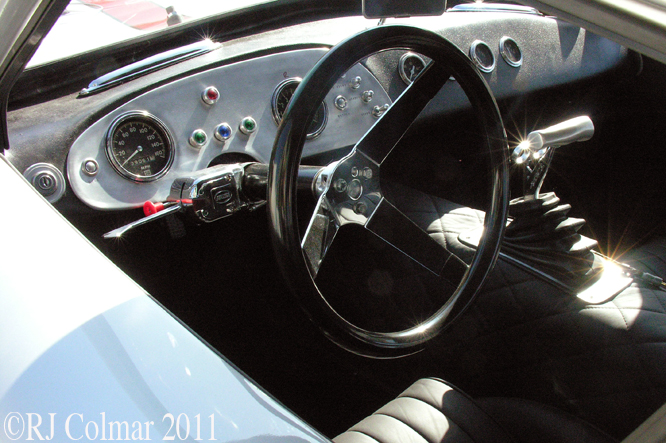
The cockpit was designed to comfortably seat a 5′ 8″ driver and passenger, though the construction of the seats was left to individual builders so that taller drivers could find away to accommodate themselves.

The Kellison could take any of the available V8’s of the day including the Ford, Chevy and Chrysler’s other proprietary parts included the windscreen that came from early 1950’s Studebaker Commander or Champion models, a rear screen from a 1949 Buick, Oldsmobile or Cadillac and door hinges that came from Mopar vehicles dated ’49 to ’52.

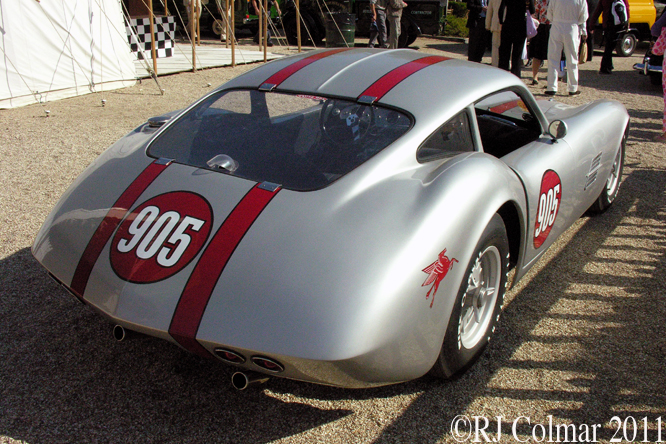
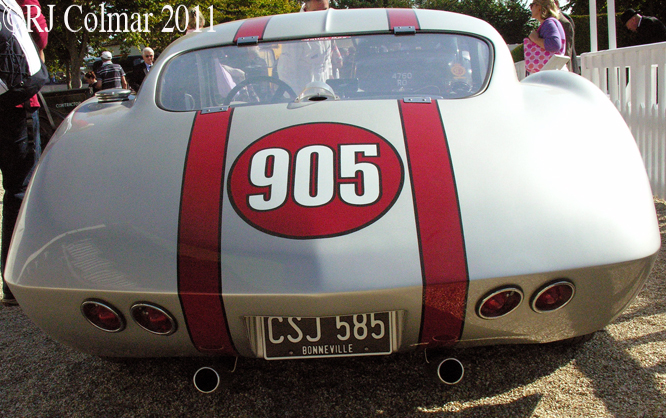
Kellison sent several vehicles to Bonneville Speed Week over the years all painted silver with maroon stripes and the #905, taken from his address ‘905-907 Sutter Street, Folsom California. One of his later J5 models is said to have recorded a top speed of 186 mph.

This particular model, in need of a pair of windscreen wipers, seen at the recent Goodwood Revival apparently has recently been acquired by Lord March. More on the Kellison Marque can be found at kellisoncars.com.

Thanks for joining me on this #905 edition of ‘Gettin’ a li’l psycho on tyres. I hope you will join me again for Ferrari Friday tomorrow. Don’t forget to come back now !
25/10/11 Egg on my face dept, reader Martin Christandl kindly informs me that Lord Marches car is actually a J6 model not the similar looking J4. Thanks Martin. If you spot any any other errors please do not hesitate to let me know.

Share

A Clockwork Orange – Adams Probe 16

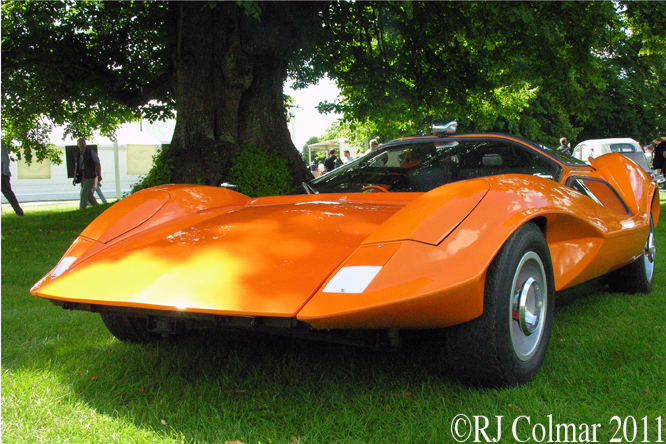
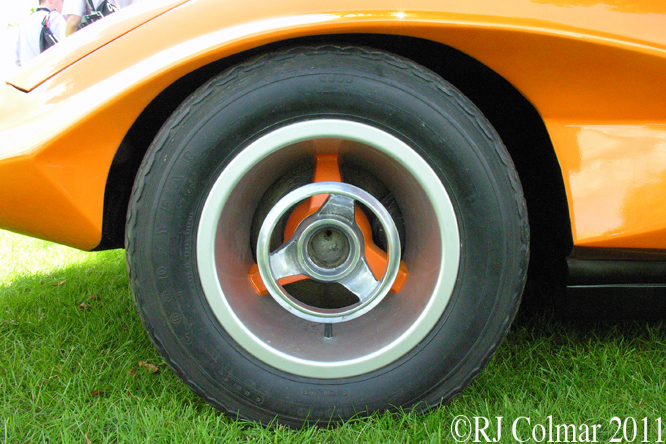
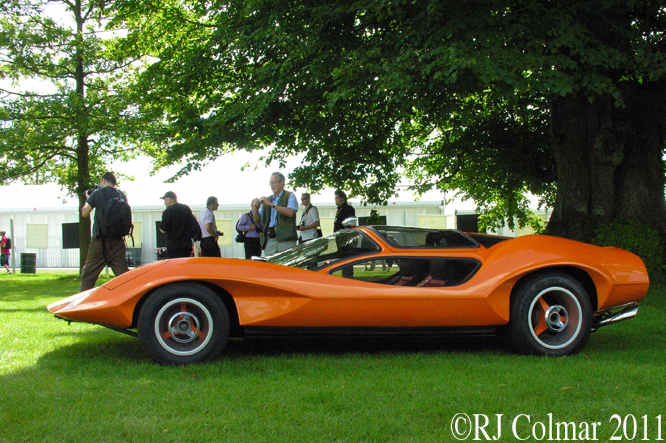
For anyone, like me, who was a kid during the fierce competition to conquer space through the 1960’s part of the vision for the future included mandatory white jump suits, jet packs and incredibly cool cars like the Adams Probe 16 seen here at the Goodwood Festival of Speed earlier this year.

Adams Probe 16, Goodwood Festival of Speed

This design came about as a result of an investigation into the extremes of styling by Dennis and Peter Adams who are credited as having introducing a number of modifications to the Marcos GT which became the Marcos Fastback GT.

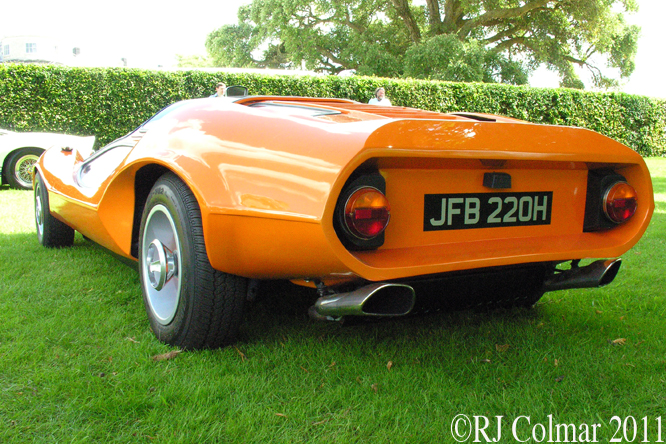
Adams Probe 16, Goodwood Festival of Speed

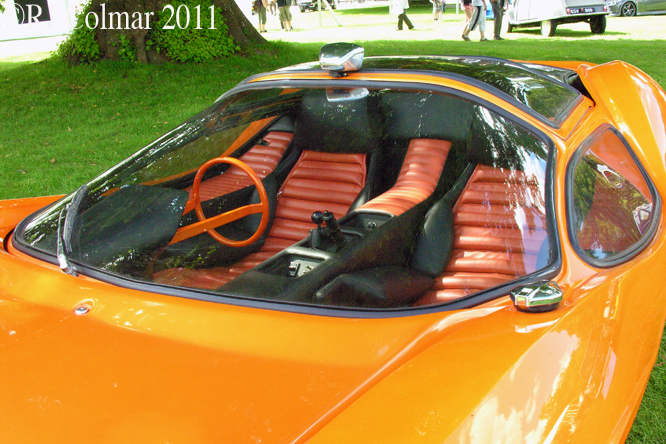
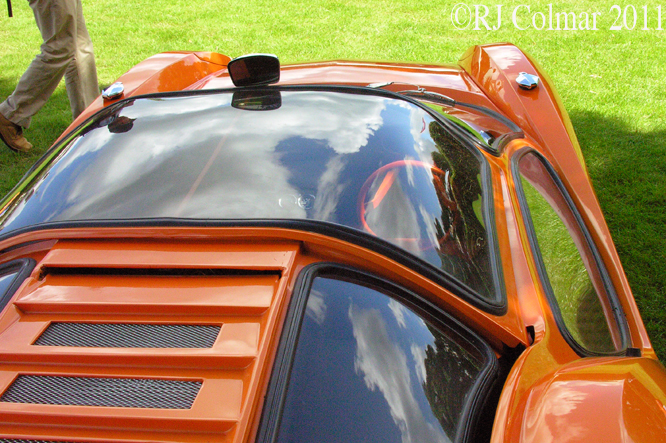
With a roof line at just 34″ above the ground, that is a full 6″ shorter than the Le Mans winning Ford GT 40 which took it’s name from it’s 40″ height, access to the Probe 16 is effected through a slide back glass roof panel.

Adams Probe 16, Goodwood Festival of Speed

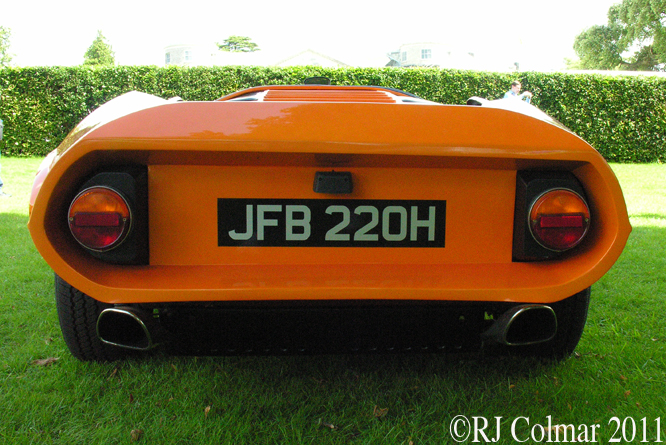
It would appear that the three Probe 16’s were manufactured at the the old Marcos factory at Bradford on Avon in Wiltshire, power came from a mid mounted 4 cylinder motor sourced from, an at the time very common, front wheel drive Austin 1800.

Adams Probe 16, Goodwood Festival of Speed

Winning the award for the best British Styling Exercise at the London Motor Show in 1969 did not raise the public profile of this vehicle enough for it to go into volume production. Though four similar Probe 2001’s were manufactured by the Probe Motor Company and WT Nugent Engineering between 1970 and 1972. Up to 48 further vehicles which used some of the Probe 16 body moulds are thought to have been built under the Centaur brand.

Adams Probe 16, Goodwood Festival of Speed

Of the three original Probe 16’s one went to Wichita Lineman singer song writer Jim Webb, by way of complete contrast another Probe 16 went to Sunshine Of Your Love singer song writer Jack Bruce. Jack passed his Probe 16 on to Mountain drummer on the Nantucket Sleigh Ride Cody Laing.

Adams Probe 16, Goodwood Festival of Speed

However AB/4 seen here is arguably the most famous of the trio of Probe 16’s having played the role of Durango 95 in the Stanley Kubric ultra violence shock flic A Clockwork Orange. After its flirtation with the silver screen AB/4 spent many years in the Pollock Auto Showcase.

Adams Probe 16, Goodwood Festival of Speed

AB/4 still painted it’s original yellow, was repatriated in 1987 and featured in the pseudo comedy television series Top Gear at the beginning of the century.

More detailed information about all of the Probe 16 related cars can be found on the probe2001.com website, on the linked page some photos of AB/4 can be seen of the car being driven around Brands Hatch. Thanks to The Nostalgia Forum reader MCS the driver of the car at Brands Hatch has been identified as most likely being Ray Allen who immortalised his place in the annals of motor racing history for winning the worlds very first Formula Ford race.

My thanks to MCS and everyone else who contributed to the Adams Probe 16 thread at The Nostalgia Forum.

Thanks for joining me on this A Clockwork Orange edition of ‘Gettin’ a li’l psycho on tyres’, I hope you will join me again tomorrow. Don’t forget to come back now !
Share