Tag Archives: Motor

Call Me Shirley – Shirley Mk II

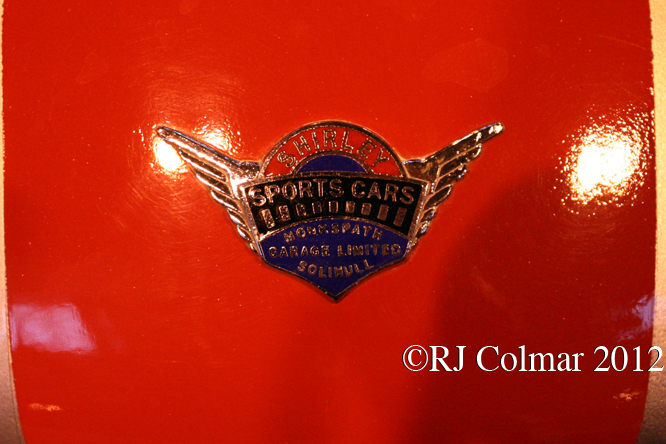
In 1957 Monkspark Garage of Shirley, Solihull just outside Birmingham started to manufacture 2 and 4 seater fibre glass body shells known as Kenmar Mk I suitable for fitting to Ford Anglia and Ford Prefect chassis respectively.

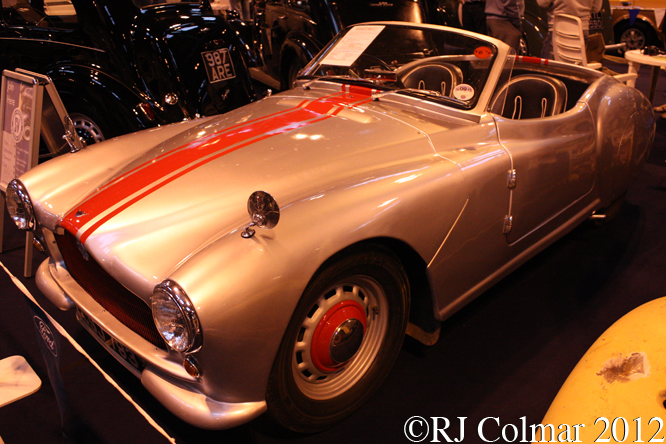
Shirely MKII, Classic Motor Show, NEC, Birmingham

Two years later a Mk II body was manufactured and marketed as the Shirley Mk II which cost just £89 with an additional £35 for the optional hard top.

Shirely MKII, Classic Motor Show, NEC Birmingham

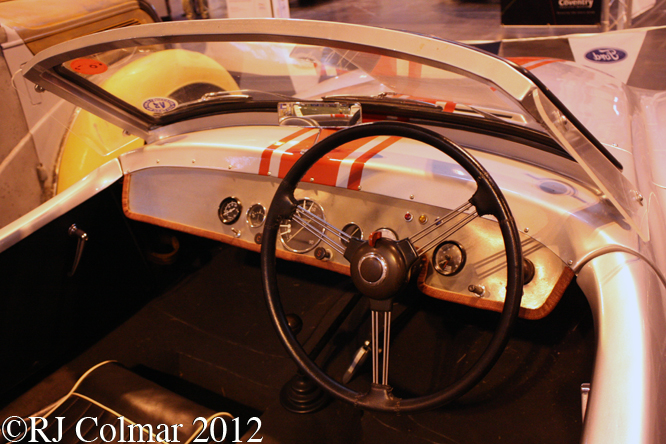
The main body is a one piece molding with a reinforcing tubular framework and welded mounting points and the bonnet could be front or rear hinged to taste.

Shirely MKII, Classic Motor Show, NEC Birmingham

The shell for this particular vehicle was purchased in January 1997 and fitted to a 1949 Ford Anglia chassis and was ready to run in April 1998. This car has several period improvements including a boxed chassis, fluid cushion suspension, Aquaplane cylinder head, twin carburetors and an additional fuel pump along with 12 volt electrics.

Shirely MKII, Classic Motor Show, NEC Birmingham

Of the 50 shells thought to have been built only 4 Shirley Mk II’s are thought to remain.

Share

The Magical Car – Paragon Panther

Between 1920 and 1924 Count Louis Zborowski and his engineer Clive Gallop built four racing cars all powered by large 18 litre / 1000 cui + World War One aero engines designed for record attempts and racing primarily at Brooklands, the first car was timed at nearly 120 mph and the last in the hands of new owner Parry Thomas in excess of 170 mph in March 1927
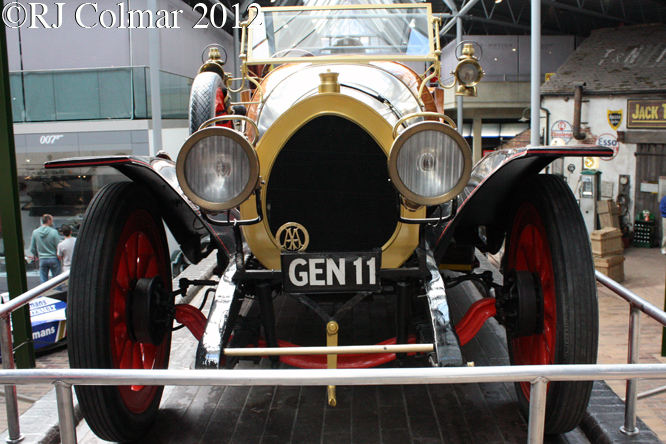
Chitty Chitty Bang Bang

Zborowski’s cars were named Chitty Chitty Bang Bang I – IV, Parry Thomas renamed the 27 litre / 1647 cui Liberty powered Chitty IV ‘Babs’ when he made his record attempts. The Chitty Chitty Bang Bang name is variously attributed to the sound of an idling aero engine or a bawdy song
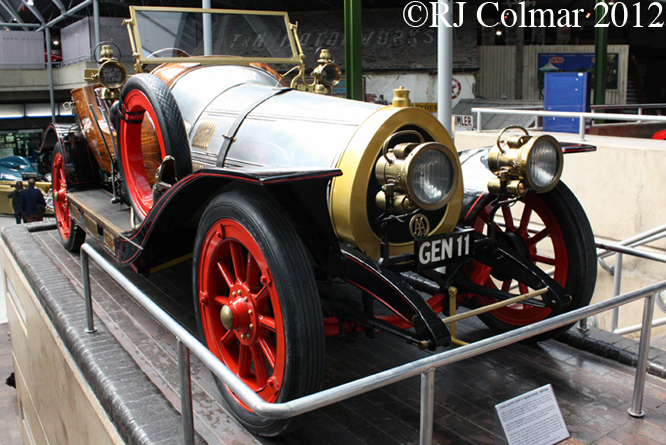
Chitty Chitty Bang Bang

Ian Flemming author of the James Bond books became familiar with Count Zborowski’s vehicles when he was invited to Zborowski’s former home Higham Park, where the cars were built, by Walter Wigham chairman of Robert Fleming & Co the investment bank founded by Ian’s Grandfather.
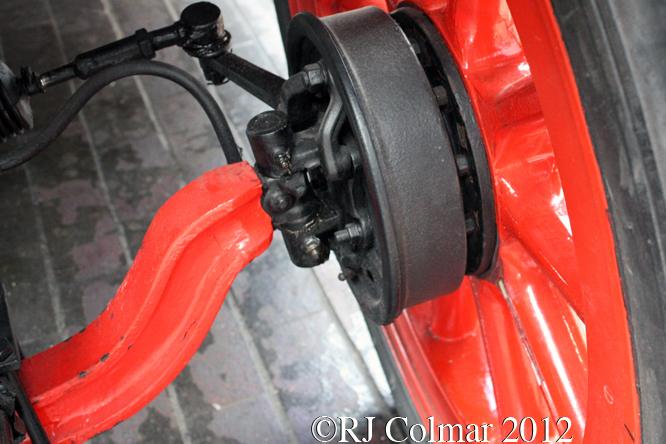
Chitty Chitty Bang Bang

In the early 1960’s Ian used the legend of Chitty Chitty Bang Bang as the inspiration for a story, Chitty Chitty Bang Bang The Magical Car, written for his son Casper that was published in three volumes in 1964 with illustrations by John Burningham.
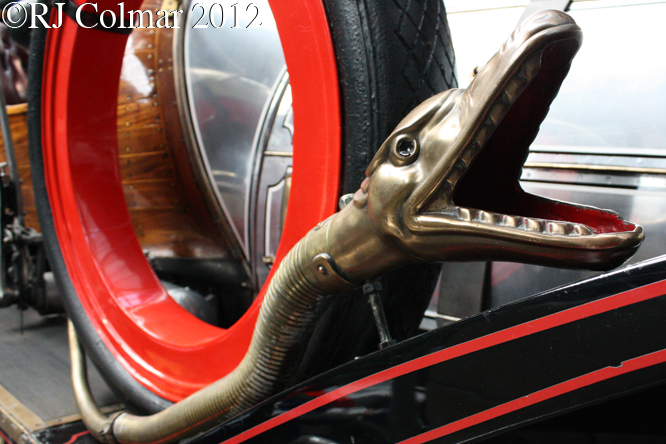
Chitty Chitty Bang Bang

Ian Fleming’s Chitty Chitty Bang Bang tells the story of the Paragon Panther a touring car that is restored by Commander Caractacus Pott before revealing the capacity to fly, over traffic jams and glide over water like a hover craft.

Chitty Chitty Bang Bang

In 1968 a loose adaption of the plot was turned into a musical and filmed with Dick van Dyke playing Caractacus Potts and Sally Ann Howes playing his love interest Truly Scrumptious who never appeared in the books. You can see the trailer on this link.

Chitty Chitty Bang Bang

In order to make the film the director Albert Broccoli asked Alan Mann to build six identical vehicles for the film of which today’s featured car is one. Apparently these Ford Zodiac V6 powered cars with automatic transmission were tested up to 100 mph before they were delivered and further modified for filming.

Thanks for joining me on “The Magical Car” edition of “Gettin’ a li’l psycho on tyres” I hope you will join me again tomorrow. Don’t forget to come back now !
Share

The Spy Who Loved Me – Wet Nellie

The Spy Who Loved Me is a 1977 action thriller staring Roger Moore as British Agent James Bond alias 007 and Barbra Bach as Anya Amasova, alias Agent Triple X from the KGB, who investigate the disappearance of British and Russian nuclear armed submarines.

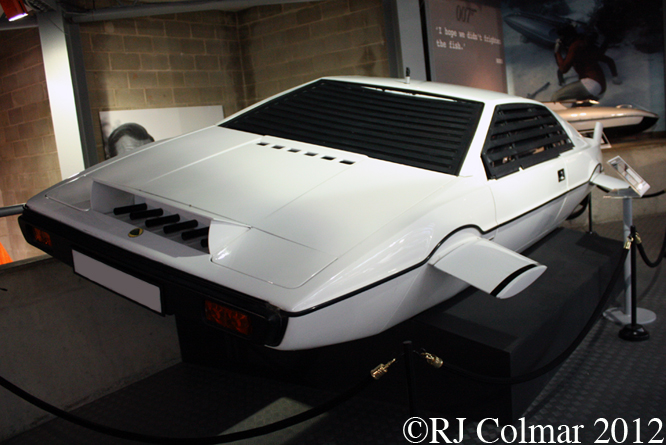
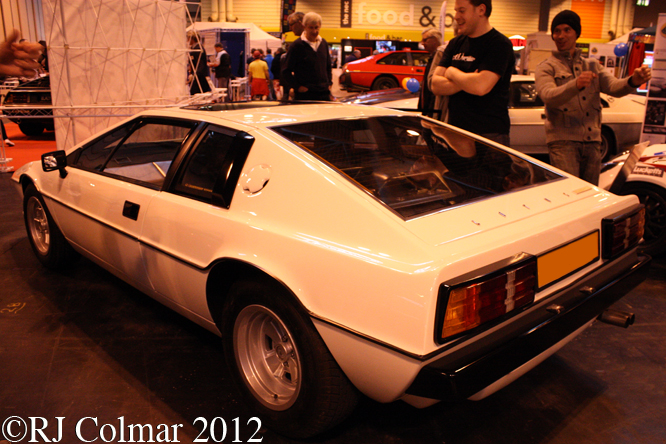
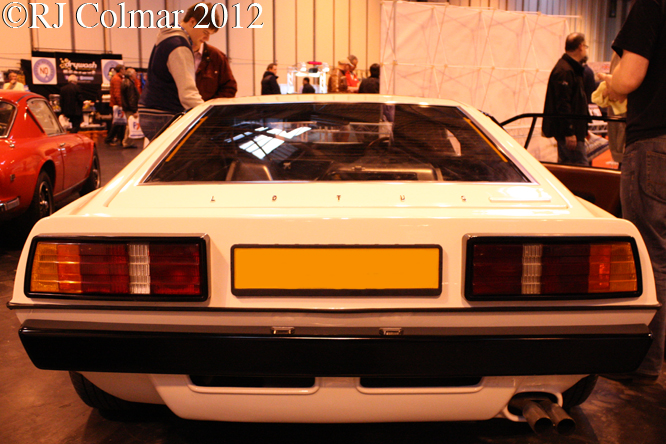
Lotus Esprit 007 Wet Nellie

James and Anya find themselves pursuing the reclusive megalomaniac Karl Stromberg played by Curd Jürgens in a film that was shot on location in Egypt, Italy and the Bahamas.

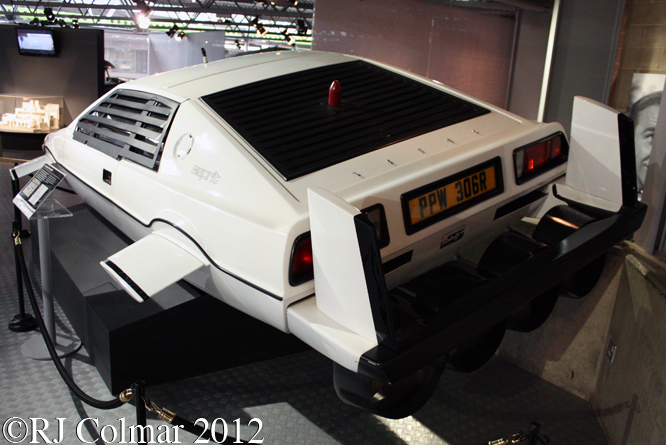
Lotus Esprit 007 Wet Nellie

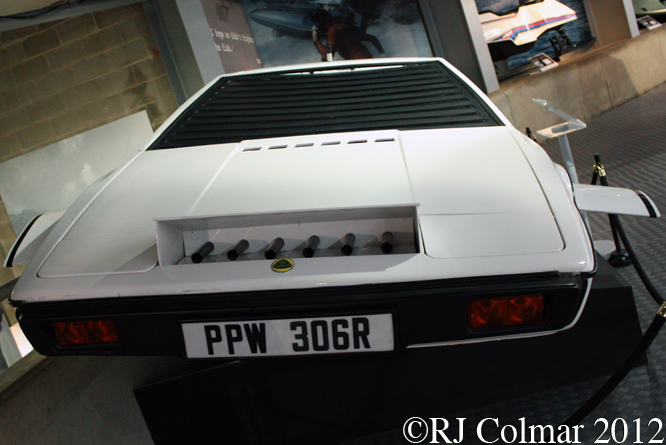
For this film Q the man with the unenviable of task of supplying toys to help 007 keep an edge on his dastardly rivals kits out a Lotus Esprit Series I, without the ears, with a myriad of gadgets and capabilities that include missiles, cement dispensers and submersible capabilities as required by the plot.

Lotus Esprit 007 Wet Nellie

The submersible Esprit seen in The Spy Who Loved Me was known as Wet Nellie and was built by midget sub specialist Perry Submarines in Florida. It was capable of 15 knots but for some reason the motors were not reversible which made controlling the vehicle somewhat precarious.

Thanks for joining me on this “The Spy Who Loved Me” edition of “Getting’ a li’l psycho on tyres” I hope you will join me again tomorrow. Don’t forget to come back now !
Share

Wheels & Ears – Lotus Esprit S2 Type 79

The pace of innovation and development at Lotus was far too high for organised record keeping to be a strong point and some how the Lotus Type 79 number ended up being given to both the 1978 World Championship winning Formula One car and the otherwise unrelated Lotus Esprit S1 & S2 variations.

Lotus Esprit S2, The Classic Motor Show, NEC, Birmingham

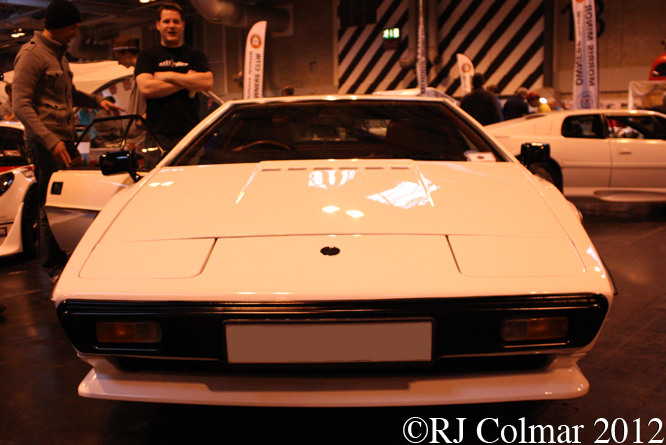
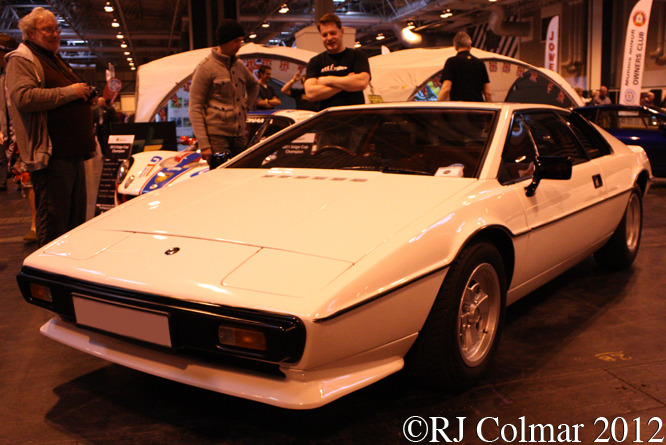
The second iteration of the Giugiaro designed Esprit, launched in 1978, featured a wrap around bumper which brought down the aerodynamic measure to Cd 0.355 and improved the handling in cross winds.

Lotus Esprit S2, The Classic Motor Show, NEC, Birmingham

The Gotti alloy wheels of the original Elite were replaced by Lotus designed alloy wheels manufactured by Speedline. Inside wider seats were fitted along side new instrumentation and switch gear illuminated by fibre optics, the external rear view mirrors became remotely operated too.

Lotus Esprit S2, The Classic Motor Show, NEC, Birmingham

Ears behind the rear 3/4 window were used to feed air into the carburetor on the left and into the engine bay on the right.

Lotus Esprit S2, The Classic Motor Show, NEC, Birmingham

The Rover SD1 sourced rear lights now incorporated high intensity fog lamps. 1061 Esprit S2’s were built with the original Type 907 2 litre / 122 cui motor that gave the car a top speed of 124 mph. A further 88 S2.2’s were built with the an identical body, galvanised chassis and Type 912 motors of 2.2 litre / 134 cui with the same 160 hp but much improved torque which made the Esprit much easier to drive around town.

Thanks for joining me on this “Wheels & Ears” edition of “Gettin’ a li’l psycho on tyres” I hope you will join me again tomorrow. Don’t forget to come back now !
Share

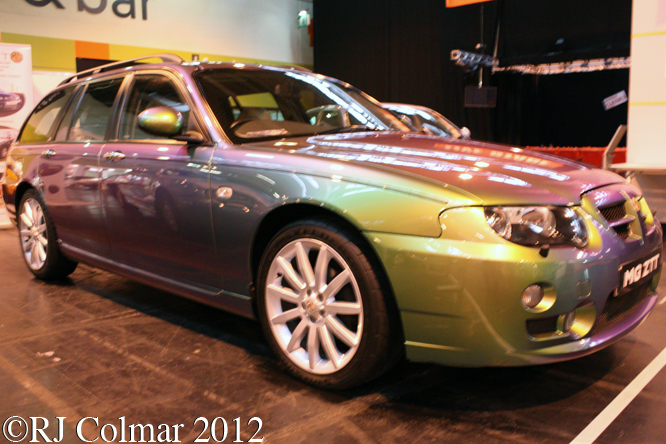
Hot Rover #3 – MG ZT-T

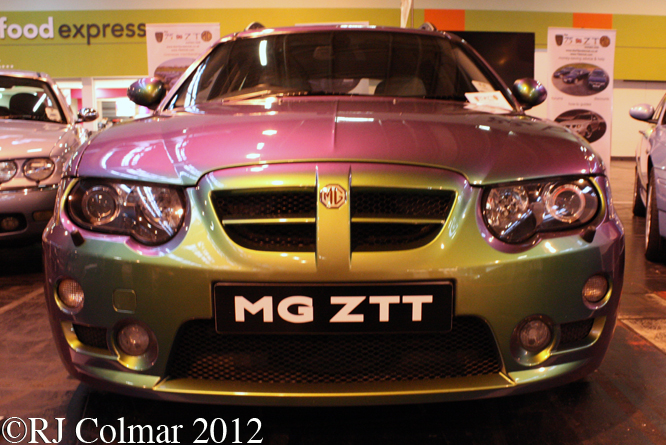
Like the MG ZR and MG ZS models the MG ZT was based on a Rover model in this case the Rover 75 and like the smaller ZR and ZS it was launched in 2001 and face lifted in 2004.

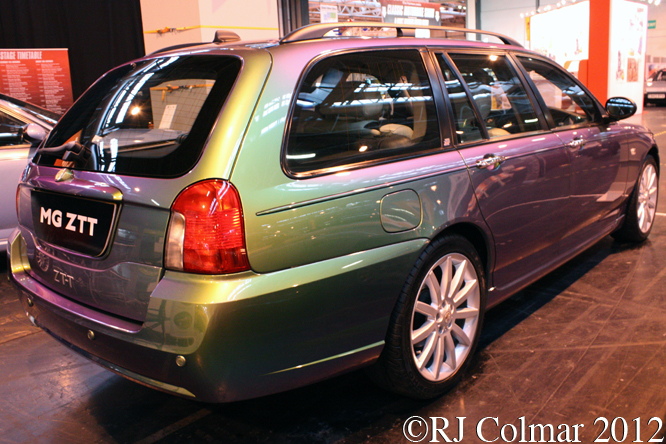
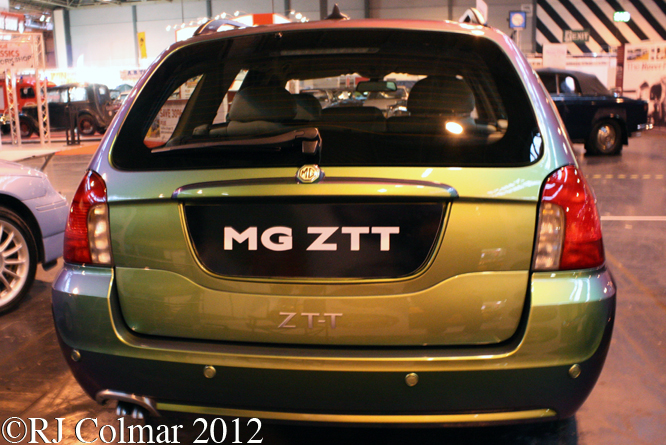
MG ZT-T, The Classic Motor Show, NEC, Birmingham

The ZT-T is the estate / station wagon version of the ZT and today’s face lifted car is said to have been completed on the 20th of January at 13:19 making it the 11th ZT to be built in 2004.

MG ZT-T, The Classic Motor Show, NEC, Birmingham

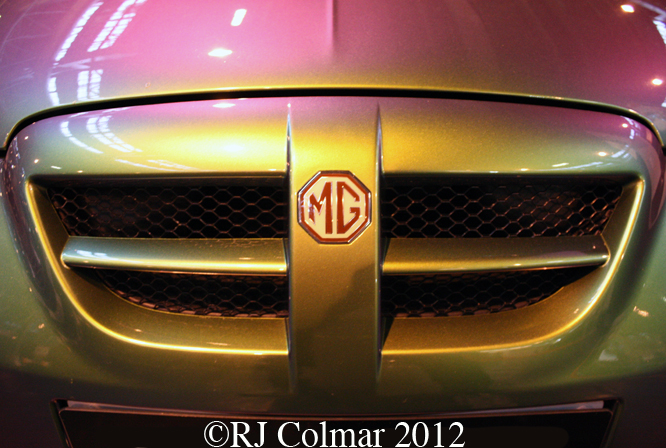
The cars chassis plate shows this car to have been intended to be biomorphic green however it was finished in shot silk chromescent, like only two other ZT-T models, one of which also has a chassis plate showing the intended colour was biomorphic green.

MG ZT-T, The Classic Motor Show, NEC, Birmingham

On 5th April 2004 the car was registered to MG Rovers Press Fleet and was subsequently used by MG Director Dr Chris Millard who had many updates and extras retro fitted to keep the car up to date with all the latest developments barring an electric sunroof.

MG ZT-T, The Classic Motor Show, NEC, Birmingham

Shot Silk Chromescent paintwork was part of MG Rovers Monogram Personalisation Programme which offered customers an exclusive opportunity for MG and Rover customers to realise their personality through automotive style.

MG ZT-T, The Classic Motor Show, NEC, Birmingham

Power for this car comes from a 129hp Turbo Diesel motor which is connected to a 5 speed automatic transmission which gives a rest to 60 mph time of 11.4 seconds and a maximum speed of 117 mph.

MG ZT-T, The Classic Motor Show, NEC, Birmingham

Just over a month after MG Rover called in the receivers in April 2005 ownership of this ZT-T transferred to the Royal Bank of Scotland before being sold on to a salesman.

My thanks to The Rover 75 and MG ZT Owners Club for the details about today’s car which is seen at the The Classic Motor Show held at the NEC, Birmingham a couple of weeks ago.

Thanks for joining me on this Hot Rover #3 edition of “Gettin’ a li’l psycho on tyres” I hope you will join me again tomorrow. Don’t forget to come back now !

Share

Wolly Bulli – Volkswagen Type 2 (T2)

In the Autumn turn of 1982 twenty odd college class mates and I made our way from the Untied Kingdom to Paderborn University for the first half of the third year of our European Business Studies course. I overslept on the train and ended up a hundred kilometers further east than intended in Kassel having missed my stop, but I digress.

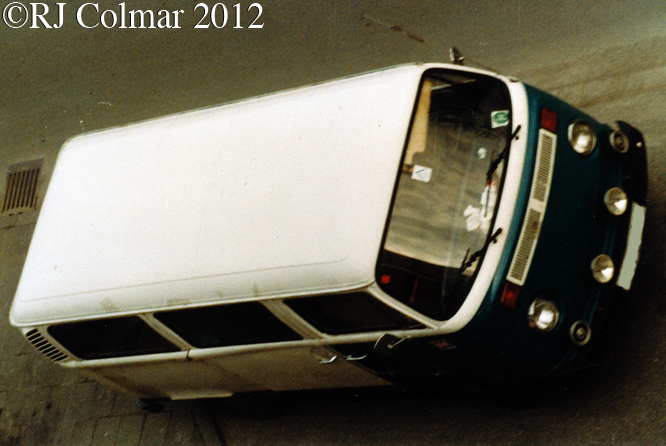
VW Type 2 (T2) Kombi, Paderborn, Germany

Once in Paderborn we soon made friends with our fellow German students some of whom had banded funds together to buy a late bay VW Type 2 (T2b) Kombi seen above, in Germany these vehicles are known locally as “Bulli”. The Type T2 (T2) was first seen in 1967, it was wider and longer than it predecessor the Type 2 (T1) which I looked at last week. The motor was slightly larger starting at 47 hp wich increased to 70 hp by the mid 1970’s, but the real improvements were in low end torque which helped this heavy vehicle keep pace with the rest of the traffic.

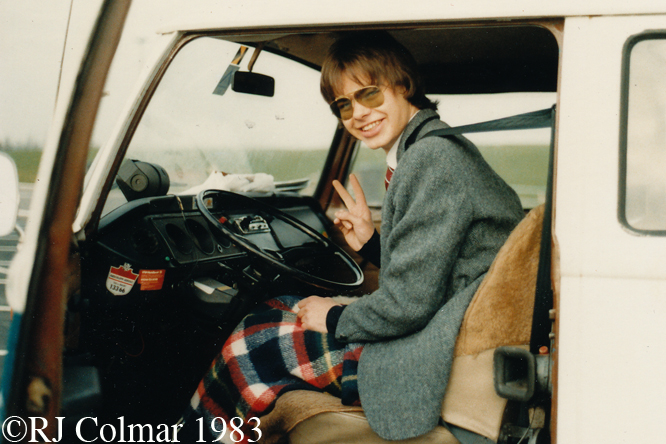
VW Type 2 (T2) Kombi, Paderborn, Germany

Above I can be seen sitting at the wheel of my friends Type 2 wrapped in a blanket in the middle of February as I was about to return from Wolsburg where I had a placement at Volkswagen to Paderborn. To reduce the intake of exhaust fumes, because the heat exchangers were breaking up, the heating pipes were blocked up and the windows were kept open hence the blanket was necessary to keep warm in the well ventilated unheated bus.

Type 2s went through three distinctive body developments from ’67 to ’71 the early bay T2a was characterised by low front indicators and rear light clusters inherited from the Type 2 (T1), from ’71 to the early 1990’s the late bay Type 2 (T2b) is characterised by high front indicators and larger vertical oblong rear light clusters. By the early 1990’s production in Mexico and Brazil moved to the Type 2 (T2c) which has a raised roof and the latest models now built only in Brazil have duel fuel water cooled engines which run on petrol or ethanol.

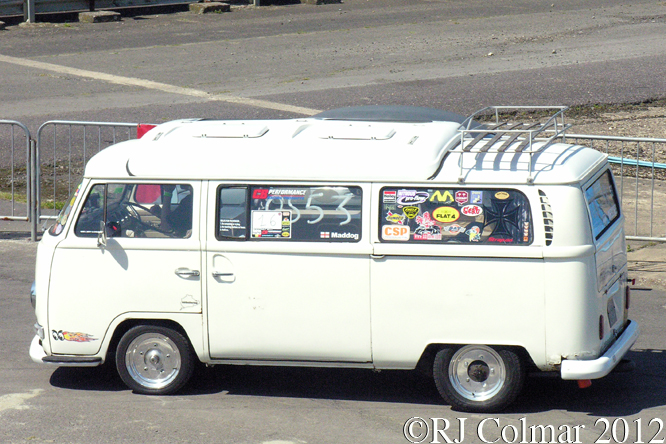
Type 2 (T2) Camper, Shakespeare County Raceway

Chris Maddog Antell’s VW Type 2 camper van seen above at Shalespeare County Raceway is an early bay Type 2 (T2a) with low front indicators and small rounded rear light clusters he runs it with a 2276 cc / 138 cui motor of yet to be determined origin, if you know please do not hesitate to chime in below.

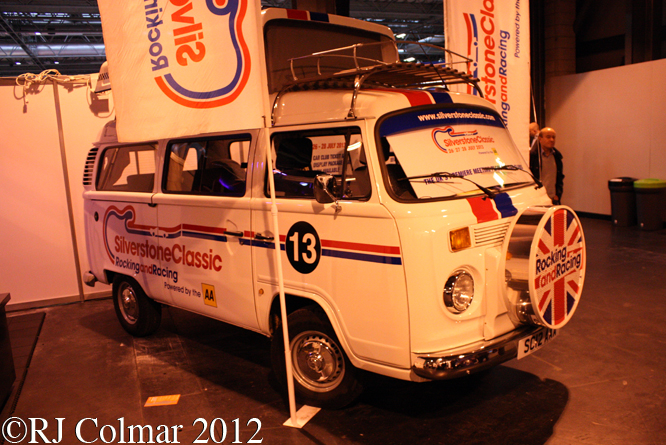
Volkswagen Type 2 (T2c), The Classic Motor Show, NEC, Birmingham

The Type 2 (T2c) as seen above at The Classic Motor Show is still in production in Brazil a couple of years ago they were being manufactured at a rate of 100 a day, some of these vehicles can be seen in Europe where they are often used as camper vans. The latest news courtesy of mariner at The Nostalgia Forum is that Type 2 (T2c) production is planned to come to a halt in Brazil next year.

Thanks for joining me on this “Wolly Bulli” edition of “Gettin’ a li’l psycho on tyres”. I hope you will join me again tomorrow. Don’t forget to come back now !

Share

Scavenged and Salvaged – Trabant P60

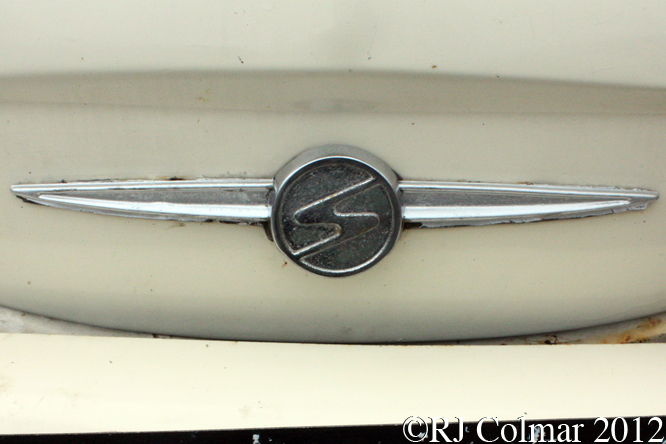
VEB Sachsenring Automobilwerke in Zwickau, Sachsen, East Germany was named after the Sachsenring race track and made use of manufacturing plants that had once belonged to Horsch and Audi before the 1939/45 war.

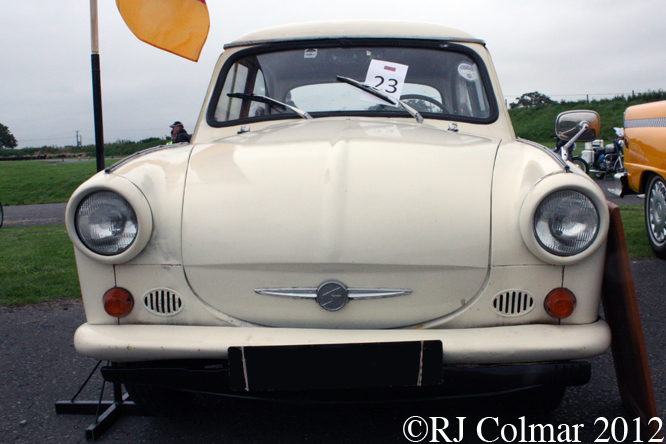
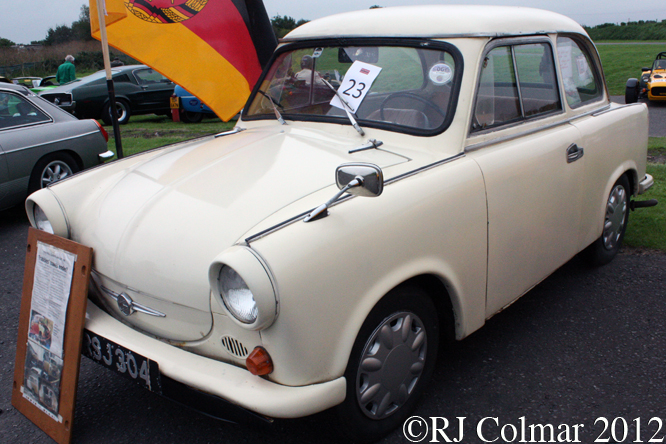
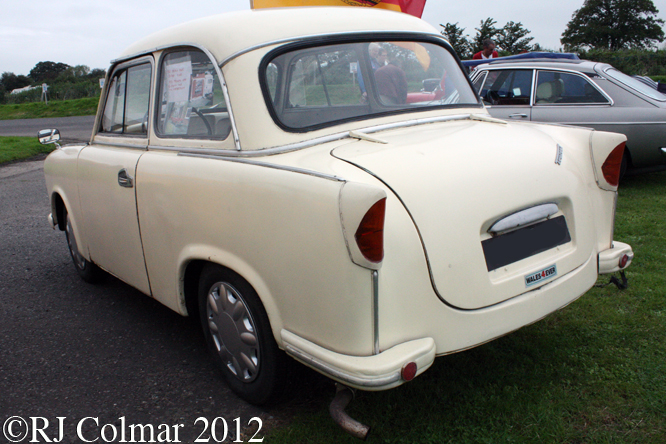
Trabant P60, Rare Breeds, Haynes International Motor Museum

East Germany’s need for agricultural equipment led VEB Sachsenring to making tractors before moving into the automobile market with a variety of water cooled 2 stroke and 4 stroke vehicles.

Trabant P60, Rare Breeds, Haynes International Motor Museum

The P60 was the second Trabant to be powered by an aircooled 594 cc / 36 cui 2 stroke motor which produced no more than 20hp.

Trabant P60, Rare Breeds, Haynes International Motor Museum

Like all Trabants the petrol tank was mounted above the motor and used only gravity to feed the two stroke mixture to the engine. The fuel gauge was a piece of graduated wood which acted as a dip stick.

Trabant P60, Rare Breeds, Haynes International Motor Museum

This particular 1962 P60, seen at the Rare Breeds show held at Haynes International Motor Museum, was rescued in 1996 from atop a pile of cars in Gatebeck, Cumbria, after it had been scavenged for parts for another P60 that resided in the Isle of Man.

Trabant P60, Rare Breeds, Haynes International Motor Museum

P60’s were in production from 1962 to 1964 when they were replaced by the Trabant 601 that remained in production until 1991.

Thanks for joining me on this “Scavenged and Salvaged” edition of ‘Gettin a li’l psycho on tyres” I hope you’ll join me again tomorrow when I’ll be honoring the first man to record a 200 mph lap in an Indy Car. Don’t forget to come back now !
Share