Tag Archives: GALPOT

Hidden Tank – MG NA

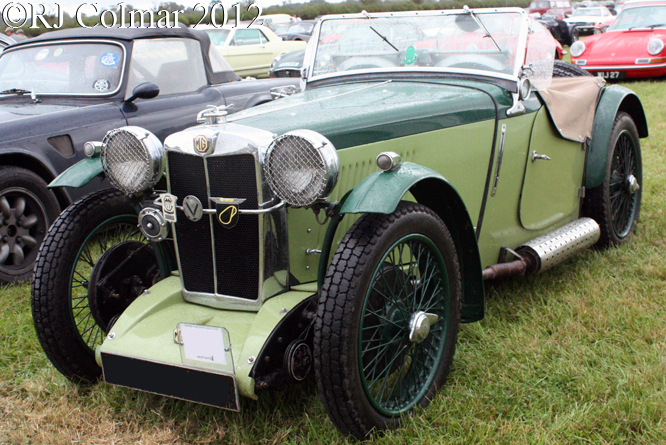
14 01 13 Errata the original photo’s posted in this blog were of an MG KN and will be re posted on 22nd January 2013 on this link, meanwhile the photo’s on this link are of an MG NA as originally intended, sincerest and humble apologies for any confusion caused.

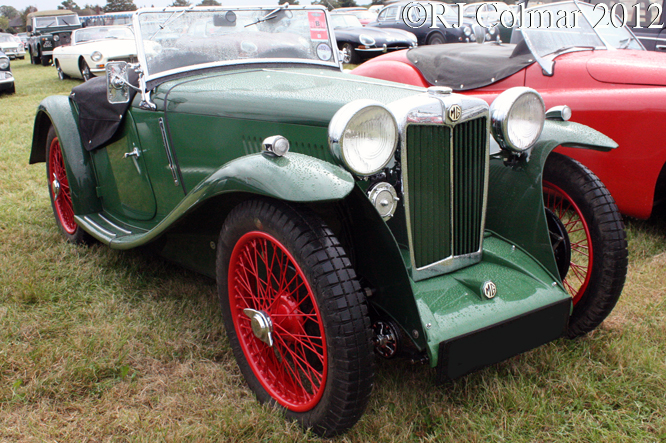
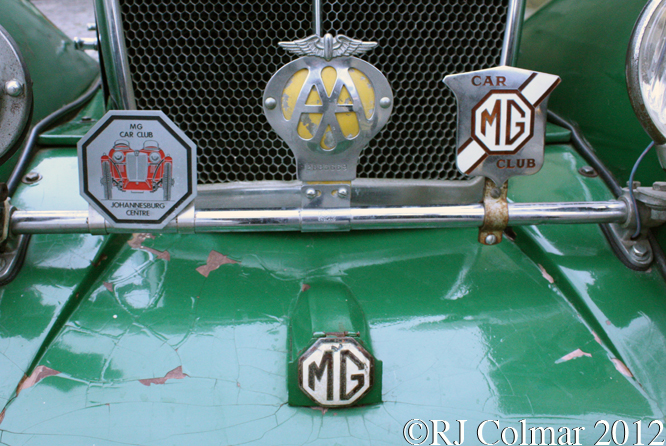
MG NA, Avenue Drivers Club, Queen Square, Bristol

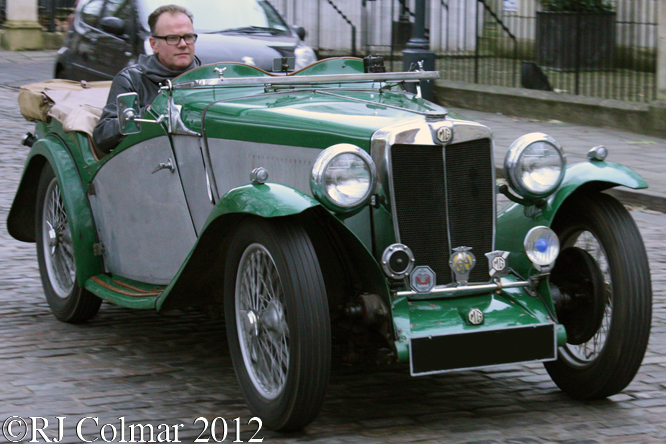
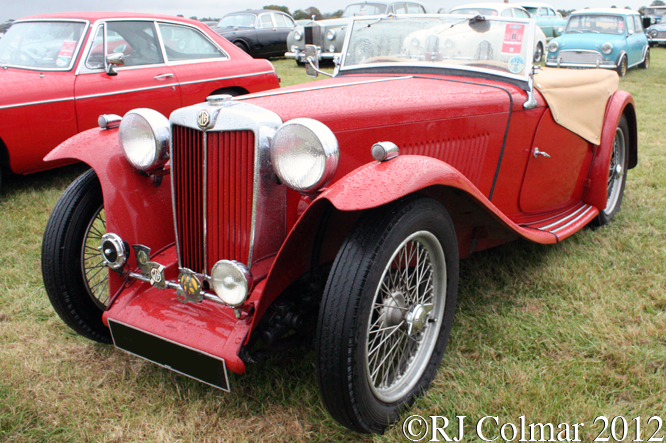
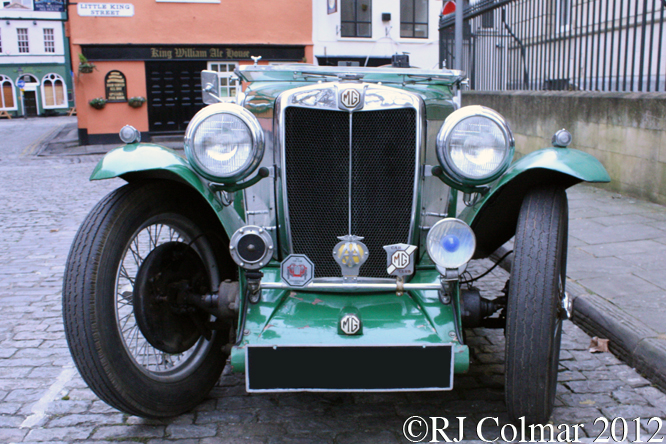
The MG N-type Magnette open tourers were manufactured from 1934 to 1936 and replaced the K-Type built from 1932 to 1934. N-Types came in two distinct forms the 1934/35 NA as seen here with a honeycomb radiator grill and the 1935/36 NB which featured vertical slats in the radiator grill.

MG NA, Avenue Drivers Club, Queen Square, Bristol

The 56 hp six cylinder 1271 cc / 77.56 KD motor, derived from the Wolseley Hornet was first seen on four of the twenty K2 models built and features twin carburettors.

MG NA, Avenue Drivers Club, Queen Square, Bristol
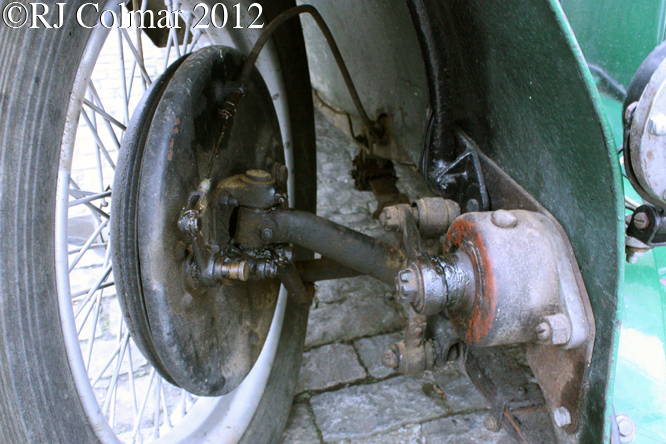
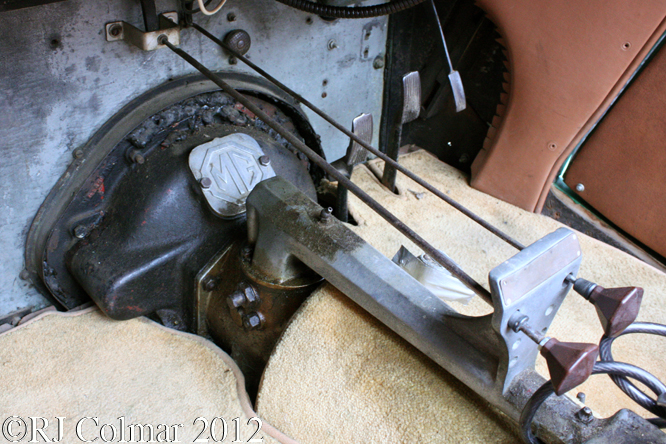
In the photo above the bicycle style cables which operate the front drum brakes can be clearly seen emerging from the chassis on their route toward the top leading edge of the brake drum.

MG NA, Avenue Drivers Club, Queen Square, Bristol

N-Types have a more sophisticated chassis, that is wider at the rear, than the earlier simple ladder frame seen on the K-Type.
MG NA, Avenue Drivers Club, Queen Square, Bristol

The body of the N-Type is insulated from the chassis by the use of rubber pads which minimise the transmission of vibrations from the suspension and the engine through the chassis.

MG NA, Avenue Drivers Club, Queen Square, Bristol

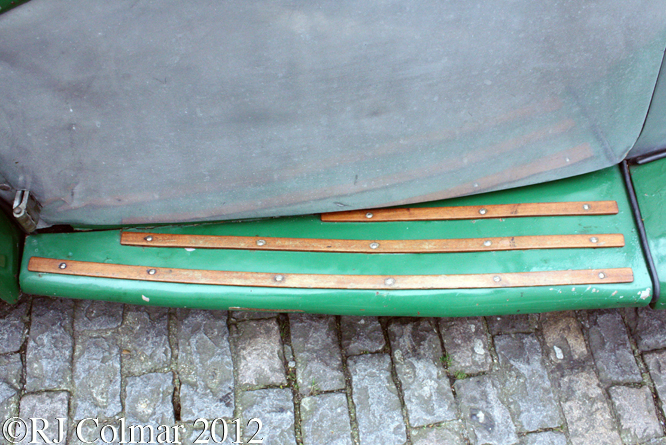
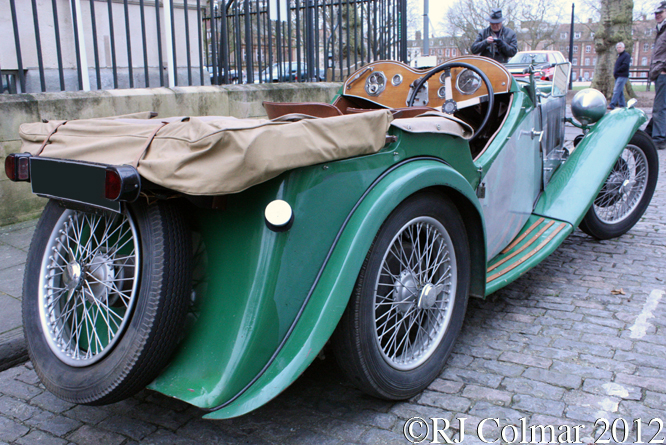
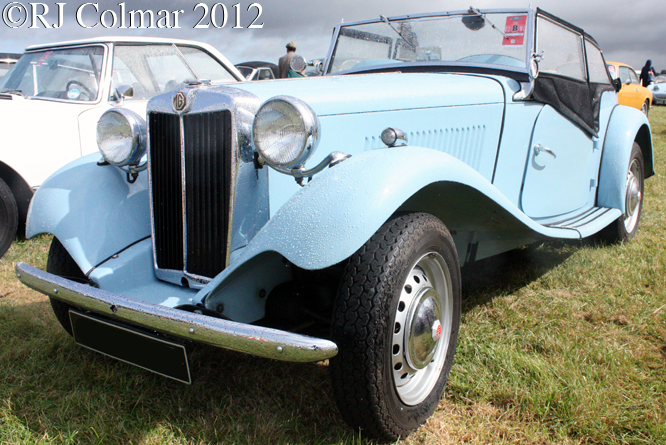
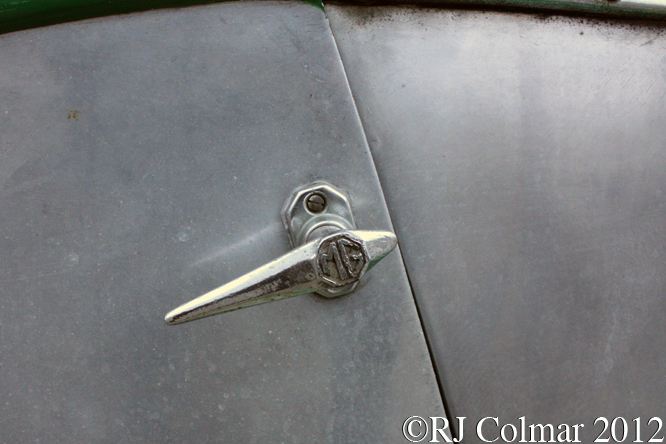
Note the NA has rear hinged ‘suicide doors’ while the later NB had front hinged doors.

MG NA, Avenue Drivers Club, Queen Square, Bristol

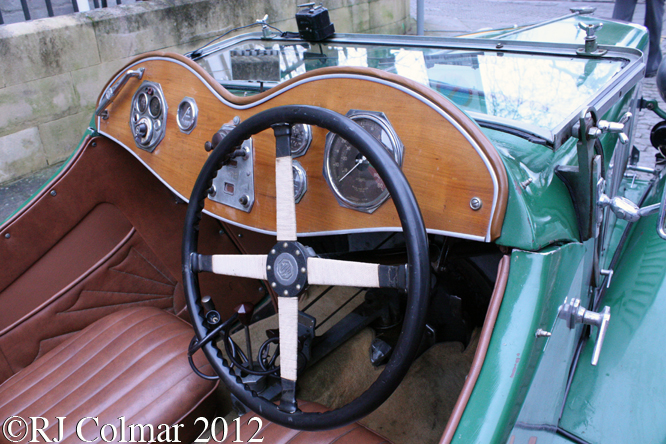
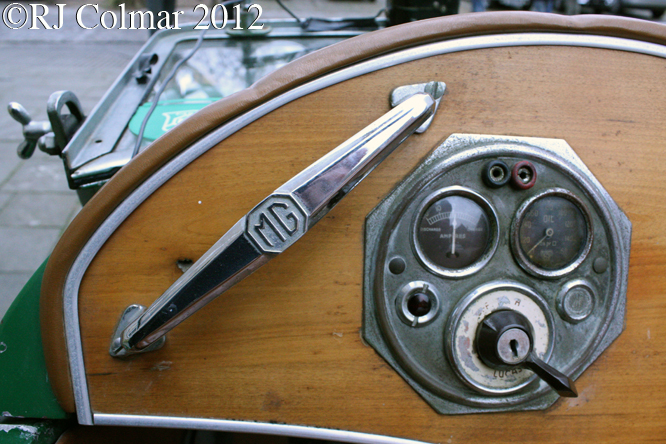
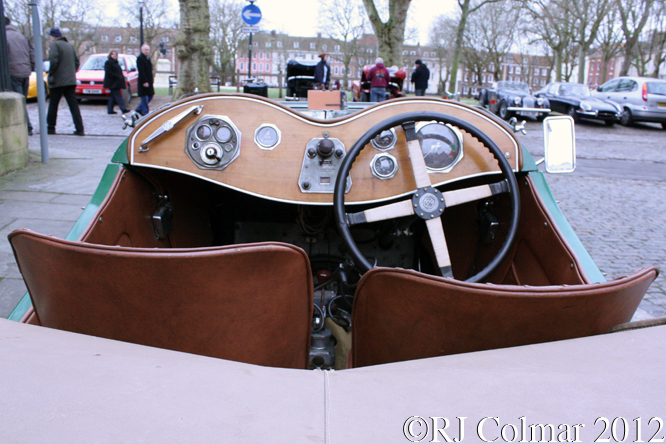
Ergonomics was still in it’s infancy when the N-Type was designed.

MG NA, Avenue Drivers Club, Queen Square, Bristol

For example the ignition key is conveniently placed in front of the passenger in case he or she needs to turn off the ignition if the driver is going too fast.

MG NA, Avenue Drivers Club, Queen Square, Bristol

The gearbox has four forward gears and a reverse but no synchromesh which means the engine revolutions must be carefully matched with that of the speed of the car in order to avoid painful graunching when changing gear.

MG NA, Avenue Drivers Club, Queen Square, Bristol

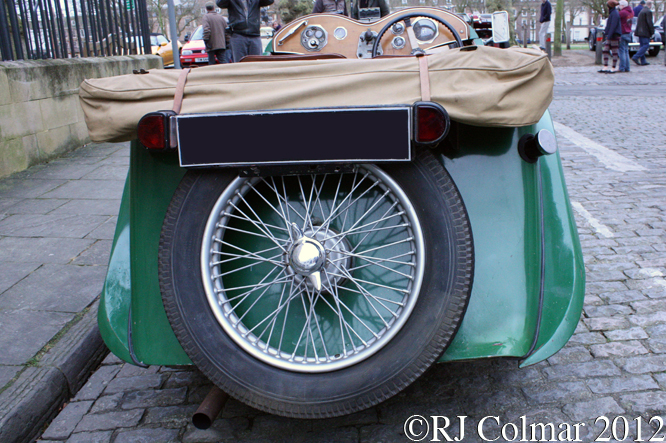
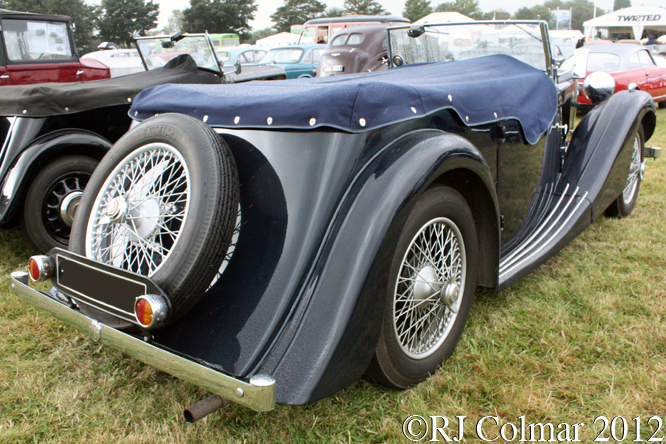
From the rear N-Types can easily be distinguished from the earlier K-Types by the fuel tank which is hidden by the rear body work.

MG NA, Avenue Drivers Club, Queen Square, Bristol

Some readers may remember the ‘Bellvue Special‘ was based on an N-Type chassis.

MG NA, Avenue Drivers Club, Queen Square, Bristol

In all 745 N-types were manufactured in total from 1934 to 1936 which included a handful of closed Airline Coupé’s.

Thanks for joining me on this ‘Hidden Tank’ edition of “Gettin’ a li’l psycho on tyres” I hope you will join me again tomorrow to welcome a new photographer to GALPOT. Don’t forget to come back now !

Share

Parkinson’s Research And Care – 8th Danville Concours d’Elegance

The weekend before last saw the 8th Danville Concour’s d’Elegance take place, organised to raise funds for research into Parkinson’s desease. Thanks to photographs by Geoffrey Horton here are a few of the cars that took part.

Aston Martin DB2, Danville Concours d'Elegance

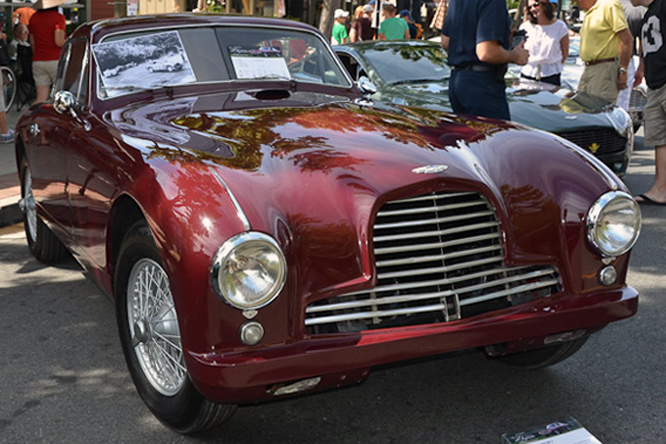
The USA’s first World Champion driver Phil Hill is said to have been the first owner of this Aston Martin DB2, in 1951 a decade before he won the World Championship driving for Ferrari.

Aston Martin DB 2/4, Danville Concours d'Elegance

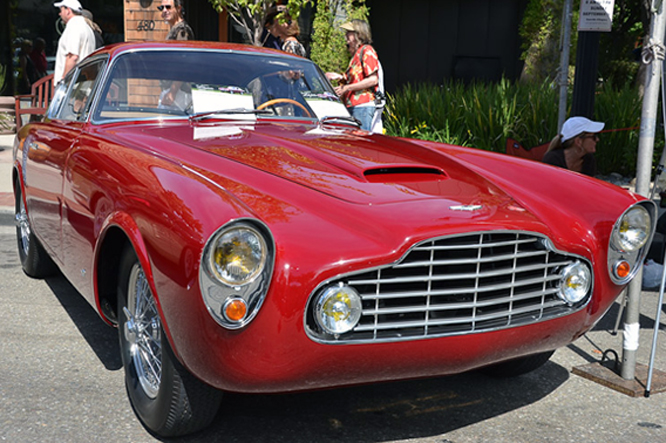
One of the worlds rarer Aston Martins is the DB2/4 with Italian coachwork by Serafino Allemano. This 1953 chassis #LML/761 was ordered by a customer in Casablanca who used it in local races.

Aston Martin DB5, Danville Concours d'Elegance

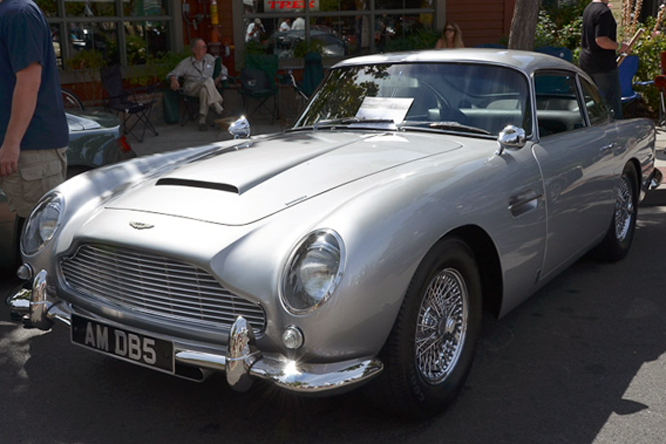
Another mouth watering example of the Aston Martin marque was this DB5 1023 of these classic ‘James Bond’ models were manufactured between 1963 and 1965, most of them with out the swiveling number plates, bullet proof rear screen, ejector seat, machine guns smoke screen and oil slick that the handsome man with the Edinburgh brogue found useful until he crashed avoiding a mirror in Gold Finger.

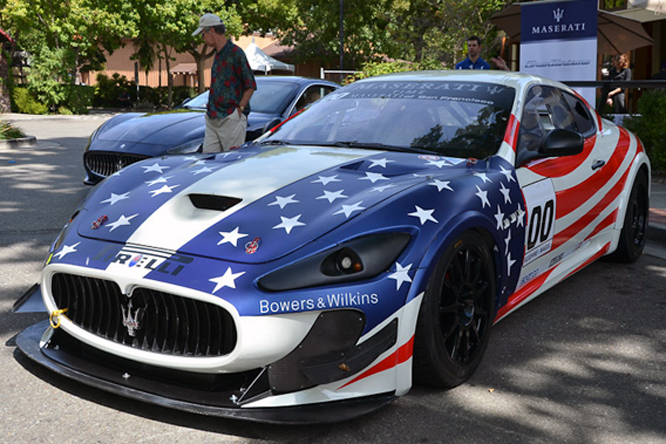
Maserati GranTurismo MC, Danville Concours d'Elegance

Both yesterday and the day before saw the first ever Trofeo Maserati races taking place at Sanoma using racing versions of the Gran Turismo MC as seen above. Venezuelan debutant Alex Popow won Saturdays race with Grey’s Anatomy guest star Patrick Dempsey claiming 6th. Sunday’s results were unknown at the time of writing.

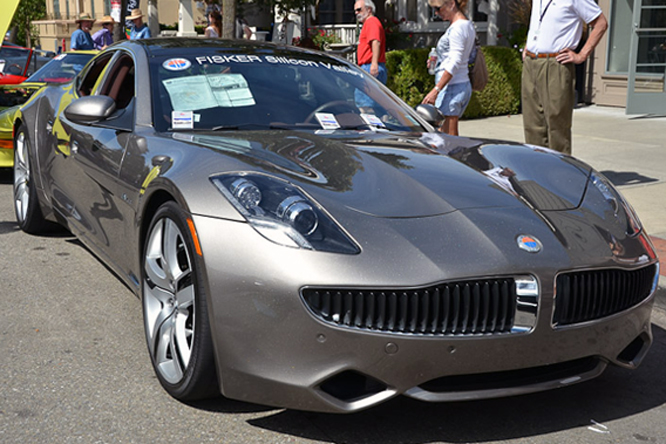
Fisker Karma, Danville Concours d'Elegance

Fisker Automotive was founded in 2007 in Anaheim California, but has the hybrid Fisker Karma vehicles it markets manufactured by Valmet Automotive in Uusikaupunki, Finland. Among the novel features are a solar panel roof which contributes to the climate control system.

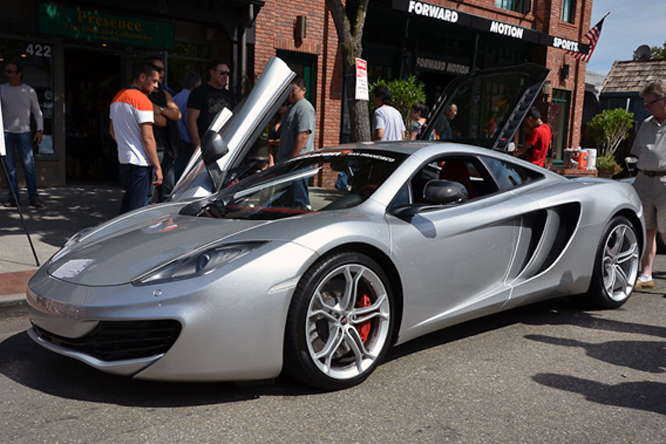
McLaren MP4-12C, Danville Concours d'Elegance

The McLaren MP4-12 C is the racing car manufacturers third road car after the 1969 M6GT (3 possibly 4 built) and 1992/98 F1 (106 built), like all McLaren’s road car projects the MP4-12 C draws heavily on it’s racing technologies which in this case includes a second brake pedal which acts on the inside rear wheel to minimise understeer.

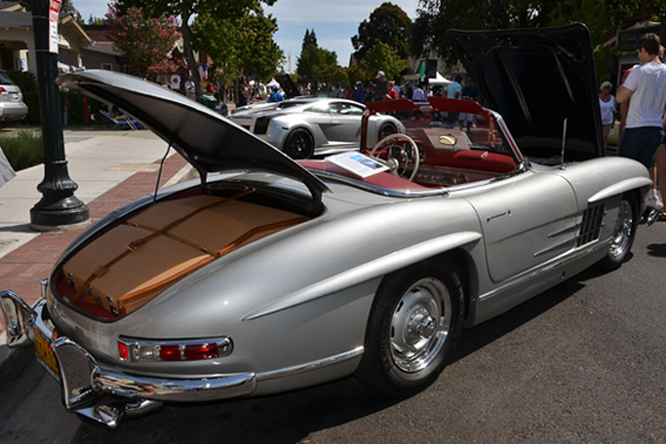
Mercedes Benz 300 SL, Danville Concours d'Elegance

From 1957 to 1963 Mercedes Benz manufactured 1,858 300 SL Roadsters, this one comes complete with the optional factory luggage cases and is one of less than 20 1957 vehicles fitted with Rudge wheels.

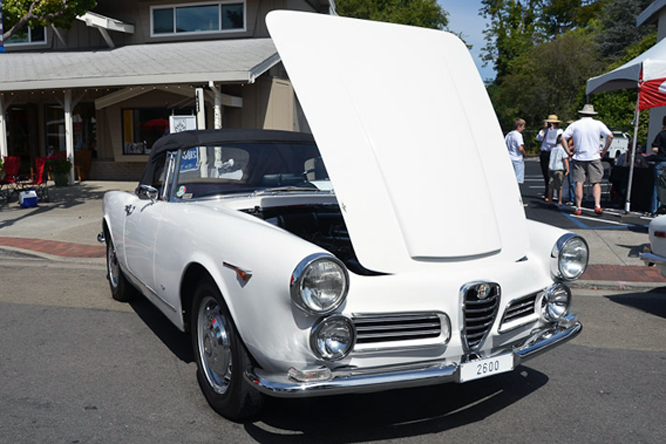
ALFA Romeo 2600 Spyder, Danville Concours d'Elegance

Since the 1920’s ALFA Romeo had offered straight six powered vehicles to it’s customers the 2600 or 106 series manufactured from 1961 to 1968 was the last of this line. Above is 1964 2600, one of 2,255 Spyders built, powered by a 145 hp twim overhead cam version of the straight 6.

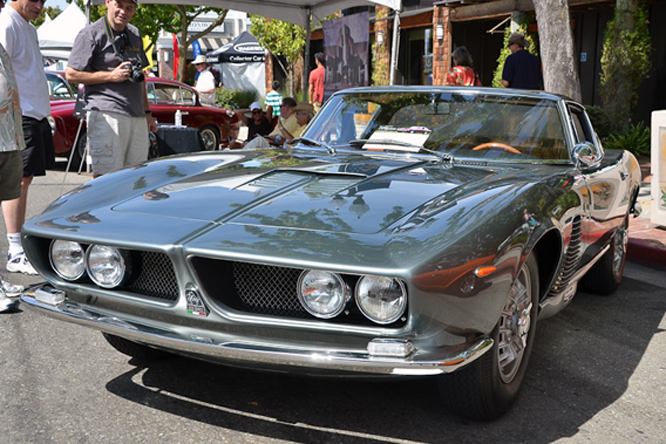
Iso Griffo, Danville Concours d'Elegance

So far as I have been able to discern the Iso Grifo A3/L above ‘might be’ the 1963 prototype shown by Bertone at the 1963 Turin Auto Show. Clues are the given 1963 date of the car and it’s current location. Sales of the 395 hp Chevy V8 cars did not begin until 1965.

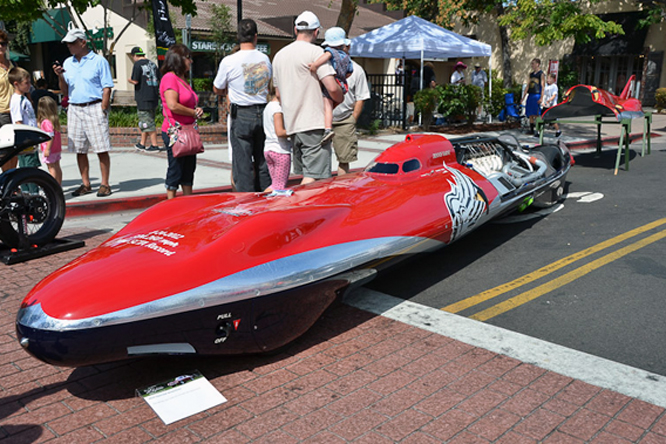
Chevrolet Streamliner, Danville Concours d'Elegance

Getting seriously psycho on tyres is Dennis Varni who on the 14th of September recorded a two way speed of 334.360 mph in this Chevrolet Streamliner powered by a turbocharged straight 6 motor at Bonneville.

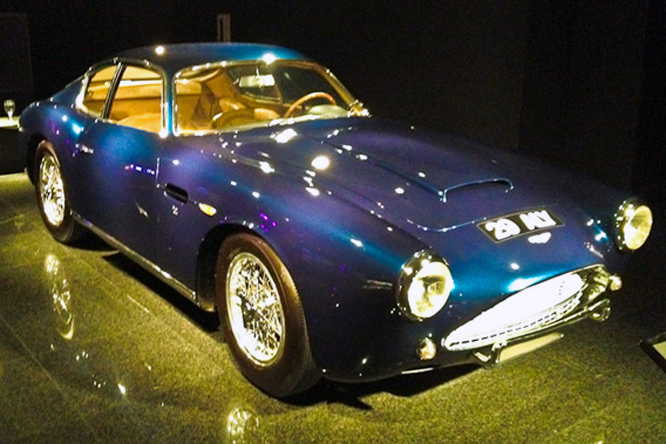
Aston Martin DB4 GT Zagato, Danville Concours d'Elegance

Geoffrey was fortunate to get to the Danville Gala Dinner where this 1961 Aston Martin DB4 GT Zagato was on display, it is the only one of the 19 original cars that still exist that has non faired-in headlights. The UK plate ’29 ALY’ has been reasigned to a 2002 Ford Ka.

Pegaso Typo Z Saoutchik Coupé, Danville Concours d'Elegance

Finally this 1955 Pegaso Tipo Z with a Saoutchik Coupé body is one of only two identical cars for international car exhibitions, at a cost of between US$15 to 35,000 they were amongst the most wildly expensive vehicles of their time.

My thanks to Geoffrey Horton for sharing his photograph’s, there will be further blogs from Danville in the week ahead.

Thanks for joining me on this “Parkinson’s Research and Care” edition of “Gettin’ a li’l psycho on tyres” I hope you will join me again tomorrow when I shall be looking at an MG. Don’t forget to come back now !

Share

Goodwood Revival – #7 Silberpfile

At the Berlin Motor Show in 1933 Adolf Hitler announced two new projects the (Kraft durch Freude – strength through joy) KdF- Wagen that would eventually become the Volkswagen Beetle and a state sponsored racing programme for Mercedes Benz. Below is a recreation of a 1936 Mercedes Benz racing department transporter based on a 70 hp petrol engine Mercedes Benz Lo 2570 truck complete with a Mercedes Benz W125 racing car on the back.
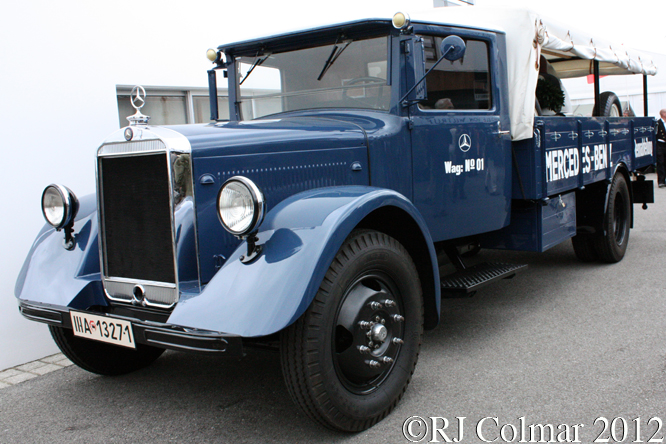
Mercedes-Benz LO 2750, Goodwood Revival

Once it became clear that Hans Stuck would not be joining Mercedes Benz he got together with Chairman of the newly amalgamated Auto Union Baron Klaus von Oertzen and free lance designer Ferdinand Porsche to make a bid to fund a rival for the Mercedes Benz team. Hitler agreed that two rivals would be better than one and so split the funding he had announced in Berlin for Mercedes Benz with Auto Union much to the disgust of the former. Below is a Büssing Typ 300 of the type used by Auto Union to carry their team.
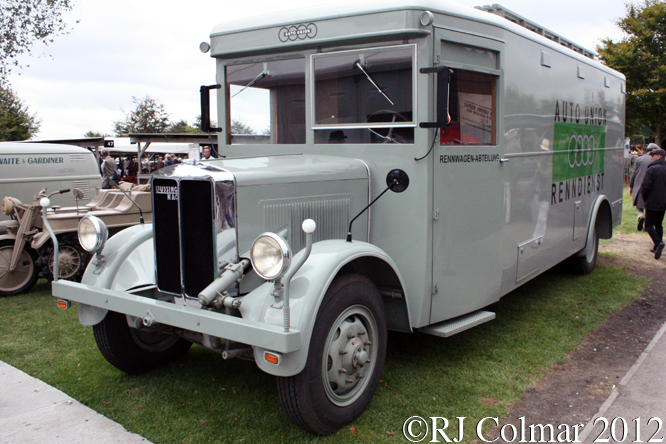
Bussing Typ 300, Goodwood Revival

There are numerous stories about how the Mercedes Benz and Auto Union team cars came to be called collectively the Silver Arrows. Apparently the earliest use to the term was in a 1932 radio broadcast in connection with a streamlined Mercedes Benz SSKL driven by Manfred von Brauchitsch was called a Silver Arrow. When the Auto Unions were prepared in 1934 they were all painted silver and bitter rivals Mercedes Benz, who would probably be loath to admit it, appear to have followed suit.

Auto Union A-Type, Goodwood Revival

For 1934 Auto Union built the A-Type with, for the period, a wholly unconventional mid engine layout which featured a 291 hp super charged V16 motor there was no championship that year, Alfa Romeo won the first two of the seven major races before Hans Stuck won the German Grand Prix for Auto Union, René Dreyfus managed an unlikely win at the Belgian Grand Prix aboard his Bugatti and Mercedes swept the last two races of the season in Italy and Spain. Above is an A-Type of the type Stuck used to win the 1934 German Grand Prix.
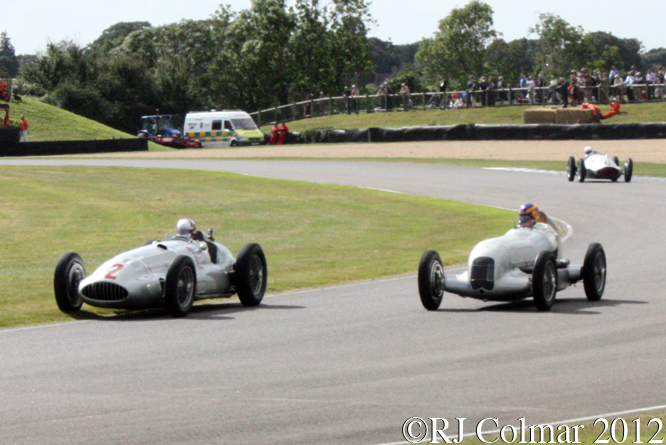
Mercedes Benz W154 and W25, Goodwood Revival

From 1934 to 1937 Mercedes Benz used the W25 powered by a supercharged straight 8 motor that rose from 300 hp in 1934 to 490 hp by the time the W25 was replaced by the W125. In 1935 Rudolf Caracciola won the European Grand Prix Championship with three wins, Stuck one once for Auto Union and Tazio Nuvolari famously upset the Fuhrer by winning for ALFA Romeo in the 1935 German Grand Prix.

Karl Wendlinger had some problems selecting gears with the W25 seen on the left above and when he got a gear on this occasion the car snaked wildly as the narrow power band of his screaming engine kicked in forcing the 1938 W154 onto the grass.

Auto Union C-Type, Goodwood Revival

For 1936 Auto Union introduced the C-Type which produced over 500 hp from it’s supercharged V16. This tipped the scales in favour of Bernd Rosemeyer who won three of the four European Championship rounds to become European Champion in 1936. This left the previous years champion Caracciola with a consolation victory at the start of the 1936 season before the Mercedes Benz team withdrew mid season, after the Auto Unions superiority became obvious, to regroup for 1937.

Five time Le Mans winner Frank Biela is seen at the wheel of the C-type above.
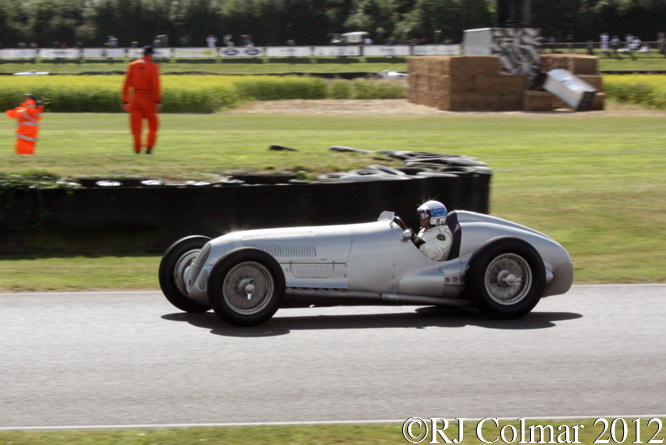
Mercedes Benz W125, Goodwood Revival

For 1937 Mercedes Benz came back with a vengeance upgrading their supercharged straight eight motor with a swept volume 5,662.85 cc / 345.56 CUI which produced 595 hp and a new W125 chassis as seen being handled by Grand Prix and Le Mans winner Jochen Mass above. After a consolation win at the start of the 1937 season for Rudolf Hasse, Caracciola took three wins from the remaining four rounds of the championship to win the 1937 European Championship title for the second time. Only Manfred von Brauchitsch also aboard a W125 interrupted Caracciola’s progress at Monaco. It was not until the late sixties that circuit racers so powerful would hit the tracks again with the emergence of the unlimited Can Am Series in North America.
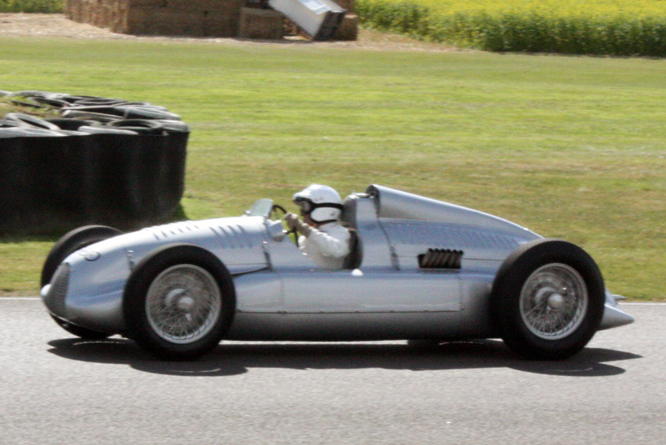
Auto Union D-Type, Goodwood Revival

For 1938 the organisers changed the rules to bring the speeds down by announcing a maximum swept volume of three litres / 183 cui. Auto Union developed the new D-type with “only” 12 cylinders in a Vee configuartaion that with 24 psi boost from the supercharger developed 478 hp and was still capable of over 200 mph ! The Nuvolari drove the D-Type, like the one seen here, to a single championship victory at the season finale at Monza.
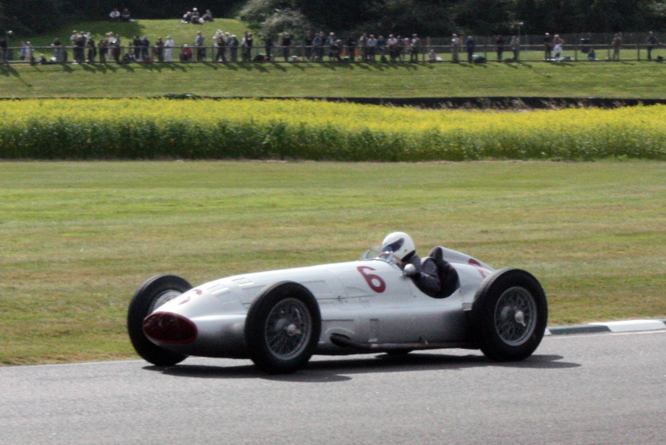
Mercedes Benz W154, Goodwood Revival

Mercedes Benz built the W154 for the smaller capacity formula using an essentially unchanged chassis from the W125 but with a supercharged V12 giving up to 475 hp. von Brauchitsch and Great Britain’s Richard Seaman won the opening 2 races of the four race series. Caracciola won the third round which was enough to secure him a third European Championship title.

For 1939 there were only four rounds of the European Championship Mercedes again winning three of them Hermann Lang winning the first and last and Caracciola winning the 1939 German Grand Prix all for Mercedes. Herman Paul Müller interrupted the Mercedes domination with a win at the French Grand Prix. Two weeks after the final championship round in Switzerland von Brauchitsch drove the #6 seen here driven by Rob Hall to second place in the non championship Belgrade Grand Prix. That same day the Second World War got underway and the European Championship organisers who apparently had never agreed on the points system to be used for the 1939 championship failed to announce a championship winner. Lang or Mülller would have won depending on the scoring system to be used.
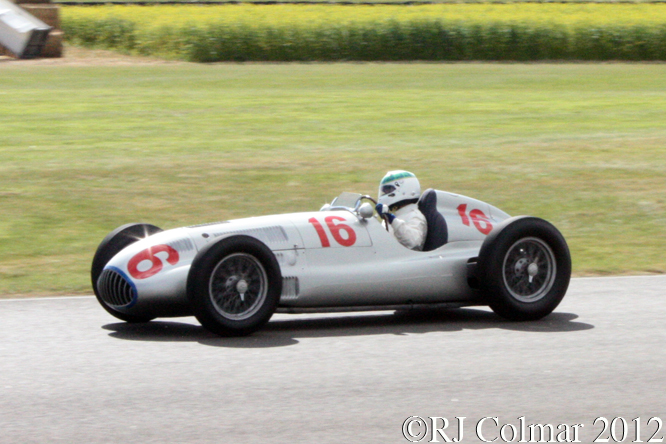
Mercedes Benz W165, Goodwood Revival

Finally Mercedes Benz built the 1.5 litre 91.5 cui supercharged V8 powered W165, as driven by Paul Stewart above, to compete in the more competitive, or at least varied since nearly everyone had abandoned hope of competing against Mercedes Benz and Auto Union, voiturette (small) class. Two cars were entered for Lang and Caracciola in the Tripoli Grand Prix and they finished first and second in that order. The cars were never to be raced again despite Caracciola being invited to compete at Indianapolis in 1946, he could not get the car out of Europe through Swiss customs.

Without doubt these are some of the most fascinating cars ever seen in motor racing, they dominated races that were often 10 hours long, but in the early years they were not invincible. However great the achievements of the teams and drivers these cars were built in an industrial context with the conscripted help of men and women who were not free to do as they liked, and I would venture to suggest these vehicles should be remembered as a testimony to those who endured unimaginable hardships and in the greater scheme of things some of the greatest inhumanities known to man.

Thanks for joining me on this “#7 Siberpfile” edition of “Gettin’ a li’l psycho on tyres”, I hope you will join me again for some California Sunshine tomorrow. Don’t forget to come back now !
Share

Goodwood Revival 2012 – #6 Lotus

Today’s post features some of the Lotus cars that were on track at Goodwood Revival last week.

Lotus Ford 30, Goodwood Revival

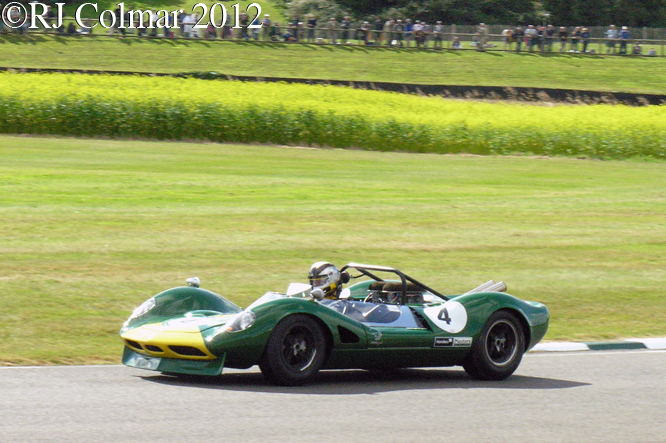
The looks and early form of the Lotus 30 flattered to deceive even with Jim Clark at the wheel, this one driven by Paul Wright features the cool exhausts coming out of the top and is one of the few whose lines have not been spoiled with a rear spoiler.

Lotus Ford 29, Goodwood Revival

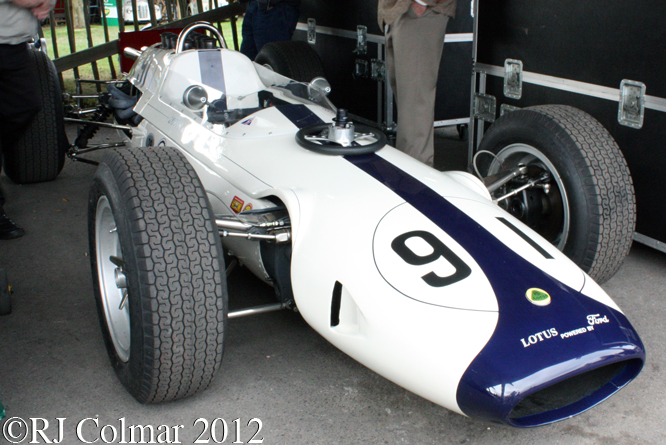
Dan Gurney played an instrumental part in taking Lotus to Indy in 1963, this is the Lotus Ford 29 chassis #29/2 Dan used in practice for the 1963 Indy 500 until he put in the wall during morning practice on Pole Day. Dan qualified the spare chassis #29/1 running the #93 12th and finished the race in 7th place after a late pit stop dropped him from 3rd.

Lotus Climax 24, Goodwood Revival

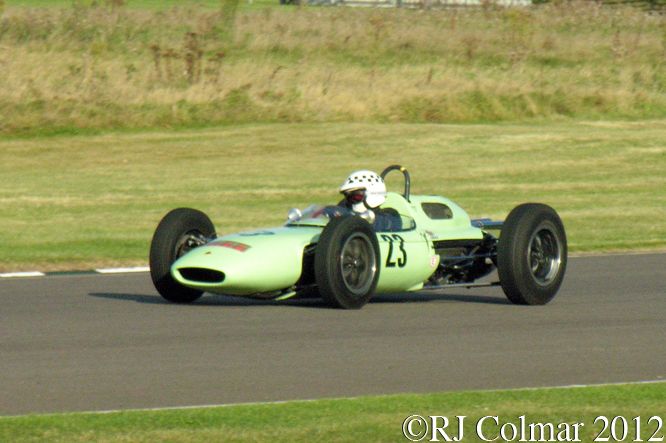
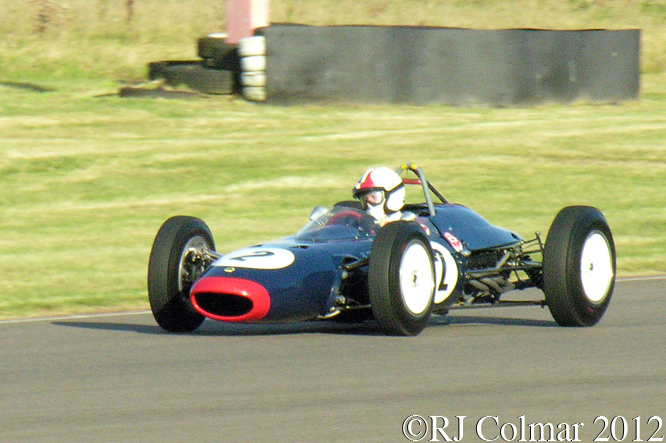
Lotus designed the space frame Lotus 24 for it’s customers in 1962, while keeping back the new monocoque Lotus 25 for the works team. The Climax powered #23 driven by Michel Wanty above is chassis #942 which was one of two supplied to the British Racing Partnership Team racing under the UDT Lystall banner for Innes Ireland and Marsten Gregory to drive. Gregory drove the car once to a 7th place finish in the ’62 British Grand Prix while Ireland retired the car in five from seven races started before finishing 5th in the South African Grand Prix.

Lotus BRM 24, Goodwood Revival

British Racing Partnerships also used a BRM powered Lotus 24 in 1962 with which Gregory managed a best 6th place in the ’62 US Grand Prix, the following season BRP fielded two BRM powered Lotus 24 for Ireland and Jim Hall, Jim finished 6th in the British and 5th in the German Grand Prix. The Lotus BRM 24 driven above by Nigel Williams is chassis #P1 which was supplied to the Reg Parnell Racing team for 1963. Marsten Gregory, Roger Ward, Hap Sharp and Chris Amon all had a go in it with Sharp scoring a best 7th place in the 1963 Mexican Grand Prix. The following season Peter Revson drove the car now fitted with bodywork from a 1963 Lola Mk4A, as seen above, for Parnell on two occasions in Belgium and Britain without any worthwhile results.

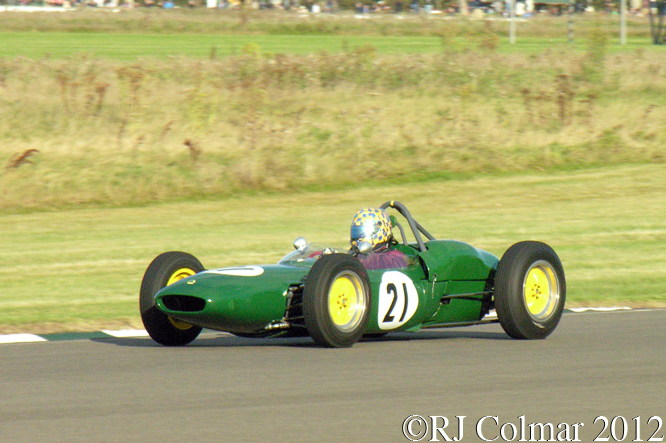
Lotus Climax 21, Goodwood Revival

Dan Collins was out in the Classic Team Lotus entered Lotus Climax 21 #933 which I looked at in December.

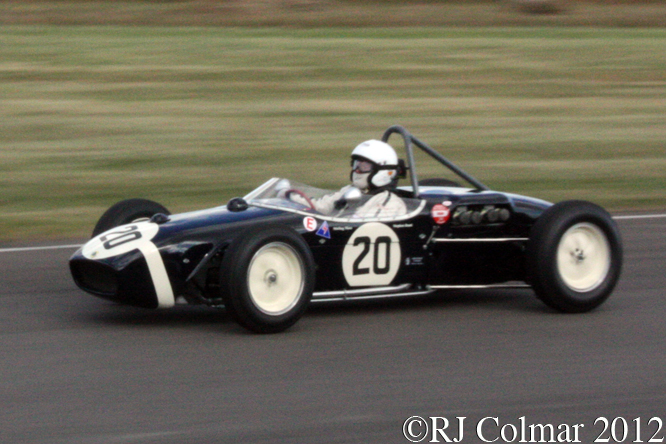
Lotus 18, Goodwood Revival

Rob Walkers famous Lotus Climax 18 chassis #912 used by Stirling Moss to win the 1960 and 1961 Monaco Grand Prix was being driven by Stephen Bond.

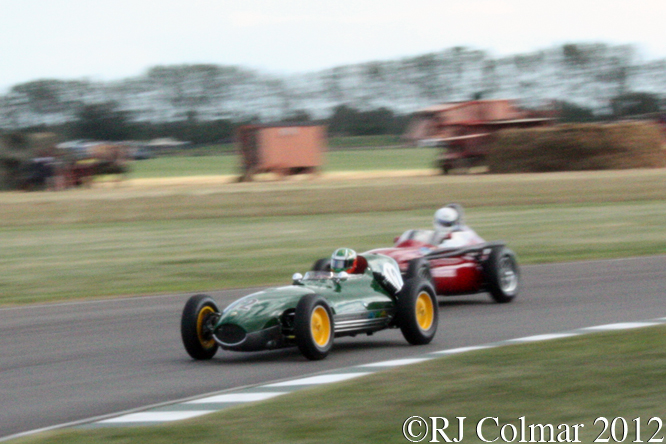
Lotus 16, Goodwood Revival

Entered by Real Auto Club Catalunya was the Lotus 16 driven by Joachim Foch-Rusinol seen here blasting past the 1959 Tec Mec Maserati 250F at St Mary’s corner. The 1959 Lotus 16 was Colin Chapman’s second seat design after the 1956 Lotus 12.

Lotus Bristol X, Goodwood Revival

Finally the 1955 Lotus Bristol X driven by Malcolm Paul and Rick Bourne, who is seen at the wheel here, charges into the evening during the Freddie March Memorial Trophy race to a 6th place finish.

My thanks to Wouter Melisson from The Nostalgia Forum and http://www.ultimatecarpage.com for his help identifying Michel Wanty’s Lola Mk4A bodied Lotus 24.

Thanks for joining me on this “#6 Lotus Edition” of “Gettin a li’l psycho on tyres” I hope you will join me tomorrow for a look at what happens when a dictatorship put’s all the necessary resources into the hands of a couple of racing teams. Don’t forget to come back now !

Share

Goodwood 2012 – #5 Ferrari Friday

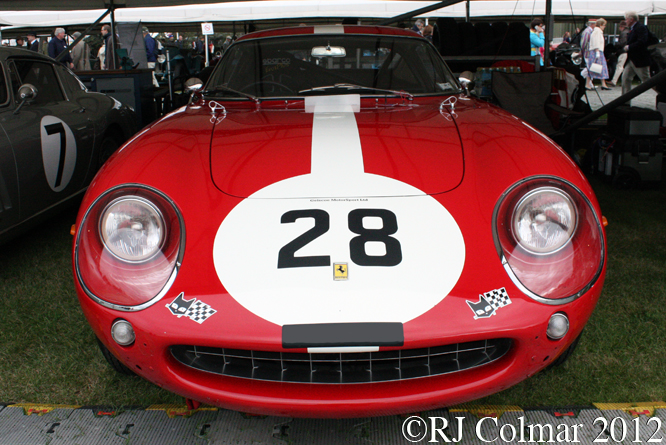
If I heard the commentary on Goodwood Radio correctly then there were over $300 million dollars worth of cars at Goodwood last Friday with 11 Ferrari 250 GTO’s present that would make up the first $120 million very quickly !

Ferrari 250 GTO, Goodwood Revival

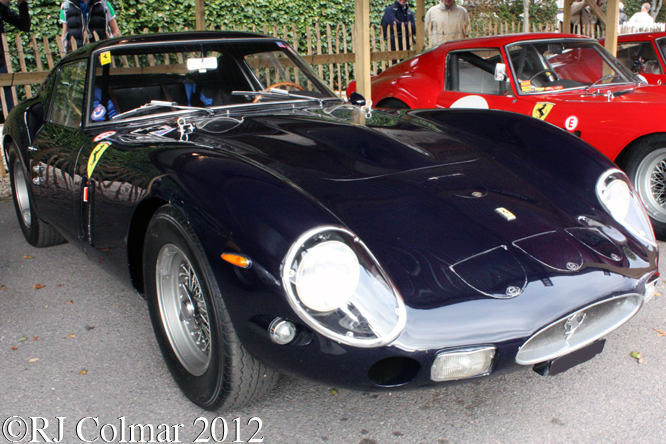
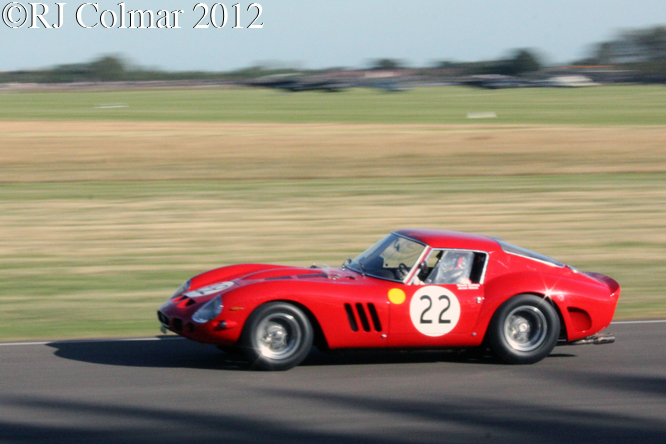
Among the 250 GTO’s I had not seen before was chassis #4219GT a car which Pedro Rodriguez drove to victory in the second Daytona 3 Hour race held in 1963. This car is reputed to have changed hands for just over $12,000 in 1964 and between $3 and 3.5 million in 1993 !

Ferrari 250 TR 59/60, Goodwood Revival

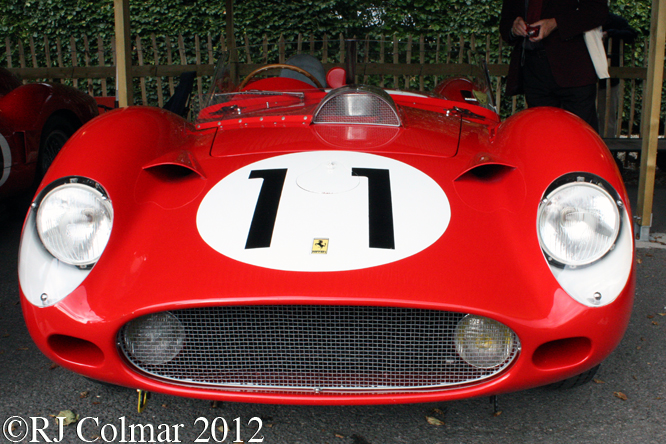
The role call of drivers of this Ferrari 250 TR #0774TR includes Jean Behra and Dan Gurney who did not finish the 1959 Le Mans 24 hours in it, Phil Hill and Cliff Allison who won the 1960 1000kms at Buenos Aires before it returned to Le Mans where it won the 1960 24 hours with Olivier Gendebien and Paul Frere at the wheel.

Ferrari 250 GT SWB, Goodwood Revival

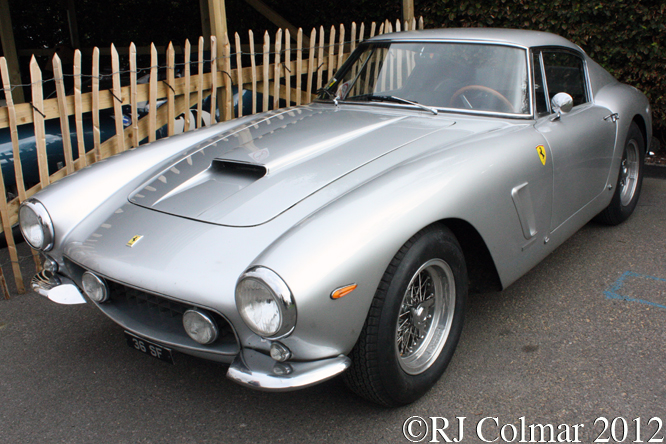
I am not sure of the chassis number of this 250 GT SWB Berlinetta so I’m not sure wether or not it’s a Competizione model or not, if you know your 250 GT SWB’s and no the identity of this one please chip in with a reference or two below.

Ferrari 275 GTB/C SWB, Goodwood Revival

A class win at Le Mans in 1967 for drivers Dietter Sporey and Rico Steinemann followed by another in the 1000 kms at Spa in 1969 with Jaques Rey and Edgar Berney at the wheel did not do much to help the value of this car in 1969 when it changed ownership for just $6,000. By 1983 the value had leapt to $150,000 two years later it was fire damaged and the wreck changed hands for $46,000.
The restored car then went to Japan for a reputed $800,000 in 1988, since then it has come to reside in the UK via the USA for undisclosed sums.

250 MM PF Berlinetta, Goodwood Revival

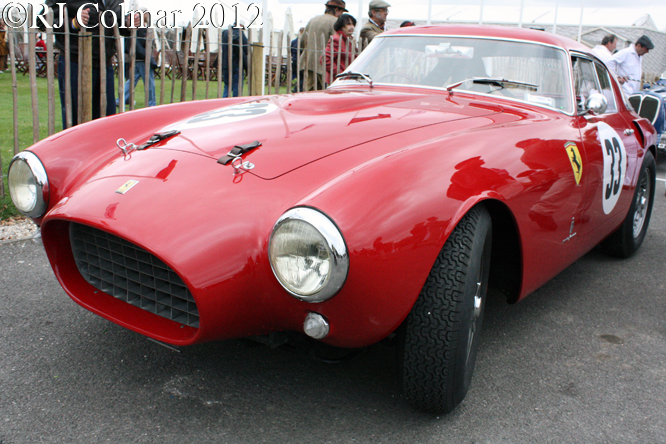
My personal pick for Ferrari of the day is this 250 MM Pinifarina Berlinetta with a longer than standard nose. The car has little racing history from it’s heyday and lost 1 million Italian Lira in value, just under 1/3rd, between 1953 and 1955. By all accounts it was used for to chauffeur movie stars in 1954.

Ferrari 250 GTE, Goodwood Revival

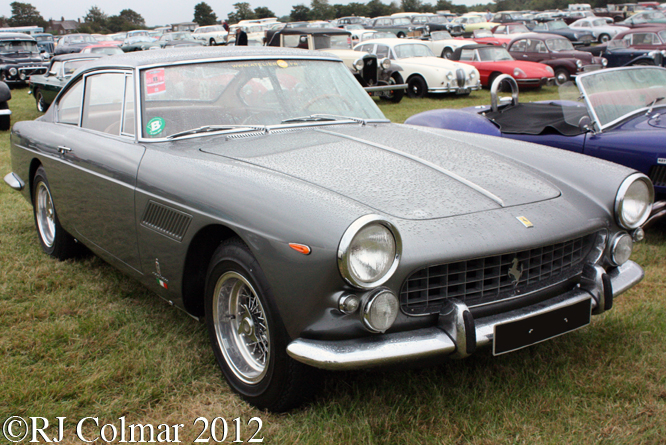
If you can’t have the Ferrari 250 of your choice there are plenty of less valuable 250 GTE’s like the 1963 example above that can be acquired and transformed into the Ferrari of your dreams at a fraction of the price of the real thing.

Ferrari 250 GTO, Goodwood Revival

For one reason or another this Ferrari 250 GTO #3757 has come up for discussion on GALPOT numerous times, I make no apology for showing yet another photo of it again because this time former Ferrari Grand Prix driver and would be Indy rookie Jean Alesi can be seen at the wheel.

Ferrari 250 GT SWB Berlinetta, Goodwood Revival

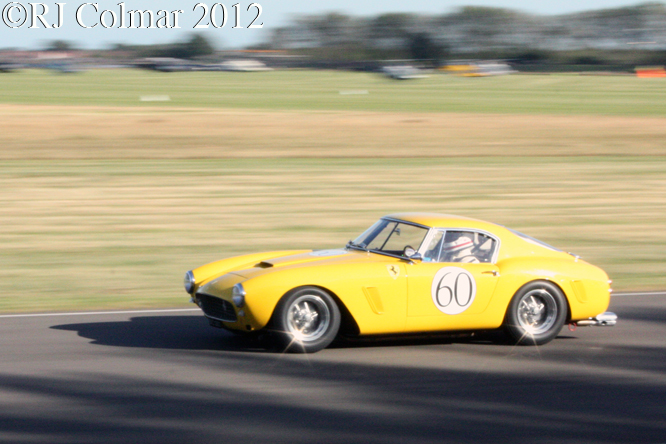
Christian Horner is best known as team principle of the multiple championship winning Red Bull racing, he was also a dab hand behind the wheel making it all the way to the second tier Formula 3000 open wheel series before the money ran out and he opted for team management in 1998. Christian is seen here in the Ferrari 250 GT SWB Berlinetta chassis 1953GT another car that has been mentioned before in connection with the motor from 250 GT SWB Berlinetta #2025 that has been fitted to the #60 seen here.

Ferrari 290 MM, Goodwood Revival

The car above driven by Mike Malone looks like a 1958 Ferrari 250 TR however it actually started life as 1956 290 MM Scaglietti Spyder #0606 with Right Hand Drive. After Maurice Trintignant and Phil Hill won first time out in Sweden car was upgraded to 1959 250 TR specs at the factory and ended up in Brazil where Rio Negri was killed after probably mistaking the central pedal for the brakes when it was actually the accelerator. The remains of the fire damaged car were eventually fitted with a Ford V8. Much later it was discovered and mistaken and built up again as the Left Hand Drive ’59 250 TR 0726. Many years later it came to light that the car was actually #0606. Finding Ferrari’s can be difficult identifying them correctly even more so !

Ferrari 860 Monza, Goodwood Revival

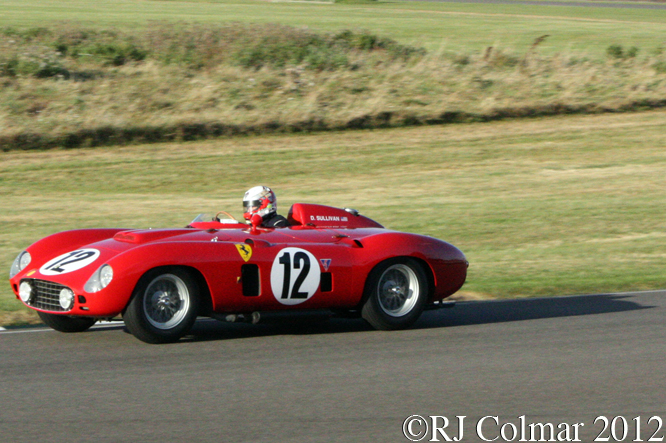
Last year I saw 1985 Indy winner Danny Sullivan at my local track Castle Combe, this year I have now seen him race a Ferrari at Goodwood, above he is driving a 1956 Ferrari 850 Monza chassis 0604M, as we saw in a previous post Danny is following in the footsteps of one five time Juan Manuel Fangio and America’s first world champion Phil Hill ! Danny qualified 15th but did not finish the Sussex Trophy Race.

Ferrari 750 Monza, Goodwood Revival

Finally the Freddie March Memorial Trophy race included this 1955 Ferrari 750 Monza Scaglietti Spider S1 chassis #0504M which appears to have been raced by Frenchman Michael Poberejsky under the pseudonym Mike Sparken. Michael won a race in Morocco before sharing the car with Marsten Gregory at Le Mans in 1955 where they failed to finish. R and A Frankel retired with less than half an hour to go in the Freddie March Memorial Trophy too !

Thanks for joining me on this ‘#5 Ferrari Friday’ edition of “Gettin’ a li’l psycho on tyres” I hope you will join me again tomorrow when I’ll be looking at some of the Lotus racing cars that were present at Goodwood. Don’t forget to come back now !

PS 12 09 21 Condolences to family and friends of Michael Poberejsky who died this morning at his home in Beaulieu sur Mer.

Share

Goodwood Revival 2012 – #3 Continental Curiosities

Today’s post features some of the Continental Curiosities that appeared at last weekends Goodwood Revival.

GAZ Volga 21M, Goodwood Revival

In the pits this 1959 GAZ Volga 21M was being readied for Roger Wills and Brendan Hartley to take part in the St Marys trophy races, the car ended the day with the bonnet hood wrapped round the windscreen after something came loose approaching Fordwater. Brendon finished 10th in race 1 and Roger 11th in race 2. The proogramme notes this 21M is powered by a 3 litre / 183 cui motor which is not a standard size for the model when it was built.

Austin Metropolitan, Goodwood Revival

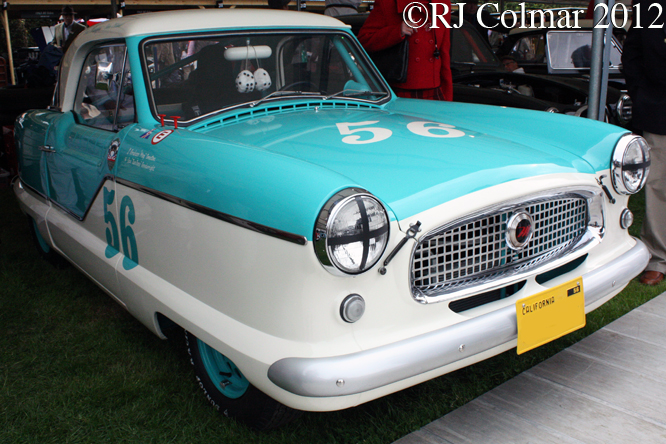
The Nash Metropolitan was a sub compact designed in the US but built in the UK by the Austin Motor Company in Birmingham, England with an Austin motor from 1953 to 1961, this left hand drive Series III car was driven in the St Mary’s Trophy races by Shaun Rainford and 1989/1995 British Touring Car Champion John Cleland. John was not classified in race 1 while Shaun finished 21st in race 2.

Renault 4CV, Goodwood Revival

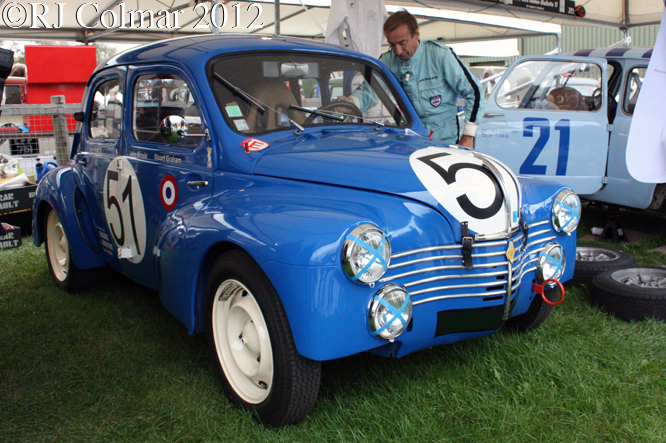
Back in the mid 1970’s Stuart Graham was a regular contender for saloon car race wins with first a Chevrolet Camaro and the Ford Capri III S. He is also a two time motorcycle Grand Prix winner. The now 70 year old Stuart can be seen preparing to climb aboard the 1951 Renault 4CV he was sharing with John Arnold. Stuart recorded a non finish in race 1 and John 25th in race 2 of the St Mary’s trophy.

Goggomobil TS250 MM Tribute, Goodwood Revival

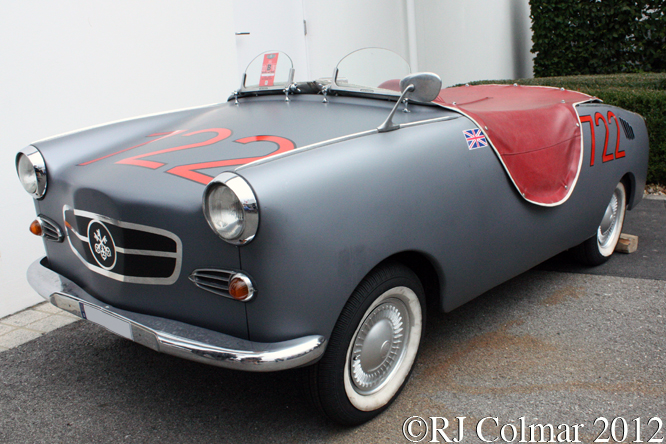
Simply hanging in the paddock was this Goggomobil TS250 that has had the roof chopped off and a 1955 Mercedes Benz 300 SLR Mille Miglia tribute paint job. #722 was the number of the Mercedes Benz 300 SLR driven to victory by Stirling Moss with Dennis Jenkinson reading the map in the 1955 Mille Miglia.

Peugeot 172R, Goodwood Revival

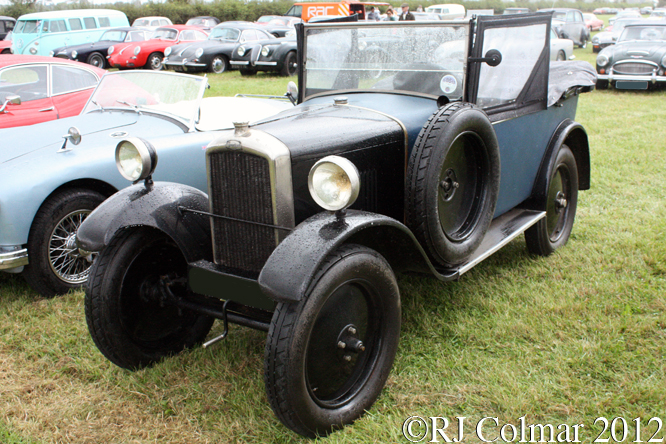
So far as I can tell the vehicle above is a 1926 Peugeot 172R also known as a 5CV named after the French Tax Bracket into which it fell. It is powered by an 11 horsepower 4 cylinder motor.

Frazer Nash "Foursome" Cabriolet, Goodwood Revival

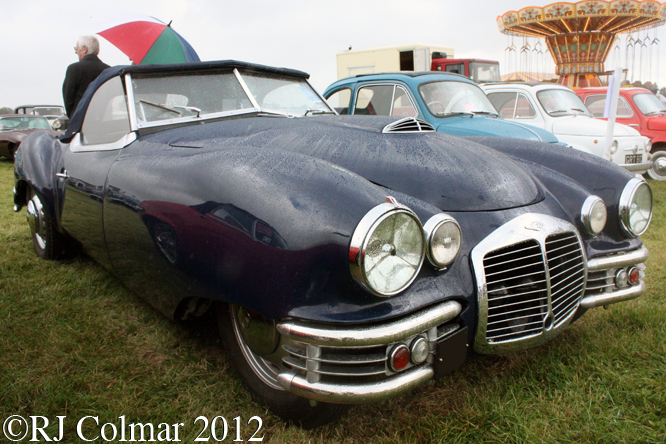
The first of two Frazer Nash’s I learnt about at the weekend was this 1950 “Foursome” Cabriolet described in the notes on a Frazer Nash website as Fritz Fiedler’s dream car, Fritz was employed by Fraser Nash and Bristol to help set up production of various vehicles based on prewar BMW designs on which he had worked. Fieidler later returned to BMW where he eventually served as chairman. This Cabriolet appears to have been the only one of it’s kind ever built and features a larger chassis than it’s contemporary Frazer Nash vehicles.

Mercedes 190 Estate, Goodwood Revival

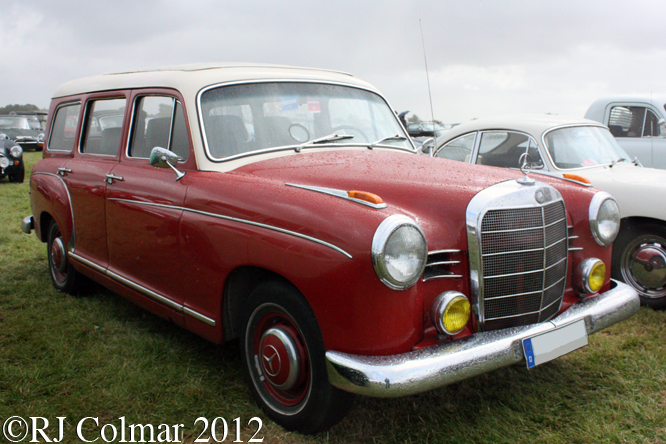
This Mercedes Benz 190 will have left the factory as a saloon / sedan and had a post production conversion into an estate / station wagon, given the paint scheme this one may have served as an ambulance / retungswagen. The wide radiator grill dates the car post 1960 confusingly the swish indicators on the wing / fender appear to have come from a more powerful Mercedes Benz 220.

Jankowits, Goodwood Revival

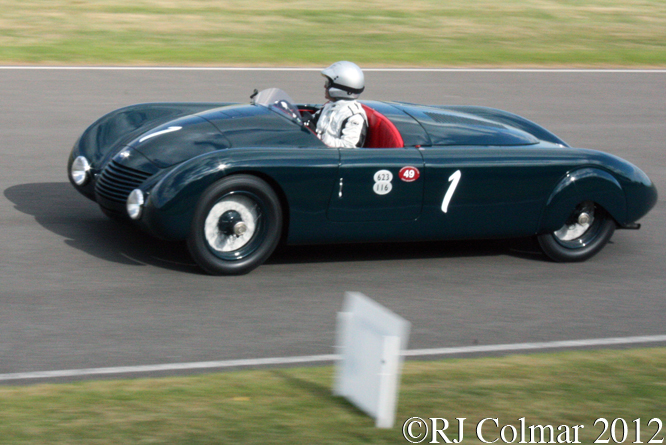
Georg Gebhard gave his Jankowits Special it’s world competition debut in the Brooklands Trophy, and I have to admire him for his bravery, given that the steering wheel is in the middle of a three wide bench seat ! The beautiful but heavy steel body sapped the cars acceleration on the straights and the seating arrangements made cornering a precarious experience even at walking pace. Unsurprisingly the Jankowits qualified last for the Brooklands Trophy over 30 seconds slower than the last but one slowest competitor. The owner is still convinced that the Jankowits is an ALFA Romeo in the absence of a single shred of evidence.

Frazer Nash Saloon "The Owlet", Goodwood Revival

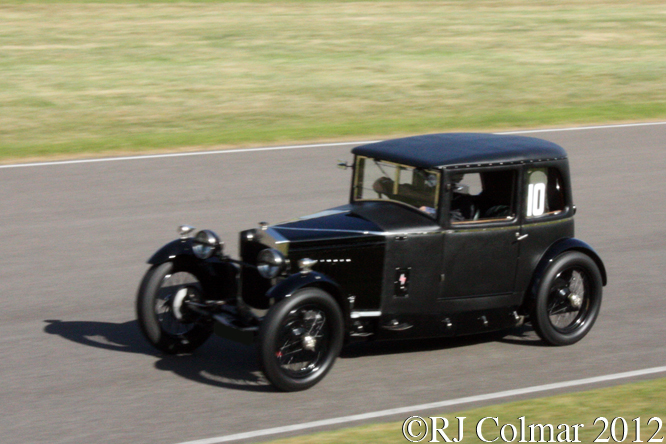
The second Frazer Nash I learnt of for the first time over the weekend is this 1928 Saloon known as “The Owlet” driven by Patrick Blakeney-Edwards. Other than the car appears to be a recreation I know little else at the moment except that it is very fast qualifying over a minuet faster than the Jankowits for the Brooklands trophy race for 5th place on the grid and finishing 3rd behind a more powerful ALFA Romeo and Talbot.

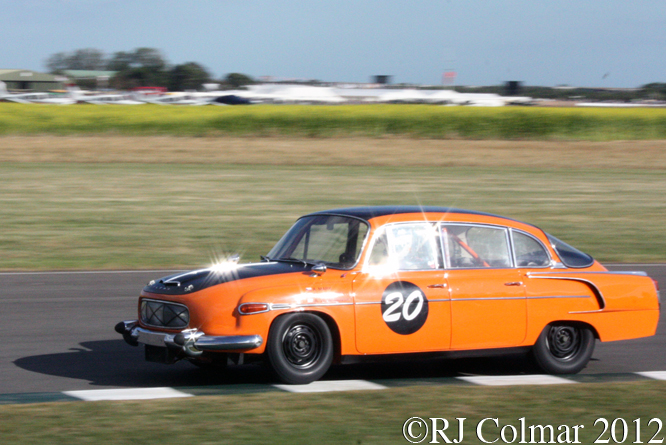
Tatra T603, Goodwood Revival

Winner of the unofficial biggest exhaust pipes in the paddock award the Tatra T603 driven by John Haugland and Arne Berg proved to be more than “all show and no go” with 5th and 8th place finishes in their respective St Mary’s Trophy races.

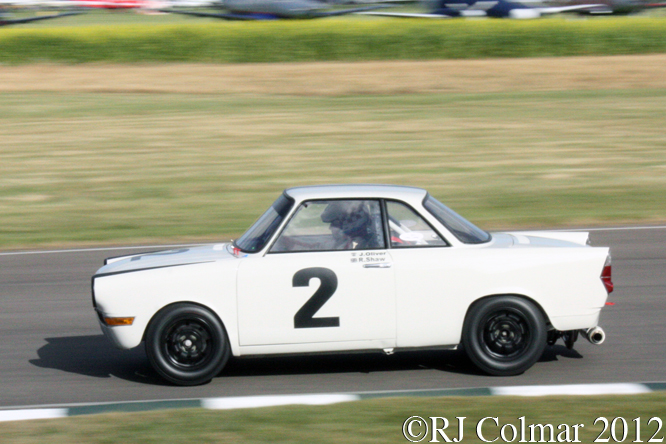
BMW 700, Goodwood Revival

BMW was in danger of a merger with Daimler Benz such was the poor state of it’s finances when the BMW 700 Coupé was launched in 1959, fortunately a substantial number of orders along with a substantial investment saved the day for the company to remain independent. Jackie Oliver driving the #2 qualified and finished 3rd in the 1st Mary’s Race while team mate Richard Shaw qualified 5th and finished 6th in the 2nd race.

Thanks for joining me on this “#3 Continental Curiosities” edition of “Gettin’ a li’l psycho on tyres”, I hope you will join me again for a Presidential Americana edition tomorrow. Don’t forget to come back now !
Share

Goodwood Revival 2012 – #2 MGs

Given that I have been blogging about MG’s most Tuesdays since at least January I don’t suppose it is that surprising that I noticed so many MG’s at Goodwood at the weekend. Here is a cross section of what I saw in the classic car park and a couple from the race track.

MG K3, Goodwood Revival

Oldest of the MG’s I saw was probably this 1933 MG K3 driven by Howard Maguire, it was in fact one one of two that appeared during practice for the Brookland’s Trophy on Friday.

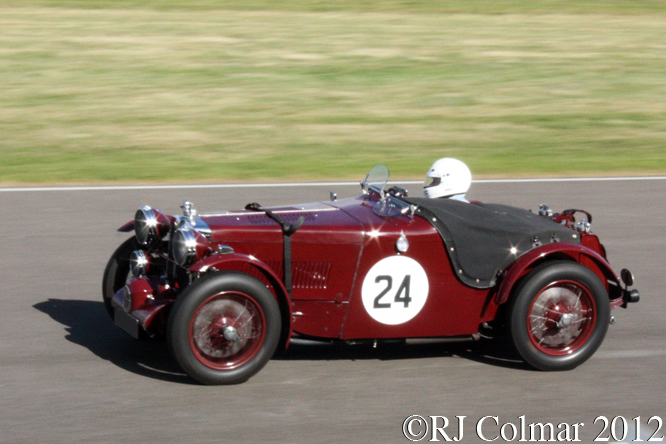
MG PA, Goodwood Revival

What looks like an MG J2, above, with its cycle type mudguards, turns out to be a 1934 MG PA which is still used in competition.

MG PB, Goodwood Revival

The easiest way to externally differentiate an MG PA from an MG PB are the vertical slats of the PB’s grill which can be clearly seen on the 1936 PB seen above. The PB also has a 950 cc motor against the 847cc of the PA.

MG VA, Goodwood Revival

Like the MG PB the MG VA has not appeared in a GALPOT blog before, but will appear in the coming weeks so I’ll spare any further details until then.

MG TC, Goodwood Revival

I don’t have a year for the MG TC above but it was built somewhere between 1945 and 1950 being the first MG model to go into production after World War II.

MG TD, Goodwood Revival

From 1950 to 1953 the MG TC was replaced by the MG TD, like the 1950 example above, which used much of the running gear of the TC but the chassis and suspension from the MG Y-Type Saloon / Sedan.

MG ZA Magnette, Goodwood Revival

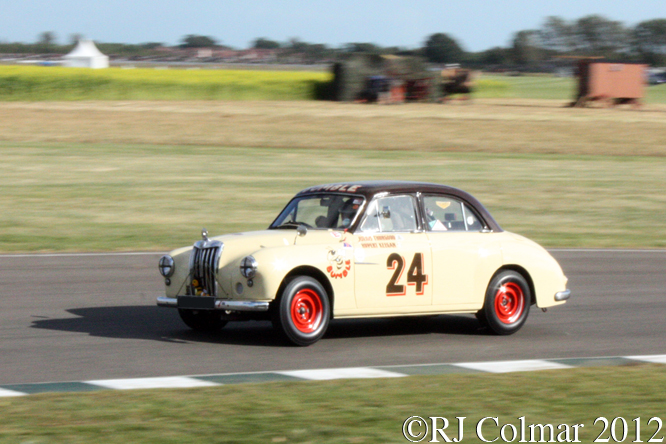
Rupert Keegan and Julian Thurgood shared this MG ZA Magnette for the St Mary’s trophy races. For some reason it is incorrectly described in the programme as a Mk 3 Magnette Farina with a 1840 cc motor.

MG A, Goodwood Revival

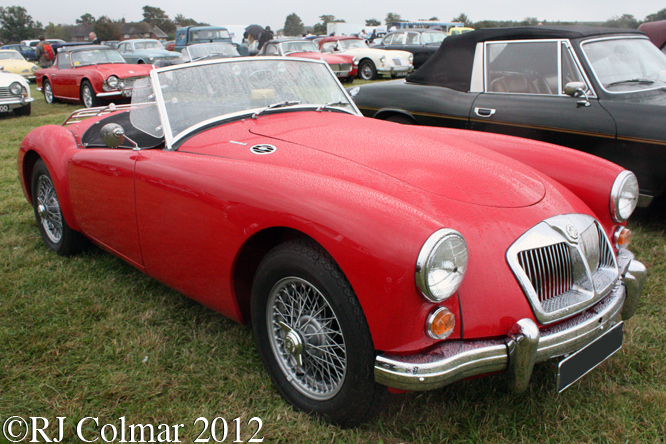
Identifying the the vehicle above I have noticed a major error in my MG A 1600 Mk II blog, the photo’s I used were all of an MG A 1600 without the distinctive lower grill seen on the MG 1600 Mk II above. This error has now been corrected. The car seen above comes from The Netherlands and I have been unable to identify the year of manufacture which will have been between 1960 and 1962.

MG Midget, Goodwood Revival

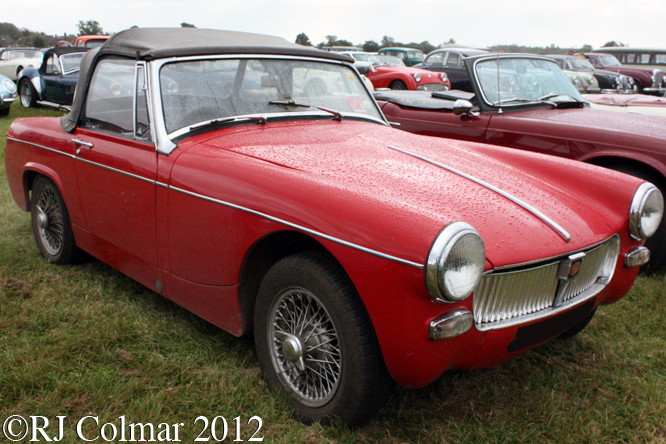
Surprisingly this is the first non fedral spec Midget I have come across since I started collecting photo’s for ‘Gettin’ a li’l psycho on tyres’ the example above was built in 1965.

MG B V8 Roadster, Goodwood Revival

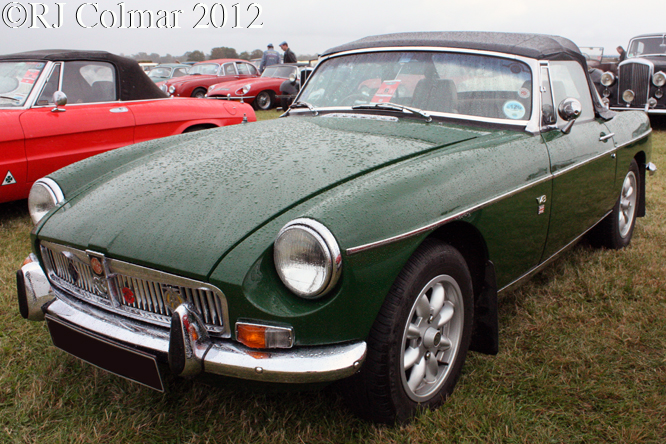
Rounding out this review of MG’s at Goodwood is this 1967 MG B Roadster which has been retrospectively fitted with a Rover V8 motor that was only made available from the factory with the MG B GT Coupé body between 1973 and 1976.

Thanks for joining me on this “Goodwood Revival 2012 – #2 MGs” edition of “Gettin’ a li’l psycho on tyres”, I hope you will join me again tomorrow when I’ll be looking at some of the Continental Curiosities at Goodwood over the weekend. Don’t forget to come back now !
Share